|
|
|||
|
||||
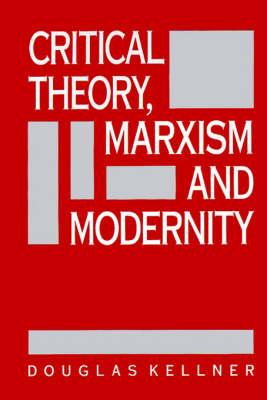
OverviewFrom its beginnings in the 1930s, the critical theory of the so-called Frankfurt School has refused to situate itself within any arbitrary or conventional academic divisions. Traversing and undermining boundaries between competing disciplines, it stresses interconnections among philosophy, economics and politics, culture and society.In Critical Theory, Marxism, and Modernity Douglas Kellner sets out the fundamental ideas and arguments of critical theory as they relate to the central issues in radical social theory and offers incisive interpretations of the theoretical tradition from its beginnings to the present.Critical theory began as a Marxian critique of capitalist modernity, Kellner contends, and moved away from orthodox Marxism in response to the events of twentieth-century history. Kellner explores the effects of historical crises of capitalism and Marxism on critical theory and reflects on the continued relevance or obsolescence of Marxism and critical theory. ""During the 1960s, many among my generation of New Left radicals turned for theoretical and political guidance to the works of Max Horkheimer, Herbert Marcuse, T.W. Adorno, Erich Fromm, Leo Lowenthal, Frederick Pollock, Jurgen Habermas, and their colleagues, "" he writes. ""As we move into the 1990s critical theory might help produce theoretical and political perspectives which could be part of a Left Turn that could reanimate the political hopes of the 1960s, while helping overcome and reverse the losses and regression of the 1980s."" Full Product DetailsAuthor: Douglas KellnerPublisher: Johns Hopkins University Press Imprint: Johns Hopkins University Press Dimensions: Width: 15.20cm , Height: 1.60cm , Length: 22.90cm Weight: 0.431kg ISBN: 9780801839146ISBN 10: 0801839149 Pages: 288 Publication Date: 27 October 1989 Recommended Age: From 17 Audience: General/trade , General Format: Paperback Publisher's Status: Out of Print Availability: In Print Limited stock is available. It will be ordered for you and shipped pending supplier's limited stock. Table of ContentsReviews<p> Kellner's ambitious and useful book attempts not only to provide a conspectus of critical theory, but to carry forward what he takes to be its essential design -- to 'do' critical theory as well as to analyze it. -- Berel Lang, Philosophy and Literature Author InformationTab Content 6Author Website:Countries AvailableAll regions |
||||