|
|
|||
|
||||
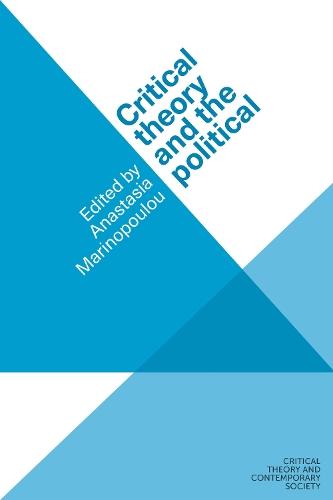
OverviewThe book addresses what is political in critical theory and which aspects, arguments or notions of critical theory maintain political significance for the 20th and the 21st centuries. The collection of essays comprises itself of a series of clear and critical perspectives that analyse the extent to which critical theory relates political argument to modern societies and, thereby, exerts a critique of the multiple social and political phenomena of late modernity. The contributors focus on a multiplicity of universal phenomena such as globalisation, multiple crises, late capitalism and the social role of the sciences, and posit some novel criticism of the contemporary social sphere, as it is situated within the wider system of global capitalism. They also present a plurivalent critique that links arguments in Marxism and Freud to all three generations of critical theory. Full Product DetailsAuthor: Anastasia MarinopoulouPublisher: Manchester University Press Imprint: Manchester University Press Dimensions: Width: 15.60cm , Height: 1.60cm , Length: 23.40cm Weight: 0.562kg ISBN: 9781526172624ISBN 10: 1526172623 Pages: 276 Publication Date: 05 May 2026 Audience: College/higher education , Professional and scholarly , Professional and scholarly , Tertiary & Higher Education , Professional & Vocational Format: Hardback Publisher's Status: Active Availability: Not yet available, will be POD This item is yet to be released. You can pre-order this item and we will dispatch it to you upon it's release. This is a print on demand item which is still yet to be released. Table of ContentsPreface by Darrow Schecter Introduction Part I: Essential political notions of critical theory Critique, negation, politics – Stephen Eric Bronner Between ideals and realism: On the ‘political’ in Max Horkheimer’s early thought – Malte Froslee Ibsen Part II: Democracy 3. Critical theory and democracy: From Kant to Habermas and then back to the Dialectic of Enlightenment – Anastasia Marinopoulou On the ambivalent effects of politicising justice – Esther Neuhann Part III: Political power, civil society and globalisation From the critique of power to critical institutionalism – Hubertus Buchstein Guardians of legitimacy: Habermas on civil disobedience as radical democratic practice – Jeffrey Flynn 7. Can housing be unfair? Towards a critical theory of injustice – Regina Kreide Part IV: Epistemology and the political 8. Critical theory and the realist critique of normative political theory – Kenneth Baynes 9. Power, reasons, and ideology: On the epistemology and metaphysics of noumenal power – Matteo Bianchin Part V: Praxis, public sphere and political communication 10. The limits of critical democratic theory regarding structural transformations in twenty-first century left politics – David Ingram New challenges for critical theory: Deliberative public sphere and political communication in the new hybrid media system – Luca Corchia Postscript by Joshua Clover -- .ReviewsAuthor InformationAnastasia Marinopoulou is Resident Lecturer at the European Law and Governance School of the European Public Law Organisation Tab Content 6Author Website:Countries AvailableAll regions |
||||