Overview
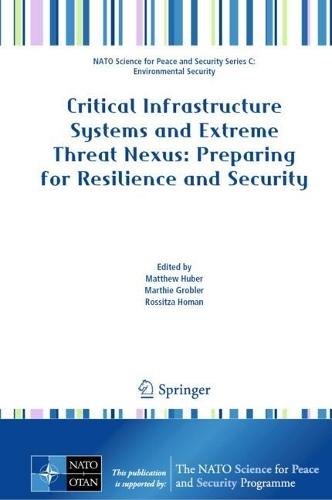
This book synthesizes the findings from a collaborative workshop featuring leading experts from academia, government, and industry, aimed at addressing the intricate interdependencies between climate change, cybersecurity, and critical infrastructure resilience. Delve into key themes such as the vulnerabilities of our energy sector against emerging hazards, the role of autonomous uncrewed systems in maintaining undersea infrastructure, and the metrics necessary for a climate-adapted cyber-physical grid. With chapters like Mapping Critical Infrastructure Interdependencies and Beyond the Trend: Climate Variability as a Threat Multiplier, this book provides a nuanced understanding of how climate change exacerbates risks and challenges across various sectors. The workshop's dynamic format, including keynote presentations, tabletop exercises, and scenario mapping, has informed the development of actionable strategies for enhancing resilience. Readers will gain insights into diversified reservoir management for water security, the implications of quantum technology on cybersecurity, and the need for a robust response to climate variability. This book is essential for policymakers, researchers, and practitioners seeking to navigate the complexities of climate adaptation and risk management. Join us in exploring innovative pathways to secure our infrastructure and ensure a sustainable future in the face of unprecedented challenges.
Full Product Details
Author: Matthew Huber ,
Marthie Grobler ,
Rossitza Homan
Publisher: Springer Nature Switzerland AG
Imprint: Springer Nature Switzerland AG
ISBN: 9783032131690
ISBN 10: 3032131693
Pages: 406
Publication Date: 20 February 2026
Audience:
College/higher education
,
Professional and scholarly
,
Postgraduate, Research & Scholarly
,
Professional & Vocational
Format: Hardback
Publisher's Status: Forthcoming
Availability: Not yet available

This item is yet to be released. You can pre-order this item and we will dispatch it to you upon its release.
Author Information
Matthew Huber David E. Ross Professor in the Earth, Atmospheric, and Planetary Sciences Department at Purdue University Matthew Huber is a professor in the Earth, Atmospheric, and Planetary Sciences Department at Purdue University and the inaugural David E. Ross Director of the Institute for a Sustainable Future, Purdue’s transdisciplinary institute working on both fundamental and applied research in areas aligned with the United Nations Sustainable Development Goals. Huber’s scholarship has been internationally recognized for its far-reaching global conclusions on Earth’s habitability, resilience, and sustainability on long time horizons. His research areas include the physical processes generating tropical “thermostats,” the polar amplification of warming, and the environmental, economic, ecological and evolutionary implications of these processes. Over the past decade, Huber’ has shifted focus to emphasize more applied and solutions-oriented research to help society build a better future. Planning for future needs requires seeing energy, environment, economics, climate, health, politics and society as linked systems and considering risk, resiliency, and security in all of these areas concurrently. Marthie Grobler Principal Research Scientist, CSIRO Dr Marthie Grobler is a Principal Research Scientist at CSIRO’s Data61, where she leads CSIRO’s strategic portfolio on Critical Infrastructure Protection and Resilience. Her research focuses on strengthening the security and resilience of essential systems and services by addressing cybersecurity governance, risk mitigation, and the complex interdependencies across critical infrastructure sectors. With a strong emphasis on human factors and digital trust, Grobler’s work enhances the usability and adoption of security solutions in real-world environments. She is actively involved in executive education and policy development, contributing to national efforts to build infrastructure resilience and public confidence in digital systems. Her work informs cyber policy and capability-building initiatives, helping ensure that Australia’s critical infrastructure remains secure, adaptive, and interconnected in the face of evolving threats. Rossitza Homan Manager, Resilience and Regulatory Effects Department, Sandia National Laboratories Dr. Rossitza Homan is a distinguished leader at Sandia National Laboratories, where she oversees research, capability development, and the deployment of critical solutions for national security missions. As the head of the Risk and Resilience of Complex Systems department, Dr. Homan is dedicated to creating innovative, scientifically sound solutions that provide decision-makers across the national security enterprise with valuable insights, thereby enhancing the resilience of critical infrastructures in the physical, cyber, and information domains. Dr. Homan drives strategic initiatives, fosters partnerships, and manages large, multidisciplinary projects that support national security, global security, integrated deterrence, and complex systems resilience. She leads teams working with both U.S. government and non-government agencies, focusing on areas such as multi-modal intelligence, cyber-physical resilience, and artificial intelligence. Her collaborative efforts extend to U.S. Federally Funded R&D Centers, academia, and various domestic and international stakeholders.