Overview
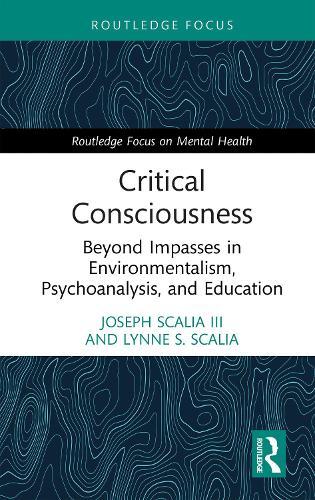
Critical Consciousness provides insight into the antagonism and disputative dialogue present in contemporary discourse. Taking a broad, pluralistic psychoanalytic perspective, the authors shed light on how and why ideology and conflict have infiltrated education, environmentalism, and psychoanalysis. This book unpacks forms of indoctrination and rejection of new ideas in environmentalism, considers the desubjectification of the human in mental health ""services,"" and assesses how the educational world needs leaders who can articulate unspoken educational aims that perpetuate inequalities, hidden oppression, and their pathogenic effects on disenfranchised groups. This book takes account of the competing schools of psychoanalysis, their members' dismissiveness and enmity toward each other, and their rationalized resistances to discussion across the aisles. From that viewscape, a challenging path forward is proposed. Critical Consciousness will be of great interest to psychoanalysts in practice and in training, and to readers interested in the psychological aspects of dehumanization, competition, and opposing group identity.
Full Product Details
Author: Joseph Scalia III ,
Lynne S. Scalia
Publisher: Taylor & Francis Ltd
Imprint: Routledge
Weight: 0.320kg
ISBN: 9781032864143
ISBN 10: 1032864141
Pages: 76
Publication Date: 22 September 2025
Audience:
Professional and scholarly
,
College/higher education
,
Professional & Vocational
,
Postgraduate, Research & Scholarly
Format: Hardback
Publisher's Status: Active
Availability: Manufactured on demand

We will order this item for you from a manufactured on demand supplier.
Reviews
“In his chapter on the environment, Joseph Scalia III addresses how initial liberatory impulses become oppressive once institutionally operationalized as he’s experienced in environmental and psychoanalytic organizations; moreover, we’re shown how the gadfly function in the midst of such ossified structures can be deeply isolating for the citizen-psychoanalyst-social critic. But Joseph doesn’t just offer the reader vision. Visions are cheap. The author addresses how they're to be actualized; this is where the rubber meets the road.” – Risa Mandell, LCSW; DysUnited Founding Member “Joseph Scalia begins Critical Consciousness by emphasizing the limits of our understanding in everything we do. He illustrates this claim in his discussion of his work with the environmental movement in Montana. From there, he shows how the same issues plague the psychoanalytic world. This struck me as one of the most meaningful and useful stories of how psychoanalysis and environmental activism can be brought together. We all need to read what he has to say.” – J. Todd Dean, MD psychiatrist and psychoanalyst in St. Louis, MO. He has been on the editorial boards of the Journal of the American Psychoanalytic Association and Division/Review. He is also a member of The DysUnited, a psychoanalytically informed activist group. “Scalia invites us all to join together in becoming unsettled, uncomfortable and unconformist enough to do better as humans. And for us psychoanalysts, this book meets the moment in which the field grapples with the growing pains of post-modernity. Scalia’s work compels us to rethink maturity – so often overtly or covertly misconstrued as respectability – orienting us instead toward a radical individual and collective mode of being in the world by transcending it through secular spirituality.” – Rana Sioufi, PhD, Supervising Psychologist in New York City, member of Dysunited. “In a moment where solidarity is hard to find, among psychoanalysts and among activists, the Scalias’ book takes a close and quite personal look at the psychic mechanisms that lead us to dissemble, fracture and turn against our own best interests. When negative hallucinations threaten to ensnare us all, this book wonders if there is a way to not only not join in the madness, but to actually lessen its impact.” – Tracy D. Morgan, Psychoanalyst, LCSW-R, M.Phil., Founding Editor, New Books in Psychoanalysis
“In his chapter on the environment, Joseph Scalia III addresses how initial liberatory impulses become oppressive once institutionally operationalized as he’s experienced in environmental and psychoanalytic organizations; moreover, we’re shown how the gadfly function in the midst of such ossified structures can be deeply isolating for the citizen-psychoanalyst-social critic. But Joseph doesn’t just offer the reader vision. Visions are cheap. The author addresses how they're to be actualized; this is where the rubber meets the road.” – Risa Mandell, LCSW; DysUnited Founding Member “Joseph Scalia begins Critical Consciousness by emphasizing the limits of our understanding in everything we do. He illustrates this claim in his discussion of his work with the environmental movement in Montana. From there, he shows how the same issues plague the psychoanalytic world. This struck me as one of the most meaningful and useful stories of how psychoanalysis and environmental activism can be brought together. We all need to read what he has to say.” – J. Todd Dean, MD psychiatrist and psychoanalyst in St. Louis, MO. He has been on the editorial boards of the Journal of the American Psychoanalytic Association and Division/Review. He is also a member of The DysUnited, a psychoanalytically informed activist group. “Scalia invites us all to join together in becoming unsettled, uncomfortable and unconformist enough to do better as humans. And for us psychoanalysts, this book meets the moment in which the field grapples with the growing pains of post-modernity. Scalia’s work compels us to rethink maturity – so often overtly or covertly misconstrued as respectability – orienting us instead toward a radical individual and collective mode of being in the world by transcending it through secular spirituality.” – Rana Sioufi, PhD, Supervising Psychologist in New York City, member of Dysunited. “In a moment where solidarity is hard to find, among psychoanalysts and among activists, the Scalias’ book takes a close and quite personal look at the psychic mechanisms that lead us to dissemble, fracture and turn against our own best interests. When negative hallucinations threaten to ensnare us all, this book wonders if there is a way to not only not join in the madness, but to actually lessen its impact.” – Tracy D. Morgan, Psychoanalyst, LCSW-R, M.Phil., Founding Editor, New Books in Psychoanalysis “In his chapter on the environment, Joseph Scalia III addresses how initial liberatory impulses become oppressive once institutionally operationalized as he’s experienced in environmental and psychoanalytic organizations; moreover, we’re shown how the gadfly function in the midst of such ossified structures can be deeply isolating for the citizen-psychoanalyst-social critic. But Joseph doesn’t just offer the reader vision. Visions are cheap. The author addresses how they're to be actualized; this is where the rubber meets the road.” Risa Mandell, LCSW, founding member of DysUnited “Joseph Scalia begins Critical Consciousness by emphasizing the limits of our understanding in everything we do. He illustrates this claim in his discussion of his work with the environmental movement in Montana. From there, he shows how the same issues plague the psychoanalytic world. This struck me as one of the most meaningful and useful stories of how psychoanalysis and environmental activism can be brought together. We all need to read what he has to say.” J. Todd Dean, MD, psychiatrist and psychoanalyst in St. Louis, MO, has been on the editorial boards of the Journal of the American Psychoanalytic Association and Division/Review, and also a member of DysUnited, a psychoanalytically informed activist group “Scalia invites us all to join together in becoming unsettled, uncomfortable, and unconformist enough to do better as humans. And for us psychoanalysts, this book meets the moment in which the field grapples with the growing pains of post-modernity. Scalia’s work compels us to rethink maturity – so often overtly or covertly misconstrued as respectability – orienting us instead toward a radical individual and collective mode of being in the world by transcending it through secular spirituality.” Rana Sioufi, PhD, supervising psychologist in New York City, member of DysUnited “In a moment where solidarity is hard to find, among psychoanalysts and among activists, the Scalias’ book takes a close and quite personal look at the psychic mechanisms that lead us to dissemble, fracture, and turn against our own best interests. When negative hallucinations threaten to ensnare us all, this book wonders if there is a way to not only not join in the madness, but to actually lessen its impact.” Tracy D. Morgan, LCSW-R, M.Phil., psychoanalyst and founding editor of New Books in Psychoanalysis
Author Information
Joseph Scalia III, PsyD, is a practicing psychoanalyst, and a social and environmental critic and activist based in Colorado, USA. Lynne S. Scalia, EdD, is an educator from Montana. She has served as a teacher, school district superintendent, and a high school, middle school, and elementary principal, all in public schools. Her work is informed by psychoanalysis and institutional ethnography. Scalia’s focus is on rurality, critical pedagogy, leadership, and school reform.