Overview
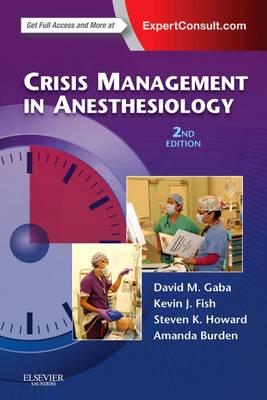
The fully updated Crisis Management in Anesthesiology continues to provide updated insights on the latest theories, principles, and practices in anesthesiology. From anesthesiologists and nurse anesthetists to emergency physicians and residents, this medical reference book will effectively prepare you to handle any critical incident during anesthesia. A comprehensive discussion of the latest theories, principles and practices for CRM in perioperative practice and will be a useful resource for anaesthetists of all grades and levels of experience Reviewed by British Journal of Anaesthesia, Jun 2015 ...this book contains essential information that all anesthesiologists should know or readily be able to easily reference... Reviewed by Jane Torrie, Oct 2015 Every anesthesia provider needs to study, not just read, this new edition, even if you read the first edition. Also, distilled instructions of key elements of the cases covered in this book need to be included in manuals made available for emergencies (although that, too, needs further study on how best to use them). If I were your patient, I would ask if you had studied these principles. If you hadn't, I might ask for another health care provider into whose hands I would want to entrust my life. Foreword by: Jeffrey B. Cooper, PhD Harvard Medical School, Boston, Massachusetts, July 2015 Identify and respond to a broad range of life-threatening situations with the updated Catalog of Critical Incidents, which outlines what may happen during surgery and details the steps necessary to respond to and resolve the crisis. React quickly to a range of potential threats with an added emphasis on simulation of managing critical incidents. Useful review for all anesthesia professionals of the core knowledge of diagnosis and management of many critical events. Explore new topics in the ever-expanding anesthesia practice environment with a detailed chapter on debriefing. Expert Consult eBook version included with purchase.
Full Product Details
Author: David M. Gaba, MD. ,
Kevin J. Fish, MSc, MB, ChB, FRCA, FRCPC ,
Steven K. Howard ,
Amanda Burden, MD.
Publisher: Elsevier Health Sciences
Imprint: Churchill Livingstone
Edition: 2nd Revised edition
Dimensions:
Width: 15.20cm
, Height: 1.50cm
, Length: 22.90cm
Weight: 1.000kg
ISBN: 9780443065378
ISBN 10: 0443065373
Pages: 432
Publication Date: 29 September 2014
Audience:
Professional and scholarly
,
Professional & Vocational
Format: Paperback
Publisher's Status: Active
Availability: Available To Order

We have confirmation that this item is in stock with the supplier. It will be ordered in for you and dispatched immediately.
Reviews
The distinguished authors of this latest edition build on these foundations, which now include new chapters on teaching CRM and the vitally important skill of debriefing colleagues after they have experienced such challenging events. The catalogue of critical incidents has been completely overhauled and updated, to reflect contemporary practice with nearly 20 new scenarios added. By British Journal of Anaesthesia, Jun 2015 Those preparing for examinations, including maintenance of certification, or those preparing others for these exams will find this book to be an excellent resource. By Jane Torrie, Oct 2015
This is a tremendous book with the single focus of improving patient safety in the fluid situation of anesthesia administration. Every residency program has a curriculum to deal with predictable situations, but not necessarily with unpredictable situations. Other books on similar topics stress medical knowledge to improve the safety of patients, but this is the only one that highlights the importance of the development of cognitive and behavioral skills that are important for averting disaster in crisis situations. This is a must read for safe and better care of patients under anesthesia. - Tariq M. Malik, MD, University of Chicago Pritzker School of Medicine Doody Score: 100 - 5 Stars This book is a welcome and long overdue update to a classic of crisis resource management in anaesthesia. It provides a comprehensive discussion of the latest theories, principles and practices for CRM in perioperative practice and will be a useful resource for anaesthetists of all grades and levels of experience, and the wider perioperative team, including trainees studying for post graduate examinations. Reviewed by ? L. J. Brennan, on behalf of?the British Journal of Anaesthesia. Date: 28/07/15.
-The distinguished authors of this latest edition build on these foundations, which now include new chapters on teaching CRM and the vitally important skill of debriefing colleagues after they have experienced such challenging events. The catalogue of critical incidents has been completely overhauled and updated, to reflect contemporary practice with nearly 20 new scenarios added-. Reviewed by British Journal of Anaesthesia, Jun 2015 -Those preparing for examinations, including maintenance of certification, or those preparing others for these exams will find this book to be an excellent resource.- Reviewed by Jane Torrie, Oct 2015 -This is a tremendous book with the single focus of improving patient safety in the fluid situation of anesthesia administration. Every residency program has a curriculum to deal with predictable situations, but not necessarily with unpredictable situations. Other books on similar topics stress medical knowledge to improve the safety of patients, but this is the only one that highlights the importance of the development of cognitive and behavioral skills that are important for averting disaster in crisis situations. This is a must read for safe and better care of patients under anesthesia.? -Tariq M. Malik, MD (University of Chicago Pritzker School of Medicine) Doody's Score: 100 - 5 Stars! ? -Who should buy this book? The authors state in the Preface that they wrote it for everyone who administers anesthesia, from trainees to experienced practitioners. I have to say that I enthusiastically agree!- -Manuel Pardo, Jr., M.D., University of California (Anesthesiology 2016; 124:738-40) The distinguished authors of this latest edition build on these foundations, which now include new chapters on teaching CRM and the vitally important skill of debriefing colleagues after they have experienced such challenging events. The catalogue of critical incidents has been completely overhauled and updated, to reflect contemporary practice with nearly 20 new scenarios added. Reviewed by British Journal of Anaesthesia, Jun 2015 Those preparing for examinations, including maintenance of certification, or those preparing others for these exams will find this book to be an excellent resource. Reviewed by Jane Torrie, Oct 2015 This is a tremendous book with the single focus of improving patient safety in the fluid situation of anesthesia administration. Every residency program has a curriculum to deal with predictable situations, but not necessarily with unpredictable situations. Other books on similar topics stress medical knowledge to improve the safety of patients, but this is the only one that highlights the importance of the development of cognitive and behavioral skills that are important for averting disaster in crisis situations. This is a must read for safe and better care of patients under anesthesia.? -Tariq M. Malik, MD (University of Chicago Pritzker School of Medicine) Doody's Score: 100 - 5 Stars! ? Who should buy this book? The authors state in the Preface that they wrote it for everyone who administers anesthesia, from trainees to experienced practitioners. I have to say that I enthusiastically agree! -Manuel Pardo, Jr., M.D., University of California (Anesthesiology 2016; 124:738-40) The distinguished authors of this latest edition build on these foundations, which now include new chapters on teaching CRM and the vitally important skill of debriefing colleagues after they have experienced such challenging events. The catalogue of critical incidents has been completely overhauled and updated, to reflect contemporary practice with nearly 20 new scenarios added. Reviewed by British Journal of Anaesthesia, Jun 2015 Those preparing for examinations, including maintenance of certification, or those preparing others for these exams will find this book to be an excellent resource. Reviewed by Jane Torrie, Oct 2015 This is a tremendous book with the single focus of improving patient safety in the fluid situation of anesthesia administration. Every residency program has a curriculum to deal with predictable situations, but not necessarily with unpredictable situations. Other books on similar topics stress medical knowledge to improve the safety of patients, but this is the only one that highlights the importance of the development of cognitive and behavioral skills that are important for averting disaster in crisis situations. This is a must read for safe and better care of patients under anesthesia.? -Tariq M. Malik, MD (University of Chicago Pritzker School of Medicine) Doody's Score: 100 - 5 Stars! ? Who should buy this book? The authors state in the Preface that they wrote it for everyone who administers anesthesia, from trainees to experienced practitioners. I have to say that I enthusiastically agree! -Manuel Pardo, Jr., M.D., University of California ( Anesthesiology 2016; 124:738-40) The distinguished authors of this latest edition build on these foundations, which now include new chapters on teaching CRM and the vitally important skill of debriefing colleagues after they have experienced such challenging events. The catalogue of critical incidents has been completely overhauled and updated, to reflect contemporary practice with nearly 20 new scenarios added. By British Journal of Anaesthesia, Jun 2015 Those preparing for examinations, including maintenance of certification, or those preparing others for these exams will find this book to be an excellent resource. By Jane Torrie, Oct 2015 This is a tremendous book with the single focus of improving patient safety in the fluid situation of anesthesia administration. Every residency program has a curriculum to deal with predictable situations, but not necessarily with unpredictable situations. Other books on similar topics stress medical knowledge to improve the safety of patients, but this is the only one that highlights the importance of the development of cognitive and behavioral skills that are important for averting disaster in crisis situations. This is a must read for safe and better care of patients under anesthesia. - Tariq M. Malik, MD, University of Chicago Pritzker School of Medicine Doody Score: 100 - 5 Stars This book is a welcome and long overdue update to a classic of crisis resource management in anaesthesia. It provides a comprehensive discussion of the latest theories, principles and practices for CRM in perioperative practice and will be a useful resource for anaesthetists of all grades and levels of experience, and the wider perioperative team, including trainees studying for post graduate examinations. Reviewed by ? L. J. Brennan, on behalf of?the British Journal of Anaesthesia, July 2015 When we wrote the Foreword to the first edition of this book, I didn't know that it would become a classic. It is still widely read in the anesthesiology and simulation communities. I also didn't know that it would take more than 20 years to update it to a second edition. To the credit of the authors, there was so much novel, excellent material in the first edition that much of the original work has held up well through the ensuing years. Thus what was written in the Foreword to the first edition still holds true...Many things have changed in the past 20 years that make a new edition of this pioneering text necessary. Foreword by: Jeffrey B. Cooper, ?Professor of Anaesthesia, Harvard Medical School, Feb 2015
The distinguished authors of this latest edition build on these foundations, which now include new chapters on teaching CRM and the vitally important skill of debriefing colleagues after they have experienced such challenging events. The catalogue of critical incidents has been completely overhauled and updated, to reflect contemporary practice with nearly 20 new scenarios added. Reviewed by British Journal of Anaesthesia, Jun 2015 Those preparing for examinations, including maintenance of certification, or those preparing others for these exams will find this book to be an excellent resource. Reviewed by Jane Torrie, Oct 2015 This is a tremendous book with the single focus of improving patient safety in the fluid situation of anesthesia administration. Every residency program has a curriculum to deal with predictable situations, but not necessarily with unpredictable situations. Other books on similar topics stress medical knowledge to improve the safety of patients, but this is the only one that highlights the importance of the development of cognitive and behavioral skills that are important for averting disaster in crisis situations. This is a must read for safe and better care of patients under anesthesia.? -Tariq M. Malik, MD (University of Chicago Pritzker School of Medicine) Doody's Score: 100 - 5 Stars! ? Who should buy this book? The authors state in the Preface that they wrote it for everyone who administers anesthesia, from trainees to experienced practitioners. I have to say that I enthusiastically agree! -Manuel Pardo, Jr., M.D., University of California (Anesthesiology 2016; 124:738-40)
Author Information
David Gaba is a Professor, Anesthesiology, Perioperative and Pain Medicine and Associate Dean for Immersive and Simulation-based Learning in Stanford University School of Medicine. Steven Howard is a Professor, Med Center Line, Anesthesiology, Perioperative and Pain Medicine and Chair, Clinical Competence Committee, Department of Anesthesia. Amanda Burden is a Professor of Anesthesiology, Cooper Medical School of Rowan University and Director, Simulation Program, Cooper University Health Care.