Overview
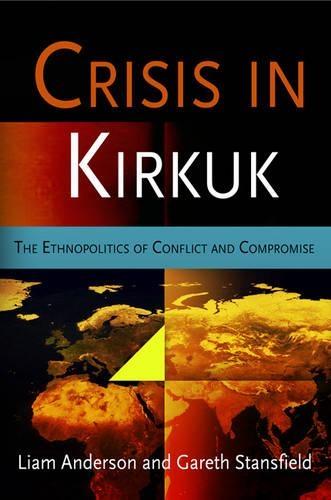
Despite dramatic improvements in the security environment in most parts of Iraq, still unresolved are many core political issues, foremost of which is the conflict over the city and region of Kirkuk. With immense oil reserves and a diverse population of Kurds, Arabs, and Turkmens, Kirkuk in recent history has been scarred by interethnic violence and state-sponsored ethnic cleansing. Throughout the twentieth century, successive Arab Iraqi governments engaged in a brutal campaign to increase Kirkuk's Arab population at the expense of Kurds and Turkmens. Following the invasion of Iraq in 2003, a newly empowered Kurdish leadership has sought to reverse the effects of the Arabization campaign and to hold a referendum on incorporating Kirkuk into the Kurdistan Region. The Kurds' efforts are, however, strongly opposed by Kirkuk's Turkmens, Arabs, and also most states in the region. In Crisis in Kirkuk, Liam Anderson and Gareth Stansfield offer a dispassionate analysis of one of Iraq's most pressing and unresolved problems. Drawing on extensive research and fieldwork, the authors investigate the claims to ownership made by each of Kirkuk's competing communities. They consider the constitutional mechanisms put in place to address the issue and the problems that have plagued their implementation. The book concludes with an assessment of the measures needed to resolve the crisis in Kirkuk, stressing that finding a compromise acceptable to all sides is vital to the future stability of Iraq.
Full Product Details
Author: Liam Anderson ,
Gareth Stansfield
Publisher: University of Pennsylvania Press
Imprint: University of Pennsylvania Press
Dimensions:
Width: 15.20cm
, Height: 2.80cm
, Length: 22.90cm
Weight: 0.649kg
ISBN: 9780812241761
ISBN 10: 0812241762
Pages: 312
Publication Date: 09 September 2009
Audience:
College/higher education
,
Tertiary & Higher Education
Format: Hardback
Publisher's Status: Out of Print
Availability: In Print

Limited stock is available. It will be ordered for you and shipped pending supplier's limited stock.
Reviews
""Anderson and Stansfield, two of the world's leading experts on Iraq, explain that it is difficult to write objectively about Kirkuk, but that it is impossible to be perceived as writing objectively. . . . This careful study addresses the conflicted history of Kirkuk to 2003, the three major perspectives, and the role of Kirkuk in the political development of present Iraq. . . . This excellent treatise deserves wide attention.""—Choice
Anderson and Stansfield, two of the world's leading experts on Iraq, explain that it is difficult to write objectively about Kirkuk, but that it is impossible to be perceived as writing objectively... This careful study addresses the conflicted history of Kirkuk to 2003, the three major perspectives, and the role of Kirkuk in the political development of present Iraq... This excellent treatise deserves wide attention. -Choice
Anderson and Stansfield, two of the world's leading experts on Iraq, explain that it is difficult to write objectively about Kirkuk, but that it is impossible to be perceived as writing objectively. . . . This careful study addresses the conflicted history of Kirkuk to 2003, the three major perspectives, and the role of Kirkuk in the political development of present Iraq. . . . This excellent treatise deserves wide attention. -Choice
"""Anderson and Stansfield, two of the world's leading experts on Iraq, explain that it is difficult to write objectively about Kirkuk, but that it is impossible to be perceived as writing objectively. . . . This careful study addresses the conflicted history of Kirkuk to 2003, the three major perspectives, and the role of Kirkuk in the political development of present Iraq. . . . This excellent treatise deserves wide attention.""—Choice"
Author Information
Liam Anderson is Associate Professor of Political Science at Wright State University and Senior Honorary Research Fellow at the Centre for Ethno-Political Studies at the University of Exeter. Gareth Stansfield is Professor of Middle East Politics at the Institute of Arab and Islamic Studies and Director of the Centre for Ethno-Political Studies at the University of Exeter and Associate Fellow of the Middle East Programme at the Royal Institute for International Affairs.