|
|
|||
|
||||
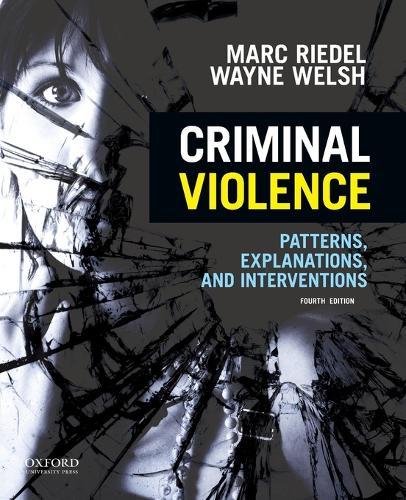
OverviewCriminal Violence: Patterns, Explanations, and Prevention, Fourth Edition, provides a current, comprehensive, and highly accessible overview of major topics, theories, and controversies within the field of criminal violence.Using engaging, straightforward language, Marc Riedel and Wayne Welsh consider diverse theoretical perspectives and present state-of-the-art prevention and intervention methods. In their discussions of various types of violence, the authors employ a consistent and coherent three-part framework that allows students to see the important relationships between research, theory, and application. Full Product DetailsAuthor: Riedel , WelshPublisher: Oxford University Press Inc Imprint: Oxford University Press Inc Edition: 4th edition Dimensions: Width: 19.10cm , Height: 2.30cm , Length: 23.40cm Weight: 0.720kg ISBN: 9780199386130ISBN 10: 0199386137 Pages: 400 Publication Date: 01 June 2015 Audience: College/higher education , Tertiary & Higher Education Format: Paperback Publisher's Status: Active Availability: To order Stock availability from the supplier is unknown. We will order it for you and ship this item to you once it is received by us. Table of Contents"Section I. Introduction 1. Violence and Criminal Violence Defining Violence Turning Violence into Criminal Violence Perspectives on Criminal Violence -- A Criminological Perspective -- A Criminal Justice Perspective -- Public Health Perspectives How Is Criminal Violence Studied? -- Theoretical Perspectives -- Research Methods -- Challenges of Violence Research What Lies Ahead? -- A Tripartite Approach to Understanding Violence Conclusions Discussion Questions Suggested Readings References Section II. Tools 2. Measures of Violence The Application of Measures of Violence Overview Crime Rates Uniform Crime Reports -- Collecting Violent Crime Data National Incident-Based Reporting System -- Comparing the Uniform Crime Report and the National Incident-Based Reporting System National Crime Victimization Survey -- The Redesign of the National Crime Victimization Survey -- The National Crime Victimization Survey Today -- Strengths and Limitations of the National Crime Victimization Survey -- Limitations of the National Crime Victimization Survey Discussion Questions Suggested Readings References 3. Violence in Other Times and Places Violence in the Early United States White and Native American Warfare -- The Trail of Tears Slavery, African Americans, and Violence -- Lynching Social Banditry Prohibition -- The Role of Organized Crime Contemporary Trends in Violence -- Impersonalization of Homicide -- Violence in Other Places Conclusions Discussion Questions Suggested Readings Note References Section III. Types of Criminal Violence 4. Homicides and Assaults Homicides and Assaults in the United States -- Age, Gender, and Race -- Other Characteristics Arrest Clearances -- Multiple Murders Trends -- Trends in Arrest Clearances -- Trends in Serial Homicide Explanations -- Symbolic Interaction -- Subcultural Theories -- Explaining the Characteristics of Arrest Clearances -- Explaining Serial Homicides Interventions -- Increasing Clearance Rates -- Apprehending Serial Killers Conclusions Discussion Questions Suggested Readings References 5. Robbery Patterns and Trends Explanations -- Strain Theory and Differential Opportunity Theory -- Control Theory -- Differential Association Theory -- Symbolic Interaction Theory -- Feminist Theory -- Routine Activities Theory Interventions Criminal Justice Approaches -- Opportunity Reduction Strategies Conclusions Discussion Questions Suggested Readings Note References 6. Rapes and Sexual Assaults Definitions Patterns and Trends -- Characteristics of Victims, Offenders, and Offenses Explanations -- Psychiatric Perspectives -- Feminist Theories -- Social Cognitive Theories -- Multifactor Theories Interventions -- Rape Law Reform -- Incarceration -- Sex Offender Notification and Registration Laws -- Victim Resistance -- Victim Services -- Sexual Violence Education -- Sex Offender Treatment Programs Conclusions Discussion Questions Suggested Readings Notes References 7. Hate Crimes Definitions Patterns and Trends Explanations -- Group Conflict Theories -- Strain Theory -- Social Learning Theory Interventions -- Law Enforcement Responses -- Hate Crime Legislation -- Civil Lawsuits -- Educational Strategies Conclusions Discussion Questions Suggested Readings Notes References Section IV. Violence in Specific Settings and Contexts 8. Intimate Violence ""People Hit Family Members Because They Can"" Patterns and Risks -- Intimate Partner Violence -- Violence Toward Family Members Trends -- Intimate Partners -- Child Killings Explanations -- Intimate Partner Violence -- Violence Toward Children Interventions -- Reducing Intimate Partner Violence -- Reducing Family Violence Conclusion: Is It Time for Another Look? Discussion Questions Suggested Readings References 9. Workplace Violence Introduction -- Multiplier Effects Patterns and Trends -- Types of Workplace Violence -- Nonfatal Workplace Violence -- Workplace Homicides -- ""Going Postal"" Explanations -- Routine Activities -- Rational Choice and Aggression in the Workplace Interventions -- Prevention Policies and Strategies -- Empirical Evidence Discussion Questions Suggested Readings References 10. School Violence Patterns and Trends -- Fear and Avoidance -- School Security Responses -- School Incidents and Disciplinary Actions -- Student Victimization -- Teacher Victimization -- Self-Reported School Violence Explanations of School Disorder -- Individual Explanations -- School-Level Theories -- Community and Multilevel Explanations of School Disorder Interventions -- School-Based Violence Prevention: What Works? -- The National Study of Delinquency Prevention in Schools -- Examples of School-Based Prevention Programs Conclusions Discussion Questions Suggested Readings References 11. Gangs and Gang Violence Patterns and Trends -- Growth and Change in Gangs -- Gang Organization and Violence Explanations -- Strain Theories -- Cultural Deviance -- Social Control -- Interactional Theory Interventions -- Reducing Gang Violence in Boston -- Pulling Levers in Other Jurisdictions Conclusions Discussion Questions Suggested Readings References 12. The Role of Firearms in Violence Patterns and Trends -- Crimes Involving Firearms -- Victims -- Characteristics of Offenders -- Firearm Acquisition, Ownership, and Use Explanations -- Symbolic Interaction Theory -- Routine Activities and Illegal Markets -- Cultural Theories and Firearm Availability -- Media Violence Interventions -- Disrupting Illegal Gun Markets -- Gun Control Legislation -- Right-to-Carry Laws -- Firearm Injury Prevention Programs Conclusions Discussion Questions Suggested Readings Note References 13. The Role of Drugs and Alcohol in Violence Patterns Explanations -- Biological and Psychological Effects -- Routine Activities -- Cultural Explanations -- Structural Explanations -- Situational Explanations Interventions -- Criminal Justice Approaches -- Public Health Approaches Conclusions Discussion Questions Suggested Readings Notes References 14. Terrorism Definitions Patterns and Trends -- A Brief History of Terrorism -- State-Sponsored Terrorism -- Terrorist Tactics -- Types of Terrorists -- Terrorist Incidents Explanations -- Strain Theory -- Social Learning Theory -- Conflict Theory Interventions -- The 9/11 Report -- The Patriot Act -- Military Action -- Diplomacy and International Cooperation Conclusions Discussion Questions Suggested Readings Notes References Section V. Conclusion 15. Prevention and Punishment: A Delicate Balance Criminal Justice Approaches -- Criminal Justice Goals -- The Death Penalty -- Three-Strikes Laws -- The Limits of Punishment Public Health Approaches to Punishment and Prevention -- The Multilevel Risk Approach -- Evidence-Based Practices and Programs -- Office of Juvenile Justice and Delinquency Prevention's Comprehensive Strategy for Serious, Violent, and Chronic Juvenile Offenders -- Community-Based Approaches -- Blueprints for Healthy Youth Development When Violent Crime Goes Down, Do We Know Why? Conclusions Discussion Questions Suggested Readings References"ReviewsThe ideal book for this course needs to touch on a wide variety of violence, causation, and patterns. This text does a really good job of covering these topics, and the tripartite approach of examining patterns, causes, and prevention flows rather nicely. --Carol Higgins O'Brien, University of Massachusetts Lowell This text provides a well-researched and comprehensive discussion of the history of criminal violence in the United States, contemporary violent activities, types of violence, and governments' responses to violence. --Abu Mboka, California State University, Stanislaus Criminal Violence offers a broad survey of violence by both type and context, and its 'tripartite approach' of patterns, explanations, and interventions is logical and intuitive. The book is clearly written and user friendly. -James Densley, Metropolitan State University The ideal book for this course needs to touch on a wide variety of violence, causation, and patterns. This text does a really good job of covering these topics, and the tripartite approach of examining patterns, causes, and prevention flows rather nicely. --Carol Higgins O'Brien, University of Massachusetts Lowell This text provides a well-researched and comprehensive discussion of the history of criminal violence in the United States, contemporary violent activities, types of violence, and governments' responses to violence. --Abu Mboka, California State University, Stanislaus Criminal Violence offers a broad survey of violence by both type and context, and its 'tripartite approach' of patterns, explanations, and interventions is logical and intuitive. The book is clearly written and user friendly. -James Densley, Metropolitan State University """The ideal book for this course needs to touch on a wide variety of violence, causation, and patterns. This text does a really good job of covering these topics, and the tripartite approach of examining patterns, causes, and prevention flows rather nicely.""--Carol Higgins O'Brien, University of Massachusetts Lowell ""This text provides a well-researched and comprehensive discussion of the history of criminal violence in the United States, contemporary violent activities, types of violence, and governments' responses to violence.""--Abu Mboka, California State University, Stanislaus ""Criminal Violence offers a broad survey of violence by both type and context, and its 'tripartite approach' of patterns, explanations, and interventions is logical and intuitive. The book is clearly written and user friendly.""-James Densley, Metropolitan State University ""This text is a sober and scholarly look at a social problem that many competitor texts tend to treat like a three-ring circus."" --Christopher Schreck, Rochester Institute of Technology" Author InformationMarc Riedel is Professor of Sociology at Southeastern Louisiana University. Wayne Welsh is Professor of Criminal Justice at Temple University. Tab Content 6Author Website:Countries AvailableAll regions |
||||