Overview
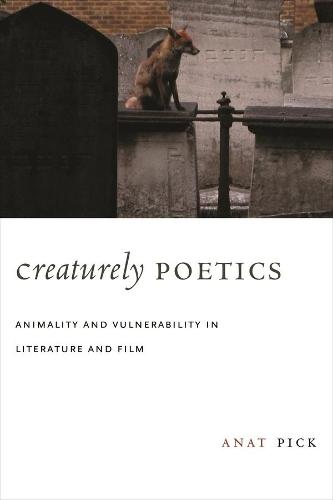
Simone Weil once wrote that ""the vulnerability of precious things is beautiful because vulnerability is a mark of existence,"" establishing a relationship between vulnerability, beauty, and existence transcending the separation of species. Her conception of a radical ethics and aesthetics could be characterized as a new poetics of species, forcing a rethinking of the body's significance, both human and animal. Exploring the ""logic of flesh"" and the use of the body to mark species identity, Anat Pick reimagines a poetics that begins with the vulnerability of bodies, not the omnipotence of thought. Pick proposes a ""creaturely"" approach based on the shared embodiedness of humans and animals and a postsecular perspective on human-animal relations. She turns to literature, film, and other cultural texts, challenging the familiar inventory of the human: consciousness, language, morality, and dignity. Reintroducing Weil's elaboration of such themes as witnessing, commemoration, and collective memory, Pick identifies the animal within all humans, emphasizing the corporeal and its issues of power and freedom. In her poetics of the creaturely, powerlessness is the point at which aesthetic and ethical thinking must begin.
Full Product Details
Author: Anat Pick
Publisher: Columbia University Press
Imprint: Columbia University Press
Dimensions:
Width: 14.00cm
, Height: 1.90cm
, Length: 21.00cm
Weight: 0.383kg
ISBN: 9780231147866
ISBN 10: 0231147864
Pages: 264
Publication Date: 07 April 2011
Audience:
General/trade
,
General
Format: Hardback
Publisher's Status: Active
Availability: Manufactured on demand

We will order this item for you from a manufactured on demand supplier.
Language: English
Reviews
Even more than Anat Pick's preparation and energetic writing, the quality of thought conveyed in this book may be its most significant feature. Here is an original thesis, built from, around, with, and against existing work in related (and unrelated) areas, timely and singular, contributing to several fields and disciplines. The 'creaturely poetics' invoked by Pick work through problems in philosophy, critical theory, film criticism, and literary studies; they address historical questions such as the Holocaust, theoretical/ethical concerns including 'speciesism,' and formal and aesthetic concerns relating to modes and genres in film and literature. Very few scholars can do what Pick has achieved: blending credible film analysis and criticism with animal studies and critical thought. An incredibly inspiring and novel approach to rethinking human relationships with animals. With its compelling account of an ethics based on attentiveness and responsiveness to the vulnerability of animal beings, Pick's important book will steer animal ethics and animals studies discussions in new and productive directions. Creaturely Poetics explores the charged, incandescent space in which the ordinary or the everyday and the mystical or the theological cross on the site of what we call tthe animal.' Working through a dazzling array of readings in literature, film, and philosophy, Pick holds the complex thought of Simone Weil as a lifeline in what is an unflinching and courageous confrontation with the ways we evade what it means to share the earth with our fellow creatures. Animals and the Human Imagination soars. Intellectually exciting, smart, and accessible, this volume will intrigue and revolt, surprise and inspire. The opening overview by Gross is a tour de force and each essay fascinates. Collectively they offer an invitation to think in new ways about what we, perhaps wrongly, call our humanity. I can't imagine a better introduction to the essential new field of critical animal studies. -- Jonathan Safran Foer [A] lively, fascinating, moving book. -- Scott Cowdell Journal of Animal Ethics Vol 2, No 2
Anat Pick's Creaturely Poetics offers an incredibly inspiring and novel approach to rethinking human relationships with animals. With its compelling account of an ethics based on attentiveness and responsiveness to the vulnerability of animal beings, Pick's important book will help to steer discussions in animal ethics and animals studies in new and productive directions. -- Matthew Calarco, California State University, Fullerton, author of Zoographies: The Question of the Animal from Heidegger to Derrida Anat Pick's Creaturely Poetics explores the charged, incandescent space in which the ordinary or the everyday and the mystical or the theological cross on the site of what we call the animal. Working through a dazzling array of readings in literature, film, and philosophy, Pick holds onto the complex thought of Simone Weil as a lifeline in what is an unflinching and courageous confrontation with the ways in which we evade what it means to share the earth with our fellow creatures. -- Cary Wolfe, Bruce and Elizabeth Dunlevie Professor Chair, Department of English, Rice University and author of What Is Posthumanism
Animals and the Human Imagination soars. Intellectually exciting, smart, and accessible, this volume will intrigue and revolt, surprise and inspire. The opening overview by Gross is a tour de force and each essay fascinates. Collectively they offer an invitation to think in new ways about what we, perhaps wrongly, call our humanity. I can't imagine a better introduction to the essential new field of critical animal studies. -- Jonathan Safran Foer [A] lively, fascinating, moving book. -- Scott Cowdell Journal of Animal Ethics This is a beautiful, profound, and important book that works through and around long-held and cherished assumptions, both within and without animal studies. -- Lindgren Johnson Journal for Critical Animal Studies
Author Information
Anat Pick is senior lecturer in film and program leader for film and video: theory and practice at the University of East London. She has published on Henry James and Emmanuel Levinas, Giorgio Agamben, Friedrich Nietzsche, Simone Weil, posthumanist theory, and independent film.