|
|
|||
|
||||
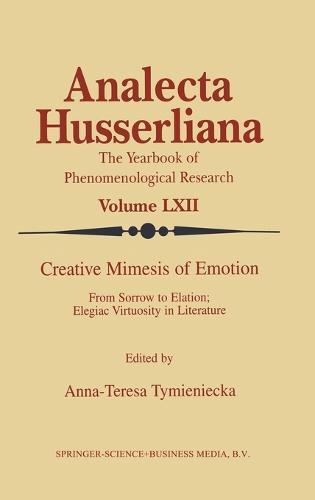
OverviewAre emotions, feelings, sentiments not the stuff of literature? There it is where they project their inner logic of aesthetic transmutation; there, beyond the instrument of language that they command. This collection explores how the lyrical virtualities of life-experience and the elegiac style in literature share a common core, lifting the human significance of life from abysmal vitality to esoteric heights, from abysmal grief to a serene reconciliation with destiny. The ""elegiac sequence"" in the play of emotions, feelings and sentiments brings together life and literary creativity in its transformatory power. Full Product DetailsAuthor: Anna-Teresa TymienieckaPublisher: Kluwer Academic Publishers Imprint: Kluwer Academic Publishers Volume: v. 62 Weight: 0.522kg ISBN: 9780792360070ISBN 10: 0792360079 Pages: 288 Publication Date: 31 May 2000 Audience: College/higher education , Professional and scholarly , Undergraduate , Postgraduate, Research & Scholarly Format: Hardback Publisher's Status: Active Availability: Out of stock The supplier is temporarily out of stock of this item. It will be ordered for you on backorder and shipped when it becomes available. Table of ContentsThe Theme. Acknowledgements. Section One: Aesthetic Transmutation of Vital Emotions in Literary Creativity. Two Types of Elegies: Goethe's Rome Elegies and Rilke's Duino Elegies; A. Giuculescu. Crossblood: Literature and the Drama of Survival; L. Kimmel. Erlebnis of Story; D.F. Castro. Longing and the Phenomenon of Loneliness; J.G. McGraw. Tragedy, Finitude, and the Value-Expressive Dimension; R.D. Ellis. Causes of Unhappiness in Dickens' Little Dorrit and Fowles' The French Lieutenant's Woman; R.J. Wilson III. Section Two: Mourning, Remorse, Silence, Mirth in Their Aesthetic Virtualities. The Christian Sappho: Mourning Albertine in Marceline Desbordes-Valmore's `Le Mal du Pays'; B.S. Watson. Concerned with Oneself and God Alone on Kirkegaard's Concept of Remorse as the Basis for his Literary Theory; A.C. Canan. The Subtractive and Nihilistic Modes of Silence: Heidegger and Beckett, Wittgenstein and Giacometti; S. Bindeman. Words of Wonder, Wit, and Well?... Well-Being! T. Raczka. Between Elation and Sorrow: Aesthetic Experience in the Western European Novel; C. Eykman. Weltschmerz or the Pain of Living; H.H. Rudnick. Vyacheslav Ivanov's Aesthetic: The Sonnet `Love'; I. Vayl. The Death of a Significant Other; G. Backhaus. The Loss of Gregor Samsa and Kafka's Use of Language; B. Prochaska. Section Three: From Abysmal Sorrow to Ecstatic Joy: The Elegiac Transmutation of Feeling. Ecstasies: Emerson's Experience of Elegy; M. Cavitch. Representations of Ecstatic Sorrow and Ecstatic Joy; G.L. Scheper. The Problem of Reconciliation in Remorse: Coleridge's Dramatic Theory and Practice; J.S. Smith. Elegy Rebuffed by Pastoral Eclogue in Wallace Stevens' `Sunday Morning'; S. Feshbach. Le Clezio: de l'heritage a l'origine! Etude du proces-verbal a Pawana, le recit d'un secret; I. Gillet. La Literatura y la Persona Excepcional; M.J. Marin.ReviewsAuthor InformationTab Content 6Author Website:Countries AvailableAll regions |
||||