Overview
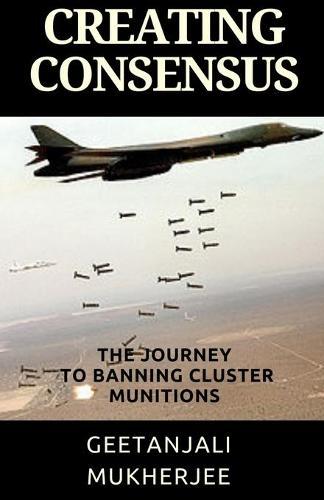
Newly revised and updated edition.This book analyses the events leading up to the cluster munitions ban, the provisions of the treaty, as well as assesses the progress made in the years since towards a world without the presence of cluster munitions. Cluster bombs are weapons that are small but deadly. They often look like small metal canisters, and some of them are painted, giving them the innocuous appearance of a soda can. The unexploded submunitions that are scattered on the ground, in effect, act as landmines, that can kill or severely injure anyone who comes across them, sometimes even years and decades later. It has been reported that 98% of all casualties of cluster munitions are civilians, of which one-third are children. Cluster munitions have been used in numerous conflicts since the Second World War, and it has been estimated that at least 1 billion submunitions were stockpiled globally. For decades, humanitarian organizations sought to limit the use of these weapons, but international consensus on the issue was hard to come by. The campaign to ban cluster munitions faced a monumental and nearly impossible task - to convince governments to agree to stop using a valuable weapon in their arsenals that they stockpiled by the hundreds of thousands, in a political climate where the interests of national security and state sovereignty outweighed humanitarian concerns in almost every instance. However, where many international agreements failed and diplomatic processes stalled, the campaign to ban cluster munitions succeeded. Despite strong opposition from many countries, 107 countries met in Dublin in May 2008 to negotiate and adopt a treaty prohibiting the use, production, transfer and stockpiling of cluster munitions. The outcome of the Oslo Process was a ray of hope among the usual cynicism and disenchantment of similar international processes. This book explores this question: how was this accomplished, and are there any wider lessons to be learned from it?
Full Product Details
Author: Geetanjali Mukherjee
Publisher: Createspace Independent Publishing Platform
Imprint: Createspace Independent Publishing Platform
Dimensions:
Width: 14.00cm
, Height: 1.30cm
, Length: 21.60cm
Weight: 0.286kg
ISBN: 9781517069971
ISBN 10: 1517069971
Pages: 222
Publication Date: 28 August 2015
Audience:
General/trade
,
General
Format: Paperback
Publisher's Status: Active
Availability: Available To Order

We have confirmation that this item is in stock with the supplier. It will be ordered in for you and dispatched immediately.
Author Information
Geetanjali Mukherjee grew up in India, spending her early years in Kolkata, and then attending high school in New Delhi. She attended the University of Warwick, United Kingdom, to read law as an undergraduate. She went on to earn a Masters in Public Administration with a concentration in human rights and social justice from Cornell University, US. She is the author of five other books, and currently lives in Singapore.