Overview
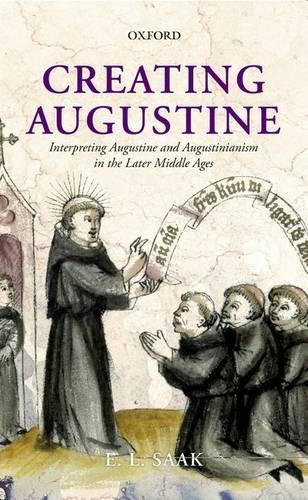
The term 'Augustinianism' has been used by scholars for over a century to refer to trends in medieval philosophy, theology, and politics, which had a major effect on the transformations of European culture and society from the Middle Ages to the onset of modernity. Yet in each of these three disciplines 'Augustinianism' means something different, and the lack of clarity only increases when the debates over the relationship between a late medieval Augustinianism and Martin Luther are considered as well. Based on historical, philological, and iconographic analysis, this study adopts a hermeneutical approach drawn from philosophical hermeneutics, religious studies, and literary and sociological theory to argue for a historical, as distinct from a philosophical or theological referent for the term 'Augustinianism'. The interpretation of Augustine and of a late medieval Augustinianism can only be based historically on the newly created image of Augustine discerned in the writings of the Augustinian Hermits in the early fourteenth century. Recognising the diverse dimensions of this created image is requisite to a historical understanding of Augustine's late medieval reception and impact. Understanding Augustine as a 'created' saint has implications for a wider understanding of Augustine's influence stretching on beyond the later Middle Ages up until the present day.
Full Product Details
Author: Eric Leland Saak (Associate Professor of History at Indiana University Purdue University in Indianapolis (IUPUI))
Publisher: Oxford University Press
Imprint: Oxford University Press
Dimensions:
Width: 14.60cm
, Height: 2.40cm
, Length: 22.20cm
Weight: 0.492kg
ISBN: 9780199646388
ISBN 10: 0199646384
Pages: 276
Publication Date: 21 June 2012
Audience:
College/higher education
,
Professional and scholarly
,
Postgraduate, Research & Scholarly
,
Professional & Vocational
Format: Hardback
Publisher's Status: Active
Availability: Manufactured on demand

We will order this item for you from a manufactured on demand supplier.
Reviews
Saak does some fine work in identifying how library holdings in Augustine's writings figure in the renaissance, shows the social function and fluidity of the Sermones ad fratres in eremo, and tracks the iconography of Augustine ... in image and text through the turn of the sixteenth century. * Travis E. Ables, Journal of Ecclesiastical History *
Saak does some fine work in identifying how library holdings in Augustine's writings figure in the renaissance, shows the social function and fluidity of the Sermones ad fratres in eremo, and tracks the iconography of Augustine ... in image and text through the turn of the sixteenth century. Travis E. Ables, Journal of Ecclesiastical History