Overview
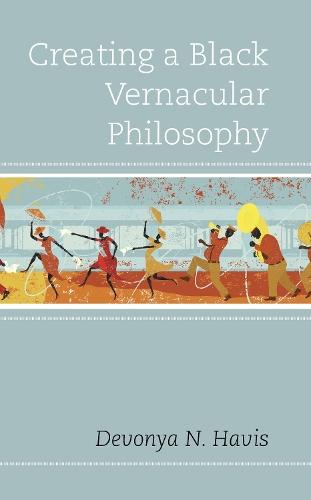
Creating a Black Vernacular Philosophy explores how everyday Black vernacular practices, developed to negotiate survival and joy, can be understood as philosophy in their own right. Devonya N. Havis argues that many unique cultural and intellectual practices of African diasporic communities have done the work of traditional philosophies. Focusing on creative practices that take place within Black American diasporic cultures via narratives, the blues, jazz, work songs, and other expressive forms, this book articulates a form of Black vernacular Philosophy that is centered within and emerges from meaning structures cultivated by Black communities. These distinct philosophical practices, running parallel with and often improvising on European philosophy, should be acknowledged for their rigorous theoretical formation and for their disruption of traditional Western philosophical ontologies.
Full Product Details
Author: Devonya N. Havis
Publisher: Bloomsbury Publishing Plc
Imprint: Lexington Books
Dimensions:
Width: 15.80cm
, Height: 1.50cm
, Length: 23.60cm
Weight: 0.372kg
ISBN: 9781498530149
ISBN 10: 1498530141
Pages: 128
Publication Date: 21 December 2022
Audience:
Professional and scholarly
,
Professional & Vocational
Format: Hardback
Publisher's Status: Active
Availability: Manufactured on demand

We will order this item for you from a manufactured on demand supplier.
Reviews
Devonya Havis' book is what thinking looks like when it tends to possibility. Powerful in its reminder about the deeply ethical stakes of theory, it clarifies why that theory is better off when 'bent and blued' by Black Vernacular phenomenon. Using thinkers like Ellison, DuBois, and Dunbar to deconstruct Western theory's deconstructivist turn, Havis calls attention to what awaits when we unsettle - with the theoretical interventions of Black Vernacular phenomenon - Western theory's obsessions with dogma and transparency. What awaits, no doubt, is a way of thinking otherwise, and a way of doing philosophy as performative utterance. Black Difference - as conceptual overflow, sonic un-capturability, and liminal archaic articulation - is at the center of all this. Havis' book is a must-read for anyone interested in those 'bent and blued' road maps that move from Black Difference toward something like revolution, in the register of possibility. In this slim volume, Havis presents a complex, ambitious, original introduction to Black vernacular phenomena, i.e., experiences of alterity that accompany moments of indeterminacy or breakdown in conceptual structures and established power relations. Drawing on Foucault and Levinas, Havis argues that such phenomena emerge in playful, indirect acts of performance that critique the self-evidence of institutions and discourses, support the individual's desire for a distinctive style of existence, and summon listeners to ethico-political concern for others and for alterity in general... [Havis's] quest to keep Black difference liminal rather than to capture it in a structure of theoretical distinctions--thereby perpetuating war between Black vernacular existence and disciplinary images of the Black--will intrigue those interested in Continental philosophy, theology, and African American studies. Highly recommended. Upper-division undergraduates through faculty.
""In this slim volume, Havis presents a complex, ambitious, original introduction to Black vernacular phenomena, i.e., experiences of alterity that accompany moments of indeterminacy or breakdown in conceptual structures and established power relations. Drawing on Foucault and Levinas, Havis argues that such phenomena emerge in playful, indirect acts of performance that critique the self-evidence of institutions and discourses, support the individual's desire for a distinctive style of existence, and summon listeners to ethico-political concern for others and for alterity in general... [Havis's] quest to keep Black difference liminal rather than to capture it in a structure of theoretical distinctions--thereby perpetuating war between Black vernacular existence and disciplinary images of the Black--will intrigue those interested in Continental philosophy, theology, and African American studies. Highly recommended. Upper-division undergraduates through faculty."" --Choice Reviews ""Devonya Havis' book is what thinking looks like when it tends to possibility. Powerful in its reminder about the deeply ethical stakes of theory, it clarifies why that theory is better off when 'bent and blued' by Black Vernacular phenomenon. Using thinkers like Ellison, DuBois, and Dunbar to deconstruct Western theory's deconstructivist turn, Havis calls attention to what awaits when we unsettle - with the theoretical interventions of Black Vernacular phenomenon - Western theory's obsessions with dogma and transparency. What awaits, no doubt, is a way of thinking otherwise, and a way of doing philosophy as performative utterance. Black Difference - as conceptual overflow, sonic un-capturability, and liminal archaic articulation - is at the center of all this. Havis' book is a must-read for anyone interested in those 'bent and blued' road maps that move from Black Difference toward something like revolution, in the register of possibility."" --Kris Sealey, Fairfield University Devonya Havis' book is what thinking looks like when it tends to possibility. Powerful in its reminder about the deeply ethical stakes of theory, it clarifies why that theory is better off when 'bent and blued' by Black Vernacular phenomenon. Using thinkers like Ellison, DuBois, and Dunbar to deconstruct Western theory's deconstructivist turn, Havis calls attention to what awaits when we unsettle - with the theoretical interventions of Black Vernacular phenomenon - Western theory's obsessions with dogma and transparency. What awaits, no doubt, is a way of thinking otherwise, and a way of doing philosophy as performative utterance. Black Difference - as conceptual overflow, sonic un-capturability, and liminal archaic articulation - is at the center of all this. Havis' book is a must-read for anyone interested in those 'bent and blued' road maps that move from Black Difference toward something like revolution, in the register of possibility. In this slim volume, Havis presents a complex, ambitious, original introduction to Black vernacular phenomena, i.e., experiences of alterity that accompany moments of indeterminacy or breakdown in conceptual structures and established power relations. Drawing on Foucault and Levinas, Havis argues that such phenomena emerge in playful, indirect acts of performance that critique the self-evidence of institutions and discourses, support the individual's desire for a distinctive style of existence, and summon listeners to ethico-political concern for others and for alterity in general... [Havis's] quest to keep Black difference liminal rather than to capture it in a structure of theoretical distinctions--thereby perpetuating war between Black vernacular existence and disciplinary images of the Black--will intrigue those interested in Continental philosophy, theology, and African American studies. Highly recommended. Upper-division undergraduates through faculty.
"Devonya Havis' book is what thinking looks like when it tends to possibility. Powerful in its reminder about the deeply ethical stakes of theory, it clarifies why that theory is better off when 'bent and blued' by Black Vernacular phenomenon. Using thinkers like Ellison, DuBois, and Dunbar to deconstruct Western theory's deconstructivist turn, Havis calls attention to what awaits when we unsettle - with the theoretical interventions of Black Vernacular phenomenon - Western theory's obsessions with dogma and transparency. What awaits, no doubt, is a way of thinking otherwise, and a way of doing philosophy as performative utterance. Black Difference - as conceptual overflow, sonic un-capturability, and liminal archaic articulation - is at the center of all this. Havis' book is a must-read for anyone interested in those 'bent and blued' road maps that move from Black Difference toward something like revolution, in the register of possibility. --Kris Sealey, Fairfield University In this slim volume, Havis presents a complex, ambitious, original introduction to Black vernacular phenomena, i.e., experiences of alterity that accompany moments of indeterminacy or breakdown in conceptual structures and established power relations. Drawing on Foucault and Levinas, Havis argues that such phenomena emerge in playful, indirect acts of performance that critique the self-evidence of institutions and discourses, support the individual's desire for a distinctive style of existence, and summon listeners to ethico-political concern for others and for alterity in general... [Havis's] quest to keep Black difference liminal rather than to capture it in a structure of theoretical distinctions--thereby perpetuating war between Black vernacular existence and disciplinary images of the Black--will intrigue those interested in Continental philosophy, theology, and African American studies. Highly recommended. Upper-division undergraduates through faculty. -- ""Choice Reviews"""
Devonya Havis' book is what thinking looks like when it tends to possibility. Powerful in its reminder about the deeply ethical stakes of theory, it clarifies why that theory is better off when 'bent and blued' by Black Vernacular phenomenon. Using thinkers like Ellison, DuBois, and Dunbar to deconstruct Western theory's deconstructivist turn, Havis calls attention to what awaits when we unsettle - with the theoretical interventions of Black Vernacular phenomenon - Western theory's obsessions with dogma and transparency. What awaits, no doubt, is a way of thinking otherwise, and a way of doing philosophy as performative utterance. Black Difference - as conceptual overflow, sonic un-capturability, and liminal archaic articulation - is at the center of all this. Havis' book is a must-read for anyone interested in those 'bent and blued' road maps that move from Black Difference toward something like revolution, in the register of possibility.--Kris Sealey, Fairfield University
Author Information
Devonya N. Havis is associate professor of philosophy at Canisius College and the University at Buffalo.