Overview
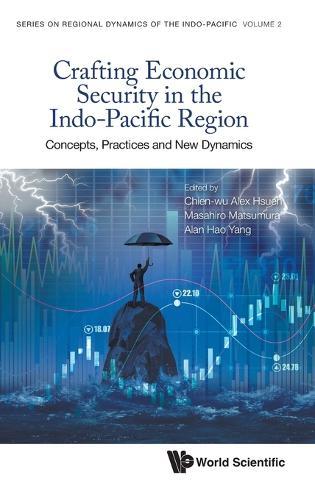
This book addresses the up-to-date development and changing features of Economic Security. It corroborates with the concepts, policies and dynamics in the Indo-Pacific region. This book argues that economic security is an important component of national security, albeit it shall go beyond the narrowly defined national security which mainly focuses on military security and national defense. The central argument of this book identifies at least two forms of transcendence of contemporary economic security. The first transcendence is the transcendence beyond the narrow definitions and limited components, while the second one prioritizes the transcendence beyond the level of analysis; the domestic level in particular. Securing economic security is not only a concern of the government (at the national level), but also a major consideration for regional connectivity and its spill-over impact (at the international level), as well as the maintenance of livelihoods of local society, communities and people (at the grassroot level). This book demonstrates the joint efforts of transnational scholarship addressing the up-to-date development and dynamics of economic security in the Indo-Pacific region, through the lens of interdisciplinary perspectives. The contributors of this book include scholars, such as leading senior professors of international politics, international political economy, economics, anthropology, Southeast Asian Studies, research fellows and practitioners, such as a lawyer and a CEO of a start-up enterprise on green energy and carbon solution, foreign policy think tankers, technology think tankers, cyber security expert, and a diplomat (former foreign policy officer from India).The book contests against two myths. The first is that economic security is exclusively state-centric. This book agrees that the security referent of economic security is mainly the state, that is, the government. Nevertheless, this book argues that the referents should be more than the government by advocating that economic security is also tied up with the international community, especially for the regional communities based on common strategic goals and shared interests. Besides, additional referents to economic security should include private sector actors such as enterprises and companies, and people sectors, such as civil society, local communities and people. The second is to address the new dynamics of the economic security imposed by the strategic currents such as the US-China trade war or Russo-Ukraine War, which triggered the international attention over economic security that is narrowly defined as the crisis for semiconductor chips supply chain resilience.
Full Product Details
Author: Alex Chien-wu Hsueh (National Chengchi University, Taiwan) ,
Masahiro Matsumura (St Andrew's University, Japan) ,
Alan Hao Yang (National Chengchi Univ, Taiwan & Taiwan-asia Exchange Foundation (Taef), Taiwan)
Publisher: World Scientific Publishing Co Pte Ltd
Imprint: World Scientific Publishing Co Pte Ltd
Volume: 2
ISBN: 9789819817245
ISBN 10: 9819817242
Pages: 324
Publication Date: 04 November 2025
Audience:
College/higher education
,
Professional and scholarly
,
Tertiary & Higher Education
,
Professional & Vocational
Format: Hardback
Publisher's Status: Active
Availability: In Print

This item will be ordered in for you from one of our suppliers. Upon receipt, we will promptly dispatch it out to you. For in store availability, please contact us.