Overview
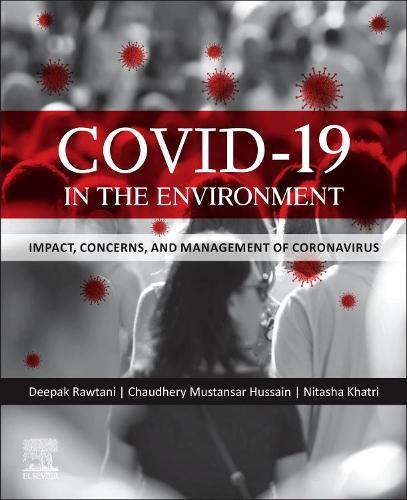
COVID-19 in the Environment: Impact, Concerns, and Management of Coronavirus highlights the research and technology addressing COVID-19 in the environment, including the associated fate, transport, and disposal. It examines the impacts of the virus at local, national, and global levels, including both positive and negative environmental impacts and techniques for assessing and managing them. Utilizing case studies, it also presents examples of various issues around handling these impacts, as well as policies and strategies being developed as a result. Organized into six parts, COVID-19 in the Environment begins by presenting the nature of the virus and its transmission in various environmental media, as well as models for reducing the transmission. Section 2 describes methods for monitoring and detecting the virus, whereas Sections 3, 4, and 5 go on to examine the socio-economic impact, the environmental impact and risk, and the waste management impact, respectively. Finally, Section 6 explores the environmental policies and strategies that have comes as a result of COVID-19, the implications for climate change, and what the long-term effects will be on environmental sustainability.
Full Product Details
Author: Deepak Rawtani (Member Governing Body GSRC & School of Pharmacy, National Forensic Science University, Gandhinagar, Gujarat, India) ,
Nitasha Khatri, PhD (Senior Scientific Officer & Head of Laboratory, Gujarat Environment Management Institute (GEMI), Forests and Environment Department, Govt. of Gujarat, Gandhinagar, Gujarat, India) ,
Chaudhery Mustansar Hussain (Adjunct Professor and Director of Chemistry & EVSC Labs, Department of Chemistry and Environmental Science, New Jersey Institute of Technology (NJIT), Newark, NJ, USA) ,
Chaudhery Mustansar Hussain (Adjunct Professor, Academic Advisor and Lab Director, Department of Chemistry and Environmental Sciences, New Jersey Institute of Technology (NJIT), Newark, USA)
Publisher: Elsevier - Health Sciences Division
Imprint: Elsevier - Health Sciences Division
Weight: 0.770kg
ISBN: 9780323902724
ISBN 10: 0323902723
Pages: 368
Publication Date: 22 September 2021
Audience:
Professional and scholarly
,
Professional & Vocational
Format: Paperback
Publisher's Status: Active
Availability: Manufactured on demand

We will order this item for you from a manufactured on demand supplier.
Author Information
Deepak Rawtani, M.E., PhD, Chartered Engineer, has over 21 years of extensive research experience spanning private and government organizations. He is an accomplished researcher with a focus on molecular medicine, discovery biology, and nanobiotechnology. His career includes roles at the Industrial Toxicology Research Centre, Lucknow; USV Limited, Mumbai; and Torrent Research Centre, Gandhinagar. His primary research areas include forensic nanobiotechnology, with a particular emphasis on DNA–nanoparticle interactions and the functionalization of halloysite nanotubes for applications such as enzyme immobilization, drug delivery, and environmental remediation. Dr. Rawtani has authored over 120 papers and seven books in nanotechnology and environmental science, published in AQ1, a reputable international journal and publisher. He has been recognized among the top 2% of researchers worldwide by Stanford University for 2021, 2022, and 2023. Additionally, he is a NABL-empaneled Technical Assessor (ISO/IEC 17025) with the Quality Council of India. Nitasha Khatri holds a graduate degree in Life Sciences, with postgraduate and MPhil qualifications in Biotechnology. She earned her PhD in Environmental Science, specializing in water pollution and management. With over 18 years of experience primarily in the environmental sector, she currently serves at Gujarat Environment Management Institute (GEMI) as a Senior Scientific Officer and Head of the Laboratory. Her active contributions span various areas of ecology, including biomonitoring with macroinvertebrates, nanotechnology-assisted bioremediation, rural environment management, conservation efforts, and source apportionment studies involving water, air, and soil monitoring and assessment. Dr. Khatri has authored more than 40 research papers published in international peer-reviewed journals. Chaudhery Mustansar Hussain is an adjunct professor and lab director in the Department of Chemistry & Environmental Sciences at the New Jersey Institute of Technology (NJIT), United States. His research is focused on sustainability, nanotechnology & advanced materials, environmental management, analytical chemistry, and other various industries. Dr. Hussain is the author of numerous papers in peer-reviewed journals as well as a prolific author and editor of several books, including scientific monographs and handbooks in his research areas. He has published with ELSEVIER, American Chemical Society, Royal Society of Chemistry, John Wiley & Sons, CRC Press, and Springer.