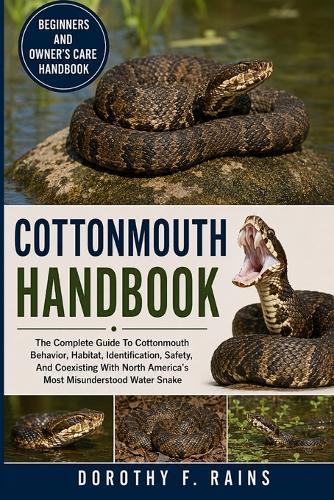
Overview
Introduction Understanding the Cottonmouth: Nature, Myth, and Reality A Snake Surrounded by Stories Few snakes in North America have earned a reputation as intense, misunderstood, and deeply rooted in folklore as the cottonmouth. Known scientifically as Agkistrodon piscivorus, this semi-aquatic pit viper has long occupied a unique place in both natural ecosystems and the human imagination. Stories about cottonmouths are often dramatic. They are described as aggressive, fearless, and eager to confront people. Tales of snakes chasing boats or attacking without warning circulate widely, passed down through generations, repeated in outdoor communities, and amplified through modern media. Yet, like many creatures that live quietly alongside people, the cottonmouth's story is far more complex than the myths suggest. It is neither a villain nor a creature driven by hostility. Instead, it is a highly specialized predator, finely tuned to its environment, playing an essential role in maintaining ecological balance. Understanding the cottonmouth requires setting aside exaggerated narratives and looking closely at its biology, behavior, and relationship with the natural world. The Origin of the Name The name ""cottonmouth"" comes from one of the snake's most distinctive defensive behaviors. When threatened, it often opens its mouth wide, revealing a stark white interior. This sudden flash of white contrasts sharply with its darker body and serves as a clear warning signal. It is a visual message that says, without ambiguity, ""Stay away."" This behavior is not an act of aggression. It is a defensive display designed to prevent conflict. In many cases, it is enough to deter predators or curious observers without the need for physical confrontation. The cottonmouth's alternative name, ""water moccasin,"" reflects its strong association with aquatic habitats and its smooth, gliding movement through water. Names carry weight. They shape how people perceive animals. The term ""cottonmouth"" evokes something bold and striking, while ""water moccasin"" can sound mysterious and even ominous. Both names, in their own way, contribute to the aura surrounding the species. Understanding the animal behind the name helps separate image from reality. Where Cottonmouths Live Cottonmouths are primarily found in the southeastern regions of the United States. Their range extends from Virginia down through Florida and westward into Texas and parts of the Midwest. Within this range, they are closely tied to water. Swamps, marshes, slow-moving rivers, lakes, ponds, and drainage ditches all provide suitable habitat. Water is not just a place for the cottonmouth to live; it is central to its survival strategy. As a semi-aquatic snake, it hunts both in and around water, feeding on fish, amphibians, small mammals, and other prey that thrive in these environments. Its ability to move efficiently in water gives it access to food sources that many other snakes cannot exploit as effectively. Despite this strong association with wetlands, cottonmouths are not limited to fully aquatic environments. They can also be found on land, particularly in areas close to water. They may bask on logs, rest along shorelines, or travel between habitats in search of food or shelter. This flexibility allows them to adapt to a variety of conditions within their geographic range. A Venomous Species The cottonmouth is a venomous snake, belonging to the pit viper family. This means it possesses specialized fangs that deliver venom, as well as heat-sensing pits located between the eyes and nostrils. These pits allow the snake to detect warm-blooded prey, even in low-light conditions. Venom plays a crucial role in the cottonmouth's life. It is primarily used for hunting, helping to immobilize prey quickly and efficiently. The venom also begins the process of digestion, breaking down tissues before the snake consumes its meal.
Full Product Details
Author: Dorothy F Rains
Publisher: Independently Published
Imprint: Independently Published
Dimensions:
Width: 15.20cm
, Height: 1.00cm
, Length: 22.90cm
Weight: 0.263kg
ISBN: 9798196944925
Pages: 192
Publication Date: 14 May 2026
Audience:
General/trade
,
General
Format: Paperback
Publisher's Status: Active
Availability: Available To Order

We have confirmation that this item is in stock with the supplier. It will be ordered in for you and dispatched immediately.