Overview
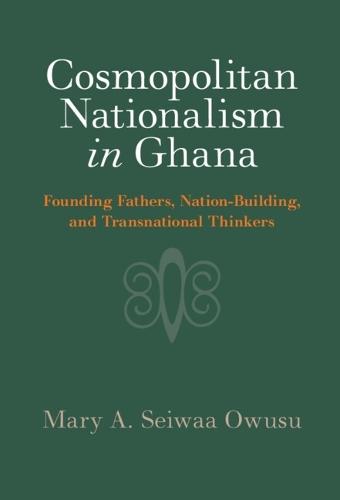
Nineteenth and twentieth-century West African writer-intellectuals harnessed their Atlantic networks to explore ideas of race, regeneration, and nation-building. Yet, the ultimately cosmopolitan nature of these political and intellectual pursuits has been overlooked by dominant narratives of anti-colonial history. In contrast, Cosmopolitan Nationalism in Ghana uses cosmopolitanism as a primary theoretical tool, interrogating the anti-colonial writings that prop up Ghana's nationalist history under a new light. Mary A. Seiwaa Owusu highlights the limitations of accepted labels of nationalist scholarship and confirms that these writer-intellectuals instead engaged with ideas around the globe. This study offers a more complex account of the nation-building project, arguing for the pivotal role of other groups and factors in addition to Kwame Nkrumah's leadership. In turn, it proposes a historical account which assumes a cosmopolitan setting, highlights the centrality of debate, and opens a vista for richer understandings of Ghanaians' longstanding questions about thriving in the world.
Full Product Details
Author: Mary A. Seiwaa Owusu (Carleton University, Ottawa)
Publisher: Cambridge University Press
Imprint: Cambridge University Press
Weight: 0.620kg
ISBN: 9781009524667
ISBN 10: 1009524666
Pages: 314
Publication Date: 19 December 2024
Audience:
General/trade
,
General
Format: Hardback
Publisher's Status: Active
Availability: Manufactured on demand

We will order this item for you from a manufactured on demand supplier.
Reviews
‘In Cosmopolitan Nationalism, Mary Owusu rightfully complicates the history of Ghanaian nationalism by unravelling the myth of a unified, coherent, and one-directional ideology. Instead, Owusu offers a rich history of intellectual and political diversity which more aptly explains the complex journey of the Ghanaian nation.’ Esperanza Brizuela-Garcia, Montclair State University ‘This incisive book provides long-sought answer to our search for a usable African past. Mary Owusu diagnoses that accounts of the modern state have only served to legitimize a Westernized elite, and demonstrates that Ghana was not simply a colonial or proto-nationalist creation but was formed by the constitutive will of its people. This history of Ghana is groundbreaking and will overcome many imposed versions.’ Oluwatoyin Oduntan, Towson University ‘Owusu identifies weaknesses with the enduring habit of reducing Ghana’s modern intellectual history to the rise of nationalism, revealing how this fails to capture the far richer nature of Ghanaian intellectuals’ enterprise. She provokes us to construct this history very differently, while providing concepts suited to the task.’ Philip Zachernuk, Dalhousie University
Author Information
Mary A. Seiwaa Owusu teaches African history at Carleton University, with her research highlighting marginalised events and personalities. She is Cadbury Fellow (2007); Fulbright scholar-in-residence (2011); Izaak Walton Killam Predoctoral Fellow (2014); and Barbara Harlow Award recipient (2019). Previous publications include Prempeh II and the Making of Modern Asante (2009). Dr Owusu heads the UN-ITU U4SSC Ghana Country Hub.