Overview
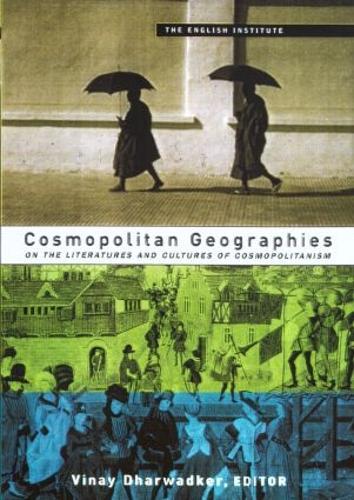
The cosmopolitan - the citizen of the world - is unconstrained by national boundaries. Today, the rise of international capital, the alteration of borders, local and transnational demands for autonomy are all making cosmopolitanism a key concept in the study of people and language, writing and space. ""Cosmopolitan Geographies"" asks whether in our rush towards globalization we can sustain the geo-cultural ideal of cosmopolitan identity. Contributors include: David Harvey; Bruce Robbins; Kwame Anthony Appiah; Una Chaudhuri; Pheng Cheah; Robert R, Edwards.
Full Product Details
Author: Vinay Dharwadker
Publisher: Taylor & Francis Ltd
Imprint: Routledge
Dimensions:
Width: 15.20cm
, Height: 2.20cm
, Length: 22.90cm
Weight: 0.502kg
ISBN: 9780415925068
ISBN 10: 0415925061
Pages: 240
Publication Date: 19 December 2000
Audience:
College/higher education
,
General/trade
,
Tertiary & Higher Education
,
General
Format: Hardback
Publisher's Status: Active
Availability: In Print

This item will be ordered in for you from one of our suppliers. Upon receipt, we will promptly dispatch it out to you. For in store availability, please contact us.
Reviews
Lively, smart, compelling, this book reclaims and redefines cosmopolitanism in a wide range of periods and places. Its first-rate essays will be of keen interest to anyone grappling with questions of transnational and intercultural experience. -Jahan Ramazani, author of The Hybrid Muse: Postcolonial Poetry in English Cosmopolitan Geographies suggests that the geographical diversity as well as the long history of 'cosmopolitanism' is absolutely vital for imagining a non-ethnocentric international humanism today. The essays in this important volume bring together a rich variety of historical contexts, literary practices, and political imperatives in order to provoke us to rethink the relationship between national cultures and internationalism, and between cultural difference and universalism. -Ania Loomba, Professor of English, University of Illinois and author of Colonialism/Postcolonialism
Lively, smart, compelling, this book reclaims and redefines cosmopolitanism in a wide range of periods and places. Its first-rate essays will be of keen interest to anyone grappling with questions of transnational and intercultural experience. -- Jahan Ramazani, author of The Hybrid Muse: Postcolonial Poetry in English Cosmopolitan Geographies suggests that the geographical diversity as well as the long history of 'cosmopolitanism' is absolutely vital for imagining a non-ethnocentric international humanism today. The essays in this important volume bring together a rich variety of historical contexts, literary practices, and political imperatives in order to provoke us to rethink the relationship between national cultures and internationalism, and between cultural difference and universalism. -- Ania Loomba, Professor of English, University of Illinois and author of Colonialism/Postcolonialism
Lively, smart, compelling, this book reclaims and redefines cosmopolitanism in a wide range of periods and places. Its first-rate essays will be of keen interest to anyone grappling with questions of transnational and intercultural experience. <br>-Jahan Ramazani, author of The Hybrid Muse: Postcolonial Poetry in English <br> Cosmopolitan Geographies suggests that the geographical diversity as well as the long history of 'cosmopolitanism' is absolutely vital for imagining a non-ethnocentric international humanism today. The essays in this important volume bring together a rich variety of historical contexts, literary practices, and political imperatives in order to provoke us to rethink the relationship between national cultures and internationalism, and between cultural difference and universalism. <br>-Ania Loomba, Professor of English, University of Illinois and author of Colonialism/Postcolonialism <br>