Overview
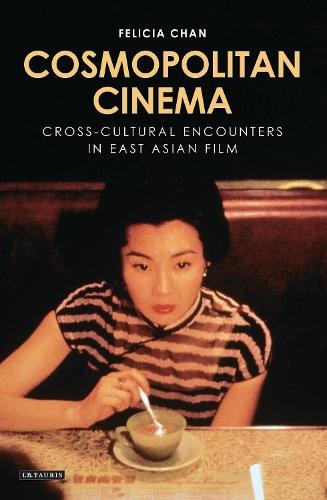
This book is available as open access through the Bloomsbury Open programme and is available on www.bloomsburycollections.com. It is funded by the University of Manchester. Films are produced, reviewed and watched worldwide, often circulating between cultural contexts. The book explores cosmopolitanism and its debates through the lens of East Asian cinemas from Hong Kong, China, Malaysia and Singapore, throwing doubt on the validity of national cinemas or definitive cultural boundaries. Case studies illuminate the ambiguously gendered star persona of Taiwanese-Hong Kong actress Brigitte Lin, the fictional realism of director Jia Zhangke, the arcane process of selection for the Best Foreign Film Oscar and the intimate connection between cinema and identity in Hirokazu Koreeda's Afterlife (1998). Considering films, their audiences and tastemaking institutions, the book argues that cosmopolitan cinema does not smooth over difference, but rather puts it on display. The ebook editions of this book are available open access under a CC BY-NC-ND 3.0 licence on bloomsburycollections.com. Open access was funded by the University of Manchester, UK
Full Product Details
Author: Felicia Chan
Publisher: Bloomsbury Publishing PLC
Imprint: I.B. Tauris
Dimensions:
Width: 14.20cm
, Height: 1.80cm
, Length: 21.80cm
Weight: 0.400kg
ISBN: 9781780767222
ISBN 10: 1780767226
Pages: 224
Publication Date: 20 March 2017
Audience:
College/higher education
,
Postgraduate, Research & Scholarly
Format: Hardback
Publisher's Status: Active
Availability: Manufactured on demand

We will order this item for you from a manufactured on demand supplier.
Reviews
Felicia Chan's book offers a critical reflection on the imperative of acknowledging and embracing difference and foreignness at the interface of cinema's textual and extra-textual levels. This call for critical cosmopolitanism - rooted in an ethos of 'learning to live with paradox' - is especially urgent during these post-Brexit, Trump-triumphant times. --Song Hwee Lim, The Chinese University of Hong Kong and author of Tsai Ming-liang and a Cinema of Slowness As much of the world retreats behind national walls, Cosmopolitan Cinema turns to globally recognised East and Southeast Asian films. Its originality lies in the acknowledgement of the pitfalls that can make cosmopolitanism complicit with hubris and neglect of the local, together with a call for critically engaged cosmopolitanism that interrogates how local specificity is globally connected. --Chris Berry, King's College London Cosmopolitan Cinema argues that world or transnational cinema is underwritten by the commodification of difference, and articulates a project of cinematic cosmopolitanism based on the critical experience and affective negotiation of linguistic and cultural limits. An admirable book. --Pheng Cheah, University of California, Berkeley
As much of the world retreats behind national walls, Cosmopolitan Cinema turns to globally recognised East and Southeast Asian films. Its originality lies in the acknowledgement of the pitfalls that can make cosmopolitanism complicit with hubris and neglect of the local, together with a call for critically engaged cosmopolitanism that interrogates how local specificity is globally connected. --Chris Berry, King's College London
As much of the world retreats behind national walls, Cosmopolitan Cinema turns to globally recognised East and Southeast Asian films. Its originality lies in the acknowledgement of the pitfalls that can make cosmopolitanism complicit with hubris and neglect of the local, together with a call for critically engaged cosmopolitanism that interrogates how local specificity is globally connected. --Chris Berry, King's College London Felicia Chan's book offers a critical reflection on the imperative of acknowledging and embracing difference and foreignness at the interface of cinema's textual and extra-textual levels. This call for critical cosmopolitanism - rooted in an ethos of 'learning to live with paradox' - is especially urgent during these post-Brexit, Trump-triumphant times. --Song Hwee Lim, The Chinese University of Hong Kong and author of Tsai Ming-liang and a Cinema of Slowness Cosmopolitan Cinema argues that world or transnational cinema is underwritten by the commodification of difference, and articulates a project of cinematic cosmopolitanism based on the critical experience and affective negotiation of linguistic and cultural limits. An admirable book. --Pheng Cheah, University of California, Berkeley
Author Information
Felicia Chan is Lecturer in Screen Studies at the University of Manchester, where she was previously Research Councils UK Fellow in Film, Media and Transnational Cultures. She has contributed to the journals Television, Inter-Asia Cultural Studies and New Cinemas: Journal of Contemporary Film, among others, and is co-editor of the collection Genre in Asian Film and Television: New Approaches (2011).