Awards
- Winner of PROSE Award in Philosophy 2025 (United States)
Overview
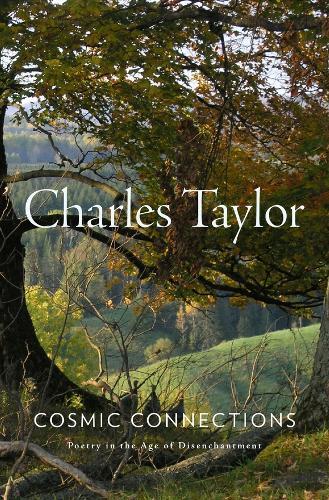
A Times Literary Supplement Best Book of the Year A major new work by Charles Taylor: the long-awaited follow-up to The Language Animal, exploring the Romantic poetics central to his theory of language. The Language Animal, Charles Taylor’s 2016 account of human linguistic capacity, was a revelation, illuminating our most fundamental selves. But, as Taylor noted in that work, there was more to be said. Cosmic Connections extends Taylor’s exploration of innovations in language by turning to Romantic and post-Romantic responses to disenchantment. The fall of cosmic order left Romantics groping toward a new meaning of life. They turned to the symbols and music of poetry to recover contact with reality beyond fragmented existence, developing aesthetic forms that post-Romantics have carried into the present day. Taylor takes us from Hölderlin, Novalis, Keats, and Shelley to Hopkins, Rilke, Baudelaire, and Mallarmé, and on to Eliot, Miłosz, and beyond. In seeking understanding and a new orientation to life, the language of poetry is not merely a pleasurable presentation of doctrines already elaborated elsewhere. Rather, Taylor insists, poetry persuades us through the experience of connection. The resulting conviction is very different from that gained through the force of argument. Poetry’s reasoning will often be incomplete, tentative, and enigmatic. But at the same time, its insight is too moving—too obviously true—to be ignored.
Full Product Details
Author: Charles Taylor
Publisher: Harvard University Press
Imprint: The Belknap Press
Dimensions:
Width: 15.60cm
, Height: 4.10cm
, Length: 23.50cm
Weight: 0.716kg
ISBN: 9780674303591
ISBN 10: 0674303598
Pages: 640
Publication Date: 10 March 2026
Audience:
College/higher education
,
Postgraduate, Research & Scholarly
Format: Paperback
Publisher's Status: Forthcoming
Availability: Not yet available

This item is yet to be released. You can pre-order this item and we will dispatch it to you upon its release.
Reviews
A wonderful demonstration of the power of literature to make us think and feel. -- Adam Kirsch * New York Review of Books * An immensely ambitious book…an extraordinarily original, ambitious, and erudite effort to excavate the roots of Romanticism and place it in a new and vital relation with the rest of Western (and not solely Western) culture…a cosmic achievement. -- George Scialabba * Commonweal * Ostensibly a study of Romantic poetry and music, [this book] is about nothing less than modern life and its discontents, and how we might transcend them. -- Adam Gopnik * New Yorker * Offers us something more complicated and interesting than just spreading the good news about poems… [Taylor’s] accounts of the poems are informed and lucid, at times disarming in their personal investment…the commentary has all the expository command of Taylor at his best. -- Seamus Perry * Times Literary Supplement * Monumental…the whole work is nothing if not tantalizing. On page after page are telling phrases and casually dropped insights, reminding us of Taylor’s intellection freshness and penetration…a book of spacious horizons, deep insight, [and] characteristically generous engagement. -- Rowan Williams * First Things * A grand statement of his lifelong conviction that words are not counters for the exchange of information but are valuable only when they express and shape what we mean and what we value. They should connect us to one another, if not perhaps to the cosmos. Cosmic Connections appears just as gloom is mounting about the commercialized automation of writing, the degradation of political language, and the disintegration of social cohesion. It invites us to consider these pressing evils as connected and to resist them by drawing upon literature to refresh our own speech. -- Michael Ledger-Lomas * Literary Review of Canada * Taylor is a perceptive reader of his poets, and he offers a wonderful synthesis of how poets from the Romantics onward have sought to overcome the ‘disenchanted’ vision of reality…he calls our attention to a way of understanding the Romantic age that makes it appear lively, salient, and worthy of the reader’s contemplation. -- James Matthew Wilson * National Review * Taylor shows how…poetry…puts readers in contact with experiences of divine harmony, of supernatural order, of a joy which is the direct result of a situated haecceity, which is to say, of the thisness of poetic experience…[this book] dares to treat poetic language as a unique category of communication unto itself that is as distinct as it is elusive to the understanding. -- Matthew Hunter * Chronicle of Higher Education * [Taylor’s] working theory seems to be that he has found in the poetics of cosmic connection a deep sense of significance, and he wants for us to find it too. Despite the different underlying stories, the endlessly diverging and never resolving meanings and symbols and significations, he finds that poetry still calls to him, still makes claims on him that are definite in their effect if not in their propositional content. Why should that be the case, for him or for anyone else? What is it that keeps drawing us back to these wells? This book is his answer. -- Jeff Reimer * The Bulwark * A return to form for Taylor…a worthy milestone in an extraordinary career. -- Stevan Veljkovic * European Journal of Social Theory * At once a meticulously precise examination of Romantic and post-Romantic poetry and, more ambitiously, an urgent call for what we might refer to as ‘poetic realism.’ -- Tara Isabella Burton * The Dispatch * [This] transcontinental exploration of the Romantic poetic tradition from William Wordsworth to Annie Dillard…responds to what we may call our ‘postliberal’ moment. Given the broad social alienation, collapse of shared epistemologies, and spread of antidemocratic sentiments across the globe, it is not the independence and creative groundlessness of the Romantics that Taylor calls upon here, but their linguistic representation of attachment across space and time. -- Jamison Kantor * Critical Inquiry * Demonstrates awe-inspiring range and a fundamental belief in the power of art…a broad-ranging, occasionally startling, and often moving book…beautifully argued [and] lovingly rendered. -- Mischa Willett * Gospel Coalition * A masterpiece that sheds light on why a poet such as Kurt Cobain speaks to us even when he sings cryptic lyrics, why the environmentalist movement expresses a kind of spirituality, and why analytic philosophers should read Continental philosophy and Romantic poetry. -- Nicholas Tampio * Review of Politics * A labor of love…a worthy swan song. -- Matt McManus * Christian Socialism * No one has this sort of range, erudition, and lucidity…[Taylor] is certainly the leading Catholic philosopher in the world. -- Robert B. Pippin * Mind * Taylor sympathetically enters into the grief and anguish, the joys and hopes of modern humanity. He is a philosopher of remarkable erudition, but his philosophical brilliance is, fundamentally, an act of service to fellow humans. Taylor is a thinker with heart. His rigorous philosophical analysis is, in the end, existential: He wants to help us understand ourselves. He wants to help us articulate our longings and losses. He wants to hear, even in our grief and anguish, a still small whisper that calls us to something more. He wants us to find fulfillment. -- James K. A. Smith * America *
A wonderful demonstration of the power of literature to make us think and feel. -- Adam Kirsch * New York Review of Books * An immensely ambitious book…an extraordinarily original, ambitious, and erudite effort to excavate the roots of Romanticism and place it in a new and vital relation with the rest of Western (and not solely Western) culture…a cosmic achievement. -- George Scialabba * Commonweal * Ostensibly a study of Romantic poetry and music, [this book] is about nothing less than modern life and its discontents, and how we might transcend them. -- Adam Gopnik * New Yorker * Offers us something more complicated and interesting than just spreading the good news about poems… [Taylor’s] accounts of the poems are informed and lucid, at times disarming in their personal investment…the commentary has all the expository command of Taylor at his best. -- Seamus Perry * Times Literary Supplement * Monumental…the whole work is nothing if not tantalizing. On page after page are telling phrases and casually dropped insights, reminding us of Taylor’s intellection freshness and penetration…a book of spacious horizons, deep insight, [and] characteristically generous engagement. -- Rowan Williams * First Things * A grand statement of his lifelong conviction that words are not counters for the exchange of information but are valuable only when they express and shape what we mean and what we value. They should connect us to one another, if not perhaps to the cosmos. Cosmic Connections appears just as gloom is mounting about the commercialized automation of writing, the degradation of political language, and the disintegration of social cohesion. It invites us to consider these pressing evils as connected and to resist them by drawing upon literature to refresh our own speech. -- Michael Ledger-Lomas * Literary Review of Canada * There is something enthralling as well as endearing about this late work. Taylor’s passionate admiration for and responsiveness to his chosen poets, and his sense of the profound importance of the issues they confront, come through essentially undiminished. -- Stephen Mulhall * London Review of Books * Taylor is a perceptive reader of his poets, and he offers a wonderful synthesis of how poets from the Romantics onward have sought to overcome the ‘disenchanted’ vision of reality…he calls our attention to a way of understanding the Romantic age that makes it appear lively, salient, and worthy of the reader’s contemplation. -- James Matthew Wilson * National Review * Taylor shows how…poetry…puts readers in contact with experiences of divine harmony, of supernatural order, of a joy which is the direct result of a situated haecceity, which is to say, of the thisness of poetic experience…[this book] dares to treat poetic language as a unique category of communication unto itself that is as distinct as it is elusive to the understanding. -- Matthew Hunter * Chronicle of Higher Education * [Taylor’s] working theory seems to be that he has found in the poetics of cosmic connection a deep sense of significance, and he wants for us to find it too. Despite the different underlying stories, the endlessly diverging and never resolving meanings and symbols and significations, he finds that poetry still calls to him, still makes claims on him that are definite in their effect if not in their propositional content. Why should that be the case, for him or for anyone else? What is it that keeps drawing us back to these wells? This book is his answer. -- Jeff Reimer * The Bulwark * A return to form for Taylor…a worthy milestone in an extraordinary career. -- Stevan Veljkovic * European Journal of Social Theory * At once a meticulously precise examination of Romantic and post-Romantic poetry and, more ambitiously, an urgent call for what we might refer to as ‘poetic realism.’ -- Tara Isabella Burton * The Dispatch * [This] transcontinental exploration of the Romantic poetic tradition from William Wordsworth to Annie Dillard…responds to what we may call our ‘postliberal’ moment. Given the broad social alienation, collapse of shared epistemologies, and spread of antidemocratic sentiments across the globe, it is not the independence and creative groundlessness of the Romantics that Taylor calls upon here, but their linguistic representation of attachment across space and time. -- Jamison Kantor * Critical Inquiry * Demonstrates awe-inspiring range and a fundamental belief in the power of art…a broad-ranging, occasionally startling, and often moving book…beautifully argued [and] lovingly rendered. -- Mischa Willett * Gospel Coalition * A masterpiece that sheds light on why a poet such as Kurt Cobain speaks to us even when he sings cryptic lyrics, why the environmentalist movement expresses a kind of spirituality, and why analytic philosophers should read Continental philosophy and Romantic poetry. -- Nicholas Tampio * Review of Politics * A labor of love…a worthy swan song. -- Matt McManus * Christian Socialism * No one has this sort of range, erudition, and lucidity…[Taylor] is certainly the leading Catholic philosopher in the world. -- Robert B. Pippin * Mind * Attempts to provide a corrective to the boring and lifeless secularism that has suffocated modernity. -- Jesse Russell * Cracks in Postmodernity * Taylor sympathetically enters into the grief and anguish, the joys and hopes of modern humanity. He is a philosopher of remarkable erudition, but his philosophical brilliance is, fundamentally, an act of service to fellow humans. Taylor is a thinker with heart. His rigorous philosophical analysis is, in the end, existential: He wants to help us understand ourselves. He wants to help us articulate our longings and losses. He wants to hear, even in our grief and anguish, a still small whisper that calls us to something more. He wants us to find fulfillment. -- James K. A. Smith * America *
A wonderful demonstration of the power of literature to make us think and feel. -- Adam Kirsch * New York Review of Books * An immensely ambitious book…an extraordinarily original, ambitious, and erudite effort to excavate the roots of Romanticism and place it in a new and vital relation with the rest of Western (and not solely Western) culture…a cosmic achievement. -- George Scialabba * Commonweal * Ostensibly a study of Romantic poetry and music, [this book] is about nothing less than modern life and its discontents, and how we might transcend them. -- Adam Gopnik * New Yorker * Offers us something more complicated and interesting than just spreading the good news about poems… [Taylor’s] accounts of the poems are informed and lucid, at times disarming in their personal investment…the commentary has all the expository command of Taylor at his best. -- Seamus Perry * Times Literary Supplement * Monumental…the whole work is nothing if not tantalizing. On page after page are telling phrases and casually dropped insights, reminding us of Taylor’s intellection freshness and penetration…a book of spacious horizons, deep insight, [and] characteristically generous engagement. -- Rowan Williams * First Things * A grand statement of his lifelong conviction that words are not counters for the exchange of information but are valuable only when they express and shape what we mean and what we value. They should connect us to one another, if not perhaps to the cosmos. Cosmic Connections appears just as gloom is mounting about the commercialized automation of writing, the degradation of political language, and the disintegration of social cohesion. It invites us to consider these pressing evils as connected and to resist them by drawing upon literature to refresh our own speech. -- Michael Ledger-Lomas * Literary Review of Canada * Taylor is a perceptive reader of his poets, and he offers a wonderful synthesis of how poets from the Romantics onward have sought to overcome the ‘disenchanted’ vision of reality…he calls our attention to a way of understanding the Romantic age that makes it appear lively, salient, and worthy of the reader’s contemplation. -- James Matthew Wilson * National Review * Taylor shows how…poetry…puts readers in contact with experiences of divine harmony, of supernatural order, of a joy which is the direct result of a situated haecceity, which is to say, of the thisness of poetic experience…[this book] dares to treat poetic language as a unique category of communication unto itself that is as distinct as it is elusive to the understanding. -- Matthew Hunter * Chronicle of Higher Education * [Taylor’s] working theory seems to be that he has found in the poetics of cosmic connection a deep sense of significance, and he wants for us to find it too. Despite the different underlying stories, the endlessly diverging and never resolving meanings and symbols and significations, he finds that poetry still calls to him, still makes claims on him that are definite in their effect if not in their propositional content. Why should that be the case, for him or for anyone else? What is it that keeps drawing us back to these wells? This book is his answer. -- Jeff Reimer * The Bulwark * A return to form for Taylor…a worthy milestone in an extraordinary career. -- Stevan Veljkovic * European Journal of Social Theory * At once a meticulously precise examination of Romantic and post-Romantic poetry and, more ambitiously, an urgent call for what we might refer to as ‘poetic realism.’ -- Tara Isabella Burton * The Dispatch * [This] transcontinental exploration of the Romantic poetic tradition from William Wordsworth to Annie Dillard…responds to what we may call our ‘postliberal’ moment. Given the broad social alienation, collapse of shared epistemologies, and spread of antidemocratic sentiments across the globe, it is not the independence and creative groundlessness of the Romantics that Taylor calls upon here, but their linguistic representation of attachment across space and time. -- Jamison Kantor * Critical Inquiry * Demonstrates awe-inspiring range and a fundamental belief in the power of art…a broad-ranging, occasionally startling, and often moving book…beautifully argued [and] lovingly rendered. -- Mischa Willett * Gospel Coalition * A masterpiece that sheds light on why a poet such as Kurt Cobain speaks to us even when he sings cryptic lyrics, why the environmentalist movement expresses a kind of spirituality, and why analytic philosophers should read Continental philosophy and Romantic poetry. -- Nicholas Tampio * Review of Politics * A labor of love…a worthy swan song. -- Matt McManus * Christian Socialism * No one has this sort of range, erudition, and lucidity…[Taylor] is certainly the leading Catholic philosopher in the world. -- Robert B. Pippin * Mind * Attempts to provide a corrective to the boring and lifeless secularism that has suffocated modernity. -- Jesse Russell * Cracks in Postmodernity * Taylor sympathetically enters into the grief and anguish, the joys and hopes of modern humanity. He is a philosopher of remarkable erudition, but his philosophical brilliance is, fundamentally, an act of service to fellow humans. Taylor is a thinker with heart. His rigorous philosophical analysis is, in the end, existential: He wants to help us understand ourselves. He wants to help us articulate our longings and losses. He wants to hear, even in our grief and anguish, a still small whisper that calls us to something more. He wants us to find fulfillment. -- James K. A. Smith * America *
Author Information
Charles Taylor is Professor Emeritus in the Department of Philosophy at McGill University. Author of The Language Animal, Sources of the Self, The Ethics of Authenticity, and A Secular Age, he has received many honors, including the Templeton Prize, the Berggruen Prize, and membership in the Order of Canada.