Overview
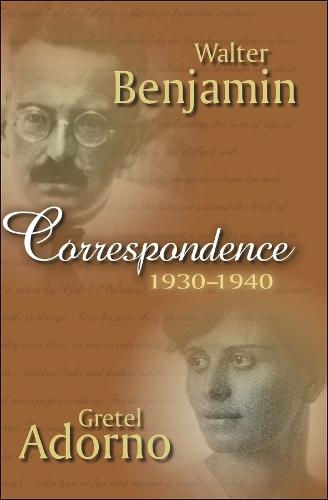
‘We must see to it that we put the best of ourselves in our letters; for there is nothing to suggest that we shall see each other again soon.’ So wrote Walter Benjamin to Gretel Adorno in spring 1940 from the south of France, shortly before he took his own life. The correspondence between Gretel Adorno and Walter Benjamin, published here in its complete form for the first time, is the document of a great friendship that existed independently of Benjamin’s relationship with Theodor W. Adorno. While Benjamin, alongside his everyday worries, writes especially about those projects on which he worked so intensively in the last years of his life, it was Gretel Karplus-Adorno who did everything in her power to keep Benjamin in the world. She urged him to emigrate to the USA and told him about Adorno’s plans and Bloch’s movements, thus maintaining the connection between the old Berlin friends and acquaintances. She helped him through the most difficult times with regular money transfers, and organized financial support from the Saar region, which was initially still independent from the Third Reich. Once in New York, she attempted to entice Benjamin to America with her descriptions of the city and the new arrivals from Europe – though ultimately to no avail.
Full Product Details
Author: Gretel Adorno ,
Walter Benjamin
Publisher: John Wiley and Sons Ltd
Imprint: Polity Press
Dimensions:
Width: 16.30cm
, Height: 2.50cm
, Length: 23.90cm
Weight: 0.662kg
ISBN: 9780745636696
ISBN 10: 0745636691
Pages: 336
Publication Date: 20 December 2007
Audience:
Professional and scholarly
,
Professional & Vocational
Format: Hardback
Publisher's Status: Active
Availability: Out of stock

The supplier is temporarily out of stock of this item. It will be ordered for you on backorder and shipped when it becomes available.
Reviews
Throughout the volume's 180 letters, the editors' scrupulous referencing and the extensive footnotes help us to decode the hermetic web of enquiries about close friends, in-jokes and mutual favours spun by the correspondents. The English translation skilfully navigates Benjamin's effusive idiosyncrasies and softens the clipped directness of both authors to reveal the comfortable familiarity beneath. Times Literary Supplement The correspondence between Gretel Karplus Adorno and Walter Benjamin documents a remarkable friendship. Benjamin valued Felizitas as a critic who was at once acute and sympathetic, and these letters bristle with some of the most challenging formulations of his thought in the 1930s. Yet their relationship also enabled Benjamin to reveal aspects of his life that remained hidden from even his closest male friends, including Adorno himself and Scholem. The letters thus offer a moving and surprisingly intimate account of the fate of a great intellectual struggling to survive - and to write - in exile. Michael Jennings, Princeton University
Author Information
Gretel Adorno, née Karplus, was born in Berlin in 1902. She acquired a PhD in chemistry, and directed a company that manufactured gloves between 1933 and 1937. She was in contact with numerous intelletuals during the late 1920s including Walter Benjamin, Ernst Bloch and Bertolt Brecht. She met Theodor W. Adorno in 1923, and they married in London in exile in 1937. In 1938 they moved to the USA together. In 1953 she returned to Germany, and lived in Frankfurt am Main until her death in 1993. Walter Benjamin was born in Berlin in 1892, and took his own life in Port Bou (France) in 1940 while fleeing from the Nazis. He was a philosopher, critic, essayist, translator and writer, and can be considered one of the most influential thinkers of the twentieth century.