Overview
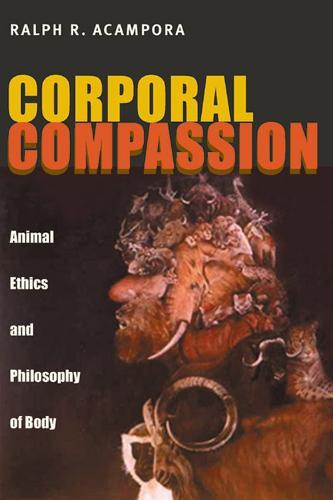
Most approaches to animal ethics ground the moral standing of nonhumans in some appeal to their capacities for intelligent autonomy or mental sentience. Corporal Compassion emphasizes the phenomenal and somatic commonality of living beings; a philosophy of body that seeks to displace any notion of anthropomorphic empathy in viewing the moral experiences of nonhuman living beings. Ralph R. Acampora employs phenomenology, hermeneutics, existentialism and deconstruction to connect and contest analytic treatments of animal rights and liberation theory. In doing so, he focuses on issues of being and value, and posits a felt nexus of bodily being, termed symphysis, to devise an interspecies ethos. Acampora uses this broad-based bioethic to engage in dialogue with other strains of environmental ethics and ecophilosophy. Corporal Compassion examines the practical applications of the somatic ethos in contexts such as laboratory experimentation and zoological exhibition and challenges practitioners to move past recent reforms and look to a future beyond exploitation or total noninterference—a posthumanist culture that advocates caring in a participatory approach.
Full Product Details
Author: Ralph Acampora
Publisher: University of Pittsburgh Press
Imprint: University of Pittsburgh Press
Dimensions:
Width: 15.00cm
, Height: 2.00cm
, Length: 23.00cm
Weight: 0.540kg
ISBN: 9780822942856
ISBN 10: 0822942852
Pages: 224
Publication Date: 10 July 2006
Audience:
College/higher education
,
Professional and scholarly
,
Undergraduate
,
Postgraduate, Research & Scholarly
Format: Hardback
Publisher's Status: Active
Availability: Awaiting stock

The supplier is currently out of stock of this item. It will be ordered for you and placed on backorder. Once it does come back in stock, we will ship it out for you.
Reviews
"Acampora has written an excellent study that opens up an innovative approach to animal ethics, based in an interspecies morality of compassion. A corporeal phenomenology of affective relations is deployed to avoid anthropocentric, cognitive, and theoretical biases that ignore bodily experience and our animality shared with other species. Particularly noteworthy is the wide variety of topics, sources, and cross-disciplinary research, as well as fruitful exchanges between analytic, continental, and feminist perspectives. This is the finest text I have read on the subject.-- ""Lawrence J. Hatab, Old Dominion University"" In this intellectually adventurous and scrupulously argued book, Ralph Acampora takes it as his aim to vitalize the Anglo-American debate on the ethics of transhuman contacts with a bracing injection of modern European thought.-- ""J. M. Coetzee, winner of the 2003 Nobel Prize in Literature"" ""All philosophers interested in animal ethics should read this thought-provoking book."" --Environmental Ethics ""In this intellectually adventurous and scrupulously argued book, Ralph Acampora takes it as his aim to vitalize the Anglo-American debate on the ethics of transhuman contacts with a bracing injection of modern European thought."" --J. M. Coetzee, winner of the 2003 Nobel Prize in Literature ""Reading Corporal Compassion soon went [from being] a fascinating journey to a gratifying learning experience. I recommend the book to all philosophers from an analytic background who would like to view familiar terrain through a new set of lenses. Acampora writes beautifully though exotically, and before too long one greatly appreciates--and even enjoys--the gestalt shift this book engenders."" --Bernard Rollin, Anthrozoos Corporal Compassion is a very important book because it shows that our moral relationships and solidarity with other animals do not have to depend on how similar 'they' are to 'us' in terms of mental capacities or sentience. Acampora avoids charges of anthropomorphism by arguing that compassion for other animals and the ethical responsibilities that follow are fostered because we are all 'bodily beings' with common vulnerabilities and experiences.-- ""Marc Bekoff, University of Colorado"" All philosophers interested in animal ethics should read this thought-provoking book.-- ""Environmental Ethics"" Reading 'Corporal Compassion' soon went [from being] a fascinating journey to a gratifying learning experience. I recommend the book to all philosophers from an analytic background who would like to view familiar terrain through a new set of lenses. Acampora writes beautifully though exotically, and before too long one greatly appreciates--and even enjoys--the gestalt shift this book engenders.-- ""Anthrozoos"""
Reading Corporal Compassion soon went [from being] a fascinating journey to a gratifying learning experience. I recommend the book to all philosophers from an analytic background who would like to view familiar terrain through a new set of lenses. Acampora writes beautifully though exotically, and before too long one greatly appreciates--and even enjoys--the gestalt shift this book engenders. --Bernard Rollin, Anthrozoos
In this intellectually adventurous and scrupulously argued book, Ralph Acampora takes it as his aim to vitalize the Anglo-American debate on the ethics of transhuman contacts with a bracing injection of modern European thought. --J. M. Coetzee, winner of the 2003 Nobel Prize in Literature Reading Corporal Compassion soon went [from being] a fascinating journey to a gratifying learning experience. I recommend the book to all philosophers from an analytic background who would like to view familiar terrain through a new set of lenses. Acampora writes beautifully though exotically, and before too long one greatly appreciates--and even enjoys--the gestalt shift this book engenders. --Bernard Rollin, Anthrozoos All philosophers interested in animal ethics should read this thought-provoking book. --Environmental Ethics In this intellectually adventurous and scrupulously argued book, Ralph Acampora takes it as his aim to vitalize the Anglo-American debate on the ethics of transhuman contacts with a bracing injection of modern European thought. --J. M. Coetzee, winner of the 2003 Nobel Prize in Literature Reading Corporal Compassion soon went [from being] a fascinating journey to a gratifying learning experience. I recommend the book to all philosophers from an analytic background who would like to view familiar terrain through a new set of lenses. Acampora writes beautifully though exotically, and before too long one greatly appreciates--and even enjoys--the gestalt shift this book engenders. --Bernard Rollin, Anthrozoos Reading Corporal Compassion soon went [from being] a fascinating journey to a gratifying learning experience. I recommend the book to all philosophers from an analytic background who would like to view familiar terrain through a new set of lenses. Acampora writes beautifully though exotically, and before too long one greatly appreciates--and even enjoys--the gestalt shift this book engenders. --Bernard Rollin, Anthrozoos Corporal Compassion is a very important book because it shows that our moral relationships and solidarity with other animals do not have to depend on how similar 'they' are to 'us' in terms of mental capacities or sentience. Acampora avoids charges of anthropomorphism by arguing that compassion for other animals and the ethical responsibilities that follow are fostered because we are all 'bodily beings' with common vulnerabilities and experiences. --Marc Bekoff, University of Colorado Reading Corporal Compassion soon went [from being] a fascinating journey to a gratifying learning experience. I recommend the book to all philosophers from an analytic background who would like to view familiar terrain through a new set of lenses. Acampora writes beautifully though exotically, and before too long one greatly appreciates--and even enjoys--the gestalt shift this book engenders. --Bernard Rollin, Anthrozoos In this intellectually adventurous and scrupulously argued book, Ralph Acampora takes it as his aim to vitalize the Anglo-American debate on the ethics of transhuman contacts with a bracing injection of modern European thought. --J. M. Coetzee, winner of the 2003 Nobel Prize in Literature Acampora has written an excellent study that opens up an innovative approach to animal ethics, based in an interspecies morality of compassion. A corporeal phenomenology of affective relations is deployed to avoid anthropocentric, cognitive, and theoretical biases that ignore bodily experience and our animality shared with other species. Particularly noteworthy is the wide variety of topics, sources, and cross-disciplinary research, as well as fruitful exchanges between analytic, continental, and feminist perspectives. This is the finest text I have read on the subject. --Lawrence J. Hatab, Old Dominion University Corporal Compassion is a very important book because it shows that our moral relationships and solidarity with other animals do not have to depend on how similar 'they' are to 'us' in terms of mental capacities or sentience. Acampora avoids charges of anthropomorphism by arguing that compassion for other animals and the ethical responsibilities that follow are fostered because we are all 'bodily beings' with common vulnerabilities and experiences. --Marc Bekoff, University of Colorado In this intellectually adventurous and scrupulously argued book, Ralph Acampora takes it as his aim to vitalize the Anglo-American debate on the ethics of transhuman contacts with a bracing injection of modern European thought. --J. M. Coetzee, winner of the 2003 Nobel Prize in Literature Acampora has written an excellent study that opens up an innovative approach to animal ethics, based in an interspecies morality of compassion. A corporeal phenomenology of affective relations is deployed to avoid anthropocentric, cognitive, and theoretical biases that ignore bodily experience and our animality shared with other species. Particularly noteworthy is the wide variety of topics, sources, and cross-disciplinary research, as well as fruitful exchanges between analytic, continental, and feminist perspectives. This is the finest text I have read on the subject. --Lawrence J. Hatab, Old Dominion University Corporal Compassion is a very important book because it shows that our moral relationships and solidarity with other animals do not have to depend on how similar 'they' are to 'us' in terms of mental capacities or sentience. Acampora avoids charges of anthropomorphism by arguing that compassion for other animals and the ethical responsibilities that follow are fostered because we are all 'bodily beings' with common vulnerabilities and experiences. --Marc Bekoff, University of Colorado
Acampora has written an excellent study that opens up an innovative approach to animal ethics, based in an interspecies morality of compassion. A corporeal phenomenology of affective relations is deployed to avoid anthropocentric, cognitive, and theoretical biases that ignore bodily experience and our animality shared with other species. Particularly noteworthy is the wide variety of topics, sources, and cross-disciplinary research, as well as fruitful exchanges between analytic, continental, and feminist perspectives. This is the finest text I have read on the subject.-- ""Lawrence J. Hatab, Old Dominion University"" In this intellectually adventurous and scrupulously argued book, Ralph Acampora takes it as his aim to vitalize the Anglo-American debate on the ethics of transhuman contacts with a bracing injection of modern European thought.-- ""J. M. Coetzee, winner of the 2003 Nobel Prize in Literature"" Corporal Compassion is a very important book because it shows that our moral relationships and solidarity with other animals do not have to depend on how similar 'they' are to 'us' in terms of mental capacities or sentience. Acampora avoids charges of anthropomorphism by arguing that compassion for other animals and the ethical responsibilities that follow are fostered because we are all 'bodily beings' with common vulnerabilities and experiences.-- ""Marc Bekoff, University of Colorado"" All philosophers interested in animal ethics should read this thought-provoking book.-- ""Environmental Ethics"" Reading 'Corporal Compassion' soon went [from being] a fascinating journey to a gratifying learning experience. I recommend the book to all philosophers from an analytic background who would like to view familiar terrain through a new set of lenses. Acampora writes beautifully though exotically, and before too long one greatly appreciates--and even enjoys--the gestalt shift this book engenders.-- ""Anthrozoos""
Author Information
Ralph R. Acampora is associate professor of philosophy at Hofstra University. He is co-editor of A Nietzchean Bestiary and a member of the editorial board for Anthrozoos.