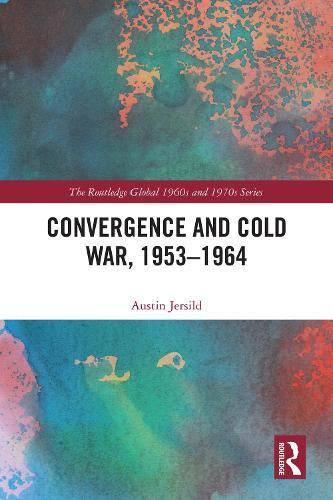
Convergence and Cold War, 1953–1964

Author:   Austin Jersild (Old Dominion University, USA)
Publisher:   Taylor & Francis Ltd
ISBN:  

9781032691930


Pages:   214
Publication Date:   31 July 2025
Format:   Hardback
Availability:   Not yet available   Availability explained
This item is yet to be released. You can pre-order this item and we will dispatch it to you upon its release.

Our Price $305.00 Quantity:  
Add to Cart

Share |

Convergence and Cold War, 1953–1964


Overview

The academic debate in Western social science about the growing “convergence” or similarities between American and Soviet society acquired political significance in the diverse relationships that made up the global Cold War. Convergence and Cold War, 1953–1964 explores the consequences and challenges of convergence through a discussion of U.S.–Soviet relations, Sino-Soviet relations, and East–South relations. The book argues that the debate about convergence was a debate about the character of the broader Cold War itself, and the background to the more recent experience of contemporary globalization and its shared practices and norms. The volume begins by addressing how Americans debated the prospect of a less threatening socialist world shaped by the challenges of industrial modernity, while the Soviets hoped to imitate Western standards of living alongside developing supposedly more elevated forms of consumption, leisure, culture, trade, and economic exchange. The second section analyzes the way supporters of Chairman Mao in China associated the socialist bloc’s engagement with the West as an example of its deterioration and dangerous abandonment of socialist values and practices. The closing chapters examine how the Chinese communicated their frustration with the Soviets and East Europeans to postcolonial states in the Global South. Jersild unpacks this through a case study of Guinea-Conakry, which posed questions about the common practices and policies of the superpowers. This volume is a valuable resource to students and scholars of the Cold War and International Relations, as well as all those interested in postcolonial studies and the history of globalization.

Full Product Details

Author:   Austin Jersild (Old Dominion University, USA)
Publisher:   Taylor & Francis Ltd
Imprint:   Routledge
Weight:   0.570kg
ISBN:  

9781032691930


ISBN 10:   103269193
Pages:   214
Publication Date:   31 July 2025
Audience:   Professional and scholarly ,  Professional & Vocational
Format:   Hardback
Publisher's Status:   Active
Availability:   Not yet available   Availability explained
This item is yet to be released. You can pre-order this item and we will dispatch it to you upon its release.

Table of Contents

Acknowledgements Introduction:1953-1964 as International History Part One: Convergence and Consumerism: U.S.—Soviet Relations 1. Telling the Story of “Socialist Consumerism” 2. The USIA National Exhibit, Moscow: Strategic Consumerism and U.S. Foreign Policy Part Two: Convergence and Collusion: Sino—Soviet Relations 3. Mao’s Version of the Socialist World 4. Khrushchev’s Version of the Socialist World Part Three: Convergence and Colonialism: East—South Relations 5. Advising, Aid, and Trade in Guinea-Conakry: Hopes, Frustrations, Outcomes 6. Two Imperialisms: Chinese Lessons for the Guineans Conclusion: Convergence and Cold War Bibliography

Reviews

Author Information

Austin Jersild is Professor of History at Old Dominion University and the author of The Sino-Soviet Alliance: An International History (2014).

Tab Content 6

Author Website:  

Countries Available

All regions
Latest Reading Guide

RGFEB26


Shopping Cart
Your cart is empty
Shopping cart
Mailing List