Overview
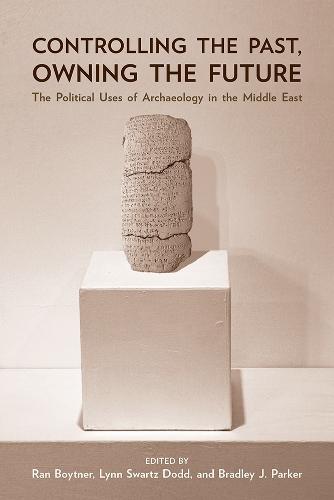
What are the political uses—and misuses—of archaeology in the Middle East? In answering this question, the contributors to this volume lend their regional expertise to a variety of case studies, including the Taliban’s destruction of Buddhas in Afghanistan, the commercialization of archaeology in Israel, the training of Egyptian archaeology inspectors, and the debate over Turkish identity sparked by the film Troy, among other provocative subjects. Other chapters question the ethical justifications of archaeology in places that have “alternative engagements with the material past.” In the process, they form various views of the role of the archaeologist, from steward of the historical record to agent of social change. The diverse contributions to this volume share a common framework in which the political use of the past is viewed as a process of social discourse. According to this model, political appropriations are seen as acts of social communication designed to accrue benefits to particular groups. Thus the contributors pay special attention to competing social visions and the filters these impose on archaeological data. But they are also attentive to the potential consequences of their own work. Indeed, as the editors remind us, “people’s lives may be affected, sometimes dramatically, because of the material remains that surround them.” Rounding out this important volume are critiques by two top scholars who summarize and synthesize the preceding chapters.|What are the political uses--and misuses--of archaeology in the Middle East? The contributors to this volume lend their regional expertise to a variety of case studies, including the Taliban's destruction of Buddhas in Afghanistan, the commercialization of archaeology in Israel, and the debate over Turkish identity sparked by the film Troy. In the process, they form various views of the role of the archaeologist, from steward of the historical record to agent of social change.
Full Product Details
Author: Ran Boytner ,
Lynn Swartz Dodd ,
Bradley J. Parker
Publisher: University of Arizona Press
Imprint: University of Arizona Press
Dimensions:
Width: 15.20cm
, Height: 3.00cm
, Length: 23.10cm
Weight: 0.570kg
ISBN: 9780816527953
ISBN 10: 0816527954
Pages: 320
Publication Date: 15 December 2010
Audience:
Professional and scholarly
,
General/trade
,
Professional & Vocational
,
General
Format: Hardback
Publisher's Status: Active
Availability: Awaiting stock

The supplier is currently out of stock of this item. It will be ordered for you and placed on backorder. Once it does come back in stock, we will ship it out for you.
Author Information
Lynn Swartz Dodd currently serves as a lecturer and curator for the Archaeological Research Collection at the University of Southern California. Bradley J. Parker is Assistant Professor of History at the University of Utah and author of The Mechanics of Empire. Ran Boytner is the director for International Research at the Cotsen Institute of Archaeology at the University of California, Los Angeles, as well as an adjunct professor of anthropology at the University of Southern California.