|
|
|||
|
||||
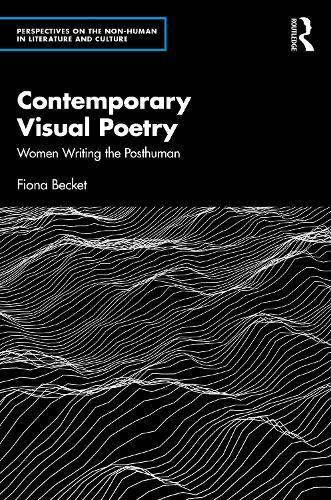
OverviewThis book examines contemporary visual poetry and how conceptual writing, poem-objects, and computational texts shape a posthumanist understanding that is “situated”. First, the eye is theorised with respect to ethical understanding. When visual poets reclaim vision, visual poetics becomes a feminist praxis. In Paula Claire and Maggie O’Sullivan, visual poetry becomes an ecological practice concerned with connectivity in the entanglements of natureculture. In O’Sullivan, Campanello, Bergvall, and Philip, spatial and temporal sense (de)formation sustains radical forms of voicing and eyewitness. Finally, works by Mez Breeze and Stephanie Strickland expand our understanding of visual poetry in digital (electronic, virtual reality, and artificial intelligence) contexts in which technology and affect are intimately connected. These visual texts open up Braidotti’s question with respect to how we are to “visualize the subject as a transversal entity encompassing the human, our genetic neighbours the animals and the earth as a whole, and to do so within an understandable language”. Full Product DetailsAuthor: Fiona BecketPublisher: Taylor & Francis Ltd Imprint: Routledge Weight: 0.586kg ISBN: 9781032231631ISBN 10: 1032231637 Pages: 220 Publication Date: 14 September 2025 Audience: College/higher education , Tertiary & Higher Education Format: Hardback Publisher's Status: Active Availability: Not yet available This item is yet to be released. You can pre-order this item and we will dispatch it to you upon its release. Table of ContentsAcknowledgements Illustrations Chapter 1 Introduction Reclaiming Vision Chapter 2 Textual Bodies: Visual Poetry as Feminist Praxis Chapter 3 The “Multiple Body”: Visual Poetry’s Natural Histories Chapter 4 Eye Witness and the Curated Language of Others Chapter 5 Computational Environments and the Extended Poet Bibliography IndexReviewsContemporary Visual Poetics not only offers an important rethinking of the history of “extended poetics,” as its author Fiona Becket names it, but breaks essential new ground across technologies which many critics still feel unsure of how to read. This book provides a vocabulary and a profound understanding of “posthuman” existence played out in the avant-garde poem, mapping new ways that such work is impacting its society and environment. Becket's connection of her core investigation to ecocritical thinking – and therefore our current (we hope not final) emergencies – also makes this intervention timely, even urgent. --Romana Huk, Associate Professor, University of Notre Dame, USA Author InformationFiona Becket is professor of contemporary poetics in the School of English, University of Leeds. She has written books and articles on aspects of modernist literature, visual poetry, and poetics. Tab Content 6Author Website:Countries AvailableAll regions |
||||