Overview
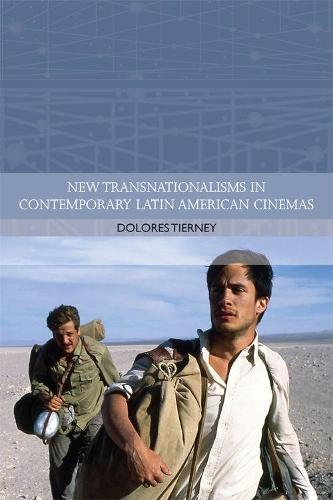
In the late 1990s and early 2000s Latin American films like Amores perros, Y tu mam tambien and Cidade de Deus enjoyed an unprecedented level of critical and commercial success in the world market. Benefitting from external financial and/or creative input, these films were considered examples of transnational cinema. Through a textual analysis of six filmmakers (Alejandro Gonzlez Irritu, Alfonso Cuarn, Guillermo del Toro, Fernando Meirelles, Walter Salles and Juan Jose Campanella), this book examines these transnational films and the subsequent wave of commercially successful 'deterritorialised' films by the same directors. It argues that although films produced within the structures of the United States film industry may have been commercially successful, they are not necessarily apolitical or totally divorced from key notions of national or continental identity. Bringing a new perspective to the films of Latin America's transnational auteurs, this is a major contribution towards understanding how different genres function across different cultures.
Full Product Details
Author: Professor Dolores Tierney (Professor, University of Sussex)
Publisher: Edinburgh University Press
Imprint: Edinburgh University Press
Weight: 0.575kg
ISBN: 9780748645732
ISBN 10: 074864573
Pages: 296
Publication Date: 16 February 2018
Audience:
College/higher education
,
Undergraduate
,
Postgraduate, Research & Scholarly
Format: Hardback
Publisher's Status: Active
Availability: Manufactured on demand

We will order this item for you from a manufactured on demand supplier.
Reviews
Tierney first examines the cultural politics of transnational filmmaking in Latin America in the late 1990s and the 2000s, a fruitful period that saw the production of international commercial and critical successes such as Central Station and City of God. In the remainder of the book, the author takes an auteurist approach, looking at six prominent Latin American transnational filmmakers--Alfonso Cuaron, Guillermo del Toro, Walter Salles, Fernando Meirelles, Alejandro Gonzalez Inarritu, and Juan Jose Campanella--with the goal of rethinking, as she writes in the epilogue, 'the relationship between Hollywood, popular cinema and contemporary Latin American cinema.' She succeeds in this goal in part through close textual analysis of key films, such as Campanella's The Secret in Their Eyes. In addition, Tierney, when examining specific works, fruitfully takes into account relevant issues such as funding sources (e.g., international film festivals), modes of production, international support (e.g., Sundance) for the development of scripts, and genre. She devotes considerable space to studying the deterritorialized films of these auteurs--productions (e.g., Salles's On the Road ) shot and/or coproduced outside a given auteur's national film industry. This insightful volume is well conceptualized and researched. --D. West, emeritus, University of Idaho CHOICE An excellent read for scholars of transnational and Latin American cinema. It provides a remarkable in-depth discussion of six key Latin American filmmakers with a focus on issues of production, funding, auterism and the use of popular genres. Dolores Tierney signposts the reader often, making this book very approachable for students of film too. --Marta F Suarez Transnational Screens
This insightful volume is well conceptualized and researched. -- D. West, emeritus, University of Idaho, CHOICE
An excellent read for scholars of transnational and Latin American cinema. It provides a remarkable in-depth discussion of six key Latin American filmmakers with a focus on issues of production, funding, auterism and the use of popular genres. Dolores Tierney signposts the reader often, making this book very approachable for students of film too. --Marta F Suarez Transnational Screens Tierney first examines the cultural politics of transnational filmmaking in Latin America in the late 1990s and the 2000s, a fruitful period that saw the production of international commercial and critical successes such as Central Station and City of God. In the remainder of the book, the author takes an auteurist approach, looking at six prominent Latin American transnational filmmakers--Alfonso Cuaron, Guillermo del Toro, Walter Salles, Fernando Meirelles, Alejandro Gonzalez Inarritu, and Juan Jose Campanella--with the goal of rethinking, as she writes in the epilogue, 'the relationship between Hollywood, popular cinema and contemporary Latin American cinema.' She succeeds in this goal in part through close textual analysis of key films, such as Campanella's The Secret in Their Eyes. In addition, Tierney, when examining specific works, fruitfully takes into account relevant issues such as funding sources (e.g., international film festivals), modes of production, international support (e.g., Sundance) for the development of scripts, and genre. She devotes considerable space to studying the deterritorialized films of these auteurs--productions (e.g., Salles's On the Road ) shot and/or coproduced outside a given auteur's national film industry. This insightful volume is well conceptualized and researched. --D. West, emeritus, University of Idaho CHOICE
Author Information
Dolores Tierney is Professor and Head of Film Studies in the School of Media, Arts and Humanities at the University of Sussex. She is author of Emilio Fernández: Pictures in the Margins (Manchester, 2007) and New Transnationalisms in Contemporary Latin American Cinemas (Edinburgh, 2018) and co-editor of Latsploitation, Exploitation Cinema and Latin American (Routledge, 2009), The Transnational Fantasies of Guillermo del Toro (Palgrave Macmillan, 2014) and Ana M. Lopez: Essays (SUNY, 2023)