Overview
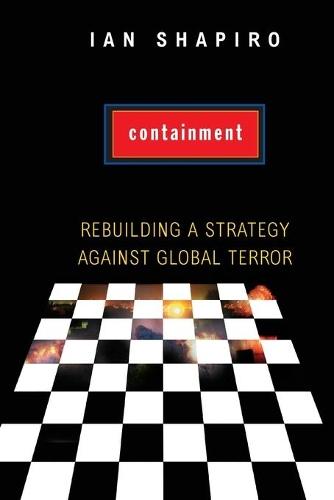
In this powerfully argued book, Ian Shapiro shows that the idea of containment offers the best hope for protecting Americans and their democracy into the future. His bold vision for American security in the post-September 11 world is reminiscent of George Kennan's historic ""Long Telegram,"" in which the containment strategy that won the Cold War was first developed. The Bush Doctrine of preemptive war and unilateral action has been marked by incompetence--missed opportunities to capture Osama bin Laden, failures of postwar planning for Iraq, and lack of an exit strategy. But Shapiro contends that the problems run deeper. He explains how the Bush Doctrine departs from the best traditions of American national-security policy and accepted international norms, and renders Americans and democratic values less safe. He debunks the belief that containment is obsolete. Terror networks might be elusive, but the enabling states that make them dangerous can be contained. Shapiro defends containment against charges of appeasement, arguing that force against a direct threat will be needed.He outlines new approaches to intelligence, finance, allies, diplomacy, and international institutions.He explains why containment is the best alternative to a misguided agenda that naively assumes democratic regime change is possible from the barrel of an American gun. President Bush has defined the War on Terror as the decisive ideological struggle of our time. Shapiro shows what a self-defeating mistake that is. He sets out a viable alternative that offers real security to Americans, reclaims America's international stature, and promotes democracy around the world.
Full Product Details
Author: Ian Shapiro
Publisher: Princeton University Press
Imprint: Princeton University Press
Dimensions:
Width: 12.70cm
, Height: 1.50cm
, Length: 20.30cm
Weight: 0.255kg
ISBN: 9780691137070
ISBN 10: 0691137072
Pages: 208
Publication Date: 17 February 2008
Audience:
General/trade
,
College/higher education
,
Professional and scholarly
,
General
,
Tertiary & Higher Education
Format: Paperback
Publisher's Status: Active
Availability: Manufactured on demand

We will order this item for you from a manufactured on demand supplier.
Language: English
Reviews
Had President Bush adopted Shapiro's approach on Sept. 12, 2001, it is quite likely that he would have had more success in marginalizing adversaries. -- Samantha Power New York Times Book Review The Bush administration's post-9/11 national security strategy has come in for tremendous criticism, but opponents have had difficulty articulating a coherent alternative. Here is one. Shapiro ... offers a brilliant sketch of a new strategic vision that draws on Cold War-era containment ideas. -- G. John Ikenberry Foreign Affairs It's to be hoped that Shapiro is not done--his ideas here deserve extended discussion. And as the post-Bush world starts to take form, there will be a continued need for creative thinking and the rediscovery of intellectual resources we have unwisely abandoned. -- Aziz Huq American Prospect Shapiro makes a convincing case that so-called rogue states like North Korea and Iran can be deterred and contained even if they develop nuclear weapons. -- Joseph S. Nye, Jr. Chronicle of Higher Education Americans who want more than garage logic and uninformed rhetoric should read [this] book. Bush administration officials should read [this] book. -- Roger Buoen Minneapolis Star Tribune Containment is both a forceful critique of current foreign policy and a prescriptive response to it... Shapiro offers a series of complicated and detailed strategies to confront global terror, including greater investment in human intelligence to methodically track and stop weapons proliferation, and to his credit, he avoids oversimplification and instead offers thorough analyses of individual situations... If only such a clear and thorough analysis existed before the last election. -- Joshua J. Kearney The Harvard Crimson The effects of the Iraq war upon the discussion of American foreign policy have come in waves. The first wave was all about competence...Now the second wave of the discussion is under way, and its subject is not competence but ideology...Ian Shapiro's book is an important document of this second wave...Shapiro argues that the only strategy that makes sense in the aftermath of Iraq is the old strategy of containment, which he believes is firmly grounded in American history and American values. The only correct retort to Bushism is Kennanism... Containment, Shapiro contends, is our fallback, and obviously a wiser course. -- James P. Rubin The New Republic This book is seductive in its belief that the university as endeavour can contribute to a better world. It is written with sensitivity, with reason and with the intelligent, well rounded insights of a liberal educator of great experience. The book asserts everything that I believe in. -- Pamela Taylor Educational Review Shapiro's overall case is compelling... [A]mong the growing number of critiques of the Bush strategy, his is the most comprehensive and, arguably, the most convincing. -- Lieutenant General William E Odom Cambridge Review of International Affairs Shapiro's style is more confrontational than contained but that is to be welcomed in this short work containing some pointed observations. -- Bill Durodie International Affairs
Shapiro's style is more confrontational than contained but that is to be welcomed in this short work containing some pointed observations. --Bill Durodie, International Affairs Shapiro's overall case is compelling. . . . [A]mong the growing number of critiques of the Bush strategy, his is the most comprehensive and, arguably, the most convincing. --Lieutenant General William E Odom, Cambridge Review of International Affairs This book is seductive in its belief that the university as endeavour can contribute to a better world. It is written with sensitivity, with reason and with the intelligent, well rounded insights of a liberal educator of great experience. The book asserts everything that I believe in. --Pamela Taylor, Educational Review The effects of the Iraq war upon the discussion of American foreign policy have come in waves. The first wave was all about competence...Now the second wave of the discussion is under way, and its subject is not competence but ideology...Ian Shapiro's book is an important document of this second wave...Shapiro argues that the only strategy that makes sense in the aftermath of Iraq is the old strategy of containment, which he believes is firmly grounded in American history and American values. The only correct retort to Bushism is Kennanism.... Containment, Shapiro contends, is our fallback, and obviously a wiser course. --James P. Rubin, The New Republic Containment is both a forceful critique of current foreign policy and a prescriptive response to it. . . . Shapiro offers a series of complicated and detailed strategies to confront global terror, including greater investment in human intelligence to methodically track and stop weapons proliferation, and to his credit, he avoids oversimplification and instead offers thorough analyses of individual situations. . . . If only such a clear and thorough analysis existed before the last election. --Joshua J. Kearney, The Harvard Crimson Americans who want more than garage logic and uninformed rhetoric should read [this] book. Bush administration officials should read [this] book. --Roger Buoen, Minneapolis Star Tribune Shapiro makes a convincing case that so-called rogue states like North Korea and Iran can be deterred and contained even if they develop nuclear weapons. --Joseph S. Nye, Jr., Chronicle of Higher Education It's to be hoped that Shapiro is not done--his ideas here deserve extended discussion. And as the post-Bush world starts to take form, there will be a continued need for creative thinking and the rediscovery of intellectual resources we have unwisely abandoned. --Aziz Huq, American Prospect The Bush administration's post-9/11 national security strategy has come in for tremendous criticism, but opponents have had difficulty articulating a coherent alternative. Here is one. Shapiro . . . offers a brilliant sketch of a new strategic vision that draws on Cold War-era containment ideas. --G. John Ikenberry, Foreign Affairs Had President Bush adopted Shapiro's approach on Sept. 12, 2001, it is quite likely that he would have had more success in marginalizing adversaries. --Samantha Power, New York Times Book Review
Had President Bush adopted Shapiro's approach on Sept. 12, 2001, it is quite likely that he would have had more success in marginalizing adversaries. --Samantha Power, New York Times Book Review The Bush administration's post-9/11 national security strategy has come in for tremendous criticism, but opponents have had difficulty articulating a coherent alternative. Here is one. Shapiro ... offers a brilliant sketch of a new strategic vision that draws on Cold War-era containment ideas. --G. John Ikenberry, Foreign Affairs It's to be hoped that Shapiro is not done--his ideas here deserve extended discussion. And as the post-Bush world starts to take form, there will be a continued need for creative thinking and the rediscovery of intellectual resources we have unwisely abandoned. --Aziz Huq, American Prospect Shapiro makes a convincing case that so-called rogue states like North Korea and Iran can be deterred and contained even if they develop nuclear weapons. --Joseph S. Nye, Jr., Chronicle of Higher Education Americans who want more than garage logic and uninformed rhetoric should read [this] book. Bush administration officials should read [this] book. --Roger Buoen, Minneapolis Star Tribune Containment is both a forceful critique of current foreign policy and a prescriptive response to it... Shapiro offers a series of complicated and detailed strategies to confront global terror, including greater investment in human intelligence to methodically track and stop weapons proliferation, and to his credit, he avoids oversimplification and instead offers thorough analyses of individual situations... If only such a clear and thorough analysis existed before the last election. --Joshua J. Kearney, The Harvard Crimson The effects of the Iraq war upon the discussion of American foreign policy have come in waves. The first wave was all about competence...Now the second wave of the discussion is under way, and its subject is not competence but ideology...Ian Shapiro's book is an important document of this second wave...Shapiro argues that the only strategy that makes sense in the aftermath of Iraq is the old strategy of containment, which he believes is firmly grounded in American history and American values. The only correct retort to Bushism is Kennanism... Containment, Shapiro contends, is our fallback, and obviously a wiser course. --James P. Rubin, The New Republic This book is seductive in its belief that the university as endeavour can contribute to a better world. It is written with sensitivity, with reason and with the intelligent, well rounded insights of a liberal educator of great experience. The book asserts everything that I believe in. --Pamela Taylor, Educational Review Shapiro's overall case is compelling... [A]mong the growing number of critiques of the Bush strategy, his is the most comprehensive and, arguably, the most convincing. --Lieutenant General William E Odom, Cambridge Review of International Affairs Shapiro's style is more confrontational than contained but that is to be welcomed in this short work containing some pointed observations. --Bill Durodie, International Affairs
Had President Bush adopted Shapiro's approach on Sept. 12, 2001, it is quite likely that he would have had more success in marginalizing adversaries. -- Samantha Power New York Times Book Review The Bush administration's post-9/11 national security strategy has come in for tremendous criticism, but opponents have had difficulty articulating a coherent alternative. Here is one. Shapiro ... offers a brilliant sketch of a new strategic vision that draws on Cold War-era containment ideas. -- G. John Ikenberry Foreign Affairs It's to be hoped that Shapiro is not done--his ideas here deserve extended discussion. And as the post-Bush world starts to take form, there will be a continued need for creative thinking and the rediscovery of intellectual resources we have unwisely abandoned. -- Aziz Huq American Prospect Shapiro makes a convincing case that so-called rogue states like North Korea and Iran can be deterred and contained even if they develop nuclear weapons. -- Joseph S. Nye, Jr. Chronicle of Higher Education Americans who want more than garage logic and uninformed rhetoric should read [this] book. Bush administration officials should read [this] book. -- Roger Buoen Minneapolis Star Tribune Containment is both a forceful critique of current foreign policy and a prescriptive response to it... Shapiro offers a series of complicated and detailed strategies to confront global terror, including greater investment in human intelligence to methodically track and stop weapons proliferation, and to his credit, he avoids oversimplification and instead offers thorough analyses of individual situations... If only such a clear and thorough analysis existed before the last election. -- Joshua J. Kearney The Harvard Crimson The effects of the Iraq war upon the discussion of American foreign policy have come in waves. The first wave was all about competence...Now the second wave of the discussion is under way, and its subject is not competence but ideology...Ian Shapiro's book is an important document of this second wave...Shapiro argues that the only strategy that makes sense in the aftermath of Iraq is the old strategy of containment, which he believes is firmly grounded in American history and American values. The only correct retort to Bushism is Kennanism... Containment, Shapiro contends, is our fallback, and obviously a wiser course. -- James P. Rubin The New Republic This book is seductive in its belief that the university as endeavour can contribute to a better world. It is written with sensitivity, with reason and with the intelligent, well rounded insights of a liberal educator of great experience. The book asserts everything that I believe in. -- Pamela Taylor Educational Review Shapiro's overall case is compelling... [A]mong the growing number of critiques of the Bush strategy, his is the most comprehensive and, arguably, the most convincing. -- Lieutenant General William E Odom Cambridge Review of International Affairs Shapiro's style is more confrontational than contained but that is to be welcomed in this short work containing some pointed observations. -- Bill Durodie International Affairs
""Had President Bush adopted Shapiro's approach on Sept. 12, 2001, it is quite likely that he would have had more success in marginalizing adversaries.""--Samantha Power, New York Times Book Review ""The Bush administration's post-9/11 national security strategy has come in for tremendous criticism, but opponents have had difficulty articulating a coherent alternative. Here is one. Shapiro ... offers a brilliant sketch of a new strategic vision that draws on Cold War-era containment ideas.""--G. John Ikenberry, Foreign Affairs ""It's to be hoped that Shapiro is not done--his ideas here deserve extended discussion. And as the post-Bush world starts to take form, there will be a continued need for creative thinking and the rediscovery of intellectual resources we have unwisely abandoned.""--Aziz Huq, American Prospect ""Shapiro makes a convincing case that so-called rogue states like North Korea and Iran can be deterred and contained even if they develop nuclear weapons.""--Joseph S. Nye, Jr., Chronicle of Higher Education ""Americans who want more than garage logic and uninformed rhetoric should read [this] book. Bush administration officials should read [this] book.""--Roger Buoen, Minneapolis Star Tribune ""Containment is both a forceful critique of current foreign policy and a prescriptive response to it... Shapiro offers a series of complicated and detailed strategies to confront global terror, including greater investment in human intelligence to methodically track and stop weapons proliferation, and to his credit, he avoids oversimplification and instead offers thorough analyses of individual situations... If only such a clear and thorough analysis existed before the last election.""--Joshua J. Kearney, The Harvard Crimson ""The effects of the Iraq war upon the discussion of American foreign policy have come in waves. The first wave was all about competence...Now the second wave of the discussion is under way, and its subject is not competence but ideology...Ian Shapiro's book is an important document of this second wave...Shapiro argues that the only strategy that makes sense in the aftermath of Iraq is the old strategy of containment, which he believes is firmly grounded in American history and American values. The only correct retort to Bushism is Kennanism... Containment, Shapiro contends, is our fallback, and obviously a wiser course.""--James P. Rubin, The New Republic ""This book is seductive in its belief that the university as endeavour can contribute to a better world. It is written with sensitivity, with reason and with the intelligent, well rounded insights of a liberal educator of great experience. The book asserts everything that I believe in.""--Pamela Taylor, Educational Review ""Shapiro's overall case is compelling... [A]mong the growing number of critiques of the Bush strategy, his is the most comprehensive and, arguably, the most convincing.""--Lieutenant General William E Odom, Cambridge Review of International Affairs ""Shapiro's style is more confrontational than contained but that is to be welcomed in this short work containing some pointed observations.""--Bill Durodie, International Affairs
Author Information
Ian Shapiro is Sterling Professor of Political Science and Henry R. Luce Director of the MacMillan Center for International and Area Studies at Yale University. His many books include The Flight from Reality in the Human Sciences and, with Michael J. Graetz, Death by a Thousand Cuts: The Fight over Taxing Inherited Wealth (both Princeton).