Overview
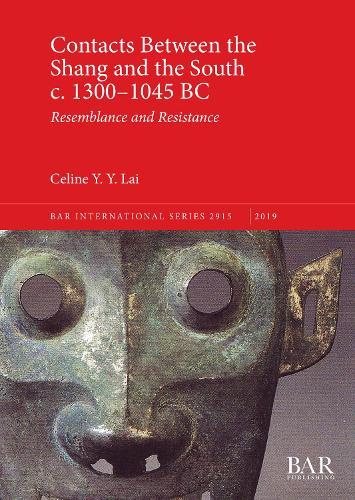
This monograph presents the first thorough study of the bronzes from south-central China. The finds from the Yangtze areas have conventionally been thought to have been entirely inspired by Shang traditions and ritual practices in Henan. This monograph applies the perspective of materiality to argue otherwise. Through investigations of three main bronze types: ritual vessels, bells and weapons, the author suggests that the Yangtze societies were far more independent from the Shang traditions than most archaeologists have understood them to have been.
Full Product Details
Author: Celine Y. Y. Lai
Publisher: BAR Publishing
Imprint: BAR Publishing
Weight: 0.510kg
ISBN: 9781407316055
ISBN 10: 1407316052
Pages: 128
Publication Date: 28 January 2019
Audience:
Professional and scholarly
,
Professional & Vocational
Format: Paperback
Publisher's Status: Active
Availability: Available To Order

We have confirmation that this item is in stock with the supplier. It will be ordered in for you and dispatched immediately.
Reviews
'Both in Chinese and English, work that takes this holistic approach is very rare, and the author should be commended for her efforts.' Prof. Dame Jessica Rawson, Professor of Chinese Art and Archaeology, University of Oxford 'This is an important contribution, as it throws new light on Bronze Age China, especially cultural interactions between several major bronze-using centres during the late Shang period.' Professor Jianjun Mei, Director of the Needham Research Institute, University of Cambridge
'Both in Chinese and English, work that takes this holistic approach is very rare, and the author should be commended for her efforts.' Prof. Dame Jessica Rawson, Professor of Chinese Art and Archaeology, University of Oxford 'This is an important contribution, as it throws new light on Bronze Age China, especially cultural interactions between several major bronze-using centres during the late Shang period.' Professor Jianjun Mei, Director of the Needham Research Institute, University of Cambridge
'Both in Chinese and English, work that takes this holistic approach is very rare, and the author should be commended for her efforts.' Prof. Dame Jessica Rawson, Professor of Chinese Art and Archaeology, University of Oxford 'This is an important contribution, as it throws new light on Bronze Age China, especially cultural interactions between several major bronze-using centres during the late Shang period.' Professor Jianjun Mei, Director of the Needham Research Institute, University of Cambridge
'Both in Chinese and English, work that takes this holistic approach is very rare, and the author should be commended for her efforts.' Prof. Dame Jessica Rawson, Professor of Chinese Art and Archaeology, University of Oxford 'This is an important contribution, as it throws new light on Bronze Age China, especially cultural interactions between several major bronze-using centres during the late Shang period.' Professor Jianjun Mei, Director of the Needham Research Institute, University of Cambridge
Author Information
Celine Lai is Associate Professor in the School of Archaeology and Museology, Peking University. Her research interests cover Early China, Bronze Age Archaeology and museum display and interpretation. Every year since 2014 she has been holding a conference on Chinese Archaeology, hoping to establish a regular platform for academics to exchange new finds and research.