Overview
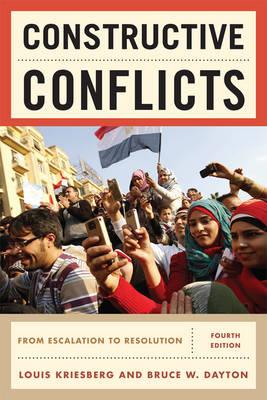
This comprehensive and highly regarded book provides a framework for analyzing diverse social conflicts. The fourth edition of Constructive Conflicts maintains the book's synthesis of theories about conflict, with key updates throughout. These include a more reader-friendly first chapter, new examples such as the Arab Spring, expanded discussions of recovery from violence and oppression, of reconciliation, and of moral concerns, and new discussions of social media and other ways conflicts are waged. Constructive Conflicts draws from relevant academic disciplines and empirical analyses of diverse conflicts to discuss the emergence, escalation, de-escalation, transformation, and settlement of conflicts. Throughout, the authors examine the strategies that partisans and intermediaries can use to minimize the destructiveness of conflicts and foster constructive ways to wage and resolve them.
Full Product Details
Author: Louis Kriesberg ,
Bruce W. Dayton
Publisher: Bloomsbury Publishing Plc
Imprint: Rowman & Littlefield
Edition: 4th Revised edition
Dimensions:
Width: 16.20cm
, Height: 2.90cm
, Length: 24.00cm
Weight: 0.740kg
ISBN: 9781442206830
ISBN 10: 1442206837
Pages: 428
Publication Date: 09 December 2011
Recommended Age: From 18 from 18 to 22 To 22
Audience:
College/higher education
,
Tertiary & Higher Education
Format: Hardback
Publisher's Status: Out of Print
Availability: Awaiting stock

Reviews
The mass protests, resulting violence and intergroup tensions within communities around the world this past year have made this fourth edition of Constructive Conflicts an urgently needed addition to dispute resolution literature. The authors have reshaped the relevant theory and rigorous analysis of past editions, building in the learning from recent events and situations. The result is successful, with the objective of improving the understanding and decisions of political leaders, non-governmental actors, academics and students of conflict management. Of special interest is the new Chapter 10, which recognizes that the end of conflict simply marks its transformation from one state to another. It identifies the outcome conditions, conflict sequences and post-agreement consequences that shape the new post-conflict relationships, and offers key guides to help decision makers and practitioners in designing a more constructive future for disputing parties. Conflict management practitione
Bringing together an accurate understanding of conflict and its resolution is a feast of significant proportions. Louis Kriesberg has improved on his already excellent volume. His grasp of established research and new understandings is superb, and the book is a must read for any scholar and student in the emerging field of conflict resolution.--Bartoli, Andrea
Author Information
Louis Kriesberg is professor emeritus of sociology and Maxwell Professor Emeritus of Social Conflict Studies at Syracuse University. He is the founding director of the Program on the Analysis and Resolution of Conflicts and past president of the Society for the Study of Social Problems. Bruce W. Dayton is associate professor of conflict transformation and the executive director of the CONTACT Peacebuilding Program at the School for International Training.