Overview
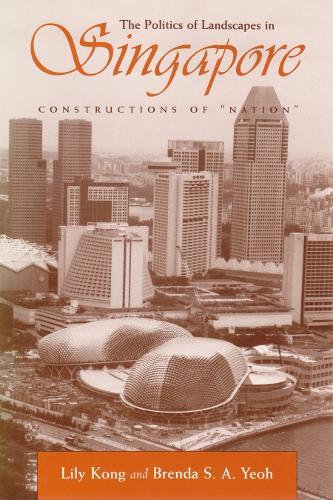
This book shows how power relations that define and challenge the concept of """"nation"""" are played out in and through landscapes. Has the era of globalization neutralized the institution of """"nation?"""" This thought-provoking book focuses on attempts to build """"nation"""" through landscape. Specifically, it explores strategies employed by Singapore, a multiracial society, to create a Singapore """"nation"""" with an emphasis on the role of landscapes. As such, the authors cast a keen eye on religious buildings, public housing, heritage landscapes, and street name changes as tangible methods of nation-building in a postcolonial society. The authors point out that notions of """"identity"""" and """"nation"""" are social constructs rooted in history. They then illustrate how """"nation"""" and """"national identity"""" are concepts that are negotiated and disputed by varied social, economic, and political groups - some of which may actively resist powerful state-centrist attitudes. Throughout this work, the role of the landscape prevails both as a way to naturalize state ideologies and as a means of providing possibilities for reinterpretation in everyday life. Insightful and informative, this is a crucial reference for geographers as well as scholars of international political economy, postcolonial and cultural studies, and Asian history.
Full Product Details
Author: Lily Kong ,
Brenda S. A. Yeoh
Publisher: Syracuse University Press
Imprint: Syracuse University Press
Edition: Annotated edition
Dimensions:
Width: 15.20cm
, Height: 2.10cm
, Length: 22.90cm
Weight: 0.454kg
ISBN: 9780815629610
ISBN 10: 0815629613
Pages: 268
Publication Date: 28 February 2003
Audience:
College/higher education
,
Professional and scholarly
,
Undergraduate
,
Postgraduate, Research & Scholarly
Format: Hardback
Publisher's Status: Active
Availability: Temporarily unavailable

The supplier advises that this item is temporarily unavailable. It will be ordered for you and placed on backorder. Once it does come back in stock, we will ship it out to you.
Reviews
An empirically rich application of contemporary ideas in cultural and political geography, Kong and Yeoh's work is a very rewarding read.--Progress in Human Geography Kong and Yeoh delve into the building of a nation through the use of landscapes. . . . With its relatively new status of a nation, Singapore has struggled with the development of a nation as a means of giving people a sense of pride and belonging and a method to discourage emigration. Kong and Yeoh examine the development of this unique nation through 'death, ' religious, housing, heritage and art landscapes in addition to toponymic inscriptions of landscapes. . . . A fascinating book that brings together the nation as defined through landscapes in Singapore. The book is well researched and written in an easy-to-understand tone. Arguments are presented as much as possible from all sides to include both positive and negative impacts of the States' policies.--Journal of Cultural Geography This book intelligently examines the various forces that have shaped Singapore's emergence as a 'nation.' . . . The structure of the book is straightforward. After a general introduction on the rationale of studying 'landscape politics, ' a number of short chapters flesh out various aspects of Singapore's nation-building project. The topics covered are diverse, ranging from an analysis of religion's role in the creation of Singapore as a nation, to a examination of how changes in street names reflect the nation-building process, and a discussion of how the framing of performing arts spaces in Singapore is geared towards enhancing nationalist feelings. . . . A essential read for everyone interested in Singapore's remarkable status in the world economy in general and in Southeast Asia in particular.--Bijdragen: Journal of the Humanities and Social Sciences of Southeast Asia and Oceania
"An empirically rich application of contemporary ideas in cultural and political geography, Kong and Yeoh's work is a very rewarding read.-- ""Progress in Human Geography"" Kong and Yeoh delve into the building of a nation through the use of landscapes. . . . With its relatively new status of a nation, Singapore has struggled with the development of a nation as a means of giving people a sense of pride and belonging and a method to discourage emigration. Kong and Yeoh examine the development of this unique nation through 'death, ' religious, housing, heritage and art landscapes in addition to toponymic inscriptions of landscapes. . . . A fascinating book that brings together the nation as defined through landscapes in Singapore. The book is well researched and written in an easy-to-understand tone. Arguments are presented as much as possible from all sides to include both positive and negative impacts of the States' policies.-- ""Journal of Cultural Geography"""
This book intelligently examines the various forces that have shaped Singapore's emergence as a 'nation.' . . . The structure of the book is straightforward. After a general introduction on the rationale of studying 'landscape politics, ' a number of short chapters flesh out various aspects of Singapore's nation-building project. The topics covered are diverse, ranging from an analysis of religion's role in the creation of Singapore as a nation, to a examination of how changes in street names reflect the nation-building process, and a discussion of how the framing of performing arts spaces in Singapore is geared towards enhancing nationalist feelings. . . . A essential read for everyone interested in Singapore's remarkable status in the world economy in general and in Southeast Asia in particular.--Bijdragen: Journal of the Humanities and Social Sciences of Southeast Asia and Oceania An empirically rich application of contemporary ideas in cultural and political geography, Kong and Yeoh's work is a very rewarding read.--Progress in Human Geography Kong and Yeoh delve into the building of a nation through the use of landscapes. . . . With its relatively new status of a nation, Singapore has struggled with the development of a nation as a means of giving people a sense of pride and belonging and a method to discourage emigration. Kong and Yeoh examine the development of this unique nation through 'death, ' religious, housing, heritage and art landscapes in addition to toponymic inscriptions of landscapes. . . . A fascinating book that brings together the nation as defined through landscapes in Singapore. The book is well researched and written in an easy-to-understand tone. Arguments are presented as much as possible from all sides to include both positive and negative impacts of the States' policies.--Journal of Cultural Geography
This book intelligently examines the various forces that have shaped Singapore's emergence as a 'nation.' . . . The structure of the book is straightforward. After a general introduction on the rationale of studying 'landscape politics, ' a number of short chapters flesh out various aspects of Singapore's nation-building project. The topics covered are diverse, ranging from an analysis of religion's role in the creation of Singapore as a nation, to a examination of how changes in street names reflect the nation-building process, and a discussion of how the framing of performing arts spaces in Singapore is geared towards enhancing nationalist feelings. . . . A essential read for everyone interested in Singapore's remarkable status in the world economy in general and in Southeast Asia in particular.--Bijdragen: Journal of the Humanities and Social Sciences of Southeast Asia and Oceania Kong and Yeoh delve into the building of a nation through the use of landscapes. . . . With its relatively new status of a nation, Singapore has struggled with the development of a nation as a means of giving people a sense of pride and belonging and a method to discourage emigration. Kong and Yeoh examine the development of this unique nation through 'death, ' religious, housing, heritage and art landscapes in addition to toponymic inscriptions of landscapes. . . . A fascinating book that brings together the nation as defined through landscapes in Singapore. The book is well researched and written in an easy-to-understand tone. Arguments are presented as much as possible from all sides to include both positive and negative impacts of the States' policies.--Journal of Cultural Geography An empirically rich application of contemporary ideas in cultural and political geography, Kong and Yeoh's work is a very rewarding read.--Progress in Human Geography
Author Information
Lily Kong is associate professor in the Department of Geography and dean of the Faculty of Arts and Social Sciences at the National University of Singapore. Among numerous publications, she coauthored Singapore: A Developmental City-State and coedited Globalization and The Asia-Pacific: Contested Territories. Brenda S. A. Yeoh is associate professor in the Department of Geography at the National University of Singapore. She is the coauthor of Singapore: A Developmental City-State, co-editor of Gender and Migration and author of Community and Change: The Tanjong Pagar Community Club Story.