Overview
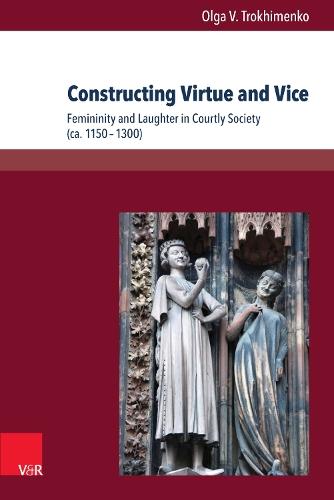
The study examines textual representations of women’s laughter and smiling and their imagined connection to female virtue in a wide variety of discourses and contexts of the German Middle Ages, including medieval epic, ecclesiastical texts, conduct literature, lyric, and sculpture. By engaging with the competing, and at times contradictory, views of female laughter, it reaffirms a disputatious nature of medieval culture, in which multiple views of femininity, sexuality, and virtue stood in a conflicting, yet productive, dialogue with one another. The society that emerges when one looks at medieval German texts is always ambivalent: it thrives on and enjoys talking about sensuality and eroticism, while being constrained by the conventions of polite behavior and the fear of sin; it relies on the ritual use of laughter, while marking it as a sign of lust and perdition. Women’s laughter thus offers an important way into understanding medieval views of gender because it combines physicality with shifting and conflicting cultural norms.
Full Product Details
Author: Prof. Dr. Olga V. Trokhimenko ,
Prof. Dr. Jutta Eming ,
Prof. Dr. Arthur Groos ,
Prof. Dr. Volker Mertens
Publisher: V&R unipress GmbH
Imprint: V&R unipress GmbH
Edition: 1. Edition 2014
Volume: 5
Dimensions:
Width: 16.00cm
, Height: 2.00cm
, Length: 23.50cm
Weight: 0.560kg
ISBN: 9783847101192
ISBN 10: 3847101196
Pages: 253
Publication Date: 14 May 2014
Audience:
General/trade
,
General
Format: Hardback
Publisher's Status: Active
Availability: In Print

This item will be ordered in for you from one of our suppliers. Upon receipt, we will promptly dispatch it out to you. For in store availability, please contact us.
Language: English
Reviews
"""The author's prose is readable and her argumentation clear, and the book would serve well in a course of medieval German literature and society or gender in history."" --Adam Oberlin, The Medieval Review, 15.08.46"
The author's prose is readable and her argumentation clear, and the book would serve well in a course of medieval German literature and society or gender in history. --Adam Oberlin, The Medieval Review, 15.08.46
""The author's prose is readable and her argumentation clear, and the book would serve well in a course of medieval German literature and society or gender in history."" --Adam Oberlin, The Medieval Review, 15.08.46
Author Information
Olga V. Trokhimenko is an Associate Professor of German at the University of North Carolina Wilmington. She received her M.A. in German from the University of Vermont and her Ph.D. in German Studies from Duke University. Her areas of research are medieval and early modern German studies, gender and feminist studies, and literary folklore. Prof. Dr. Jutta Eming ist Inhaberin des Lehrstuhls für Ältere deutsche Literatur und Sprache an der Freien Universität Berlin. Zu ihren Forschungsschwerpunkten gehören Darstellungsformen des Wunderbaren und historischer Emotionalität in der Literatur des Mittelalters und der Frühen Neuzeit sowie die Gattungen des mittelalterlichen Romans und des geistlichen Spiels. Fragestellungen der mediävistischen Gender Studies beschäftigen sie kontinuierlich. Arthur Groos is Avalon Foundation Professor in the Humanities at Cornell University, and Professor of German Studies, Medieval Studies, and Music. Dr. Volker Mertens ist Professor für Ältere deutsche Literatur und Sprache an der FU Berlin. Matthias Meyer ist Universitätsprofessor für Ältere deutsche Sprache und Literatur am Institut für Germanistik der Universität Wien. Professor Dr. Hans-Jochen Schiewer ist Inhaber des Lehrstuhls für Germanische Philologie, Ältere deutsche Literatur und Sprache an der Universität Freiburg. Prof Dr Markus Stock is an Associate Professor of German and Medieval Studies and the Chair of the Department of Germanic Languages and Literatures at the University of Toronto. He held invited visiting professorships at the University of Freiburg and Havard University. His research interests include high medieval German epic, romance, and Minnesang, historical narratology, the history of pain as well as medieval and early modern texts on Alexander the Great. He is the principal investigator of a multi-year research project, Spatial Practices in German literature, 1150-1300, funded by the Canadian Social Sciences and Humanities Research Council.