Overview
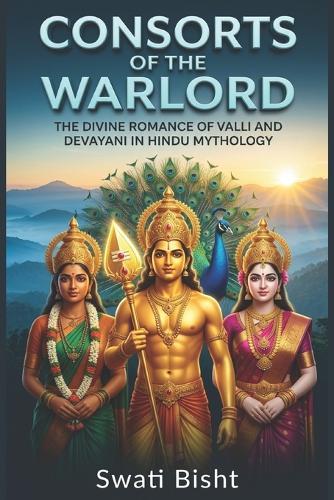
For students of Eastern philosophy, practitioners of Bhakti, and those interested in South Indian heritage, this text addresses a central enigma: Why does the Hindu god of war require two consorts of diametrically opposed origins? It provides a rigorous analysis of how these unions illustrate the soul's dual path toward realization. The deity Murugan, also known as Skanda or Kartikeya, represents the pinnacle of intellectual and martial discipline. Yet, his mythology is inextricably tied to the stories of Valli and Devayani. Devayani, the celestial princess, represents the bride of cosmic order, brought into a union through divine decree and ritual propriety. Her presence ensures the maintenance of Dharma and the stability of the cosmic hierarchy. In contrast, Valli represents the earthly hunter, won through trial, disguise, and the sheer force of unmediated devotion. Her narrative suggests that the divine is equally accessible through raw, uninhibited passion. This work investigates how these two perspectives-the celestial and the terrestrial-intersect within the figure of the warlord. By tracing the evolution of these figures from early Sangam literature to later Puranic texts, it explores how the integration of these two goddesses mirrored the historical merging of tribal and orthodox identities in ancient India. By investigating the temples of the Arupadai Veedu, readers can see how this duality is physically enshrined in the landscape of South India. This is not a simple retelling of myths but a structural analysis of the Shakti archetypes that define human existence. Inside This Guide Master the philosophical concepts of Iccha Shakti and Kriya Shakti to understand the dynamics of human will and action. Evaluate the role of Arunagirinathar's poetry in popularizing the emotional intimacy of these divine relationships. Interpret the iconography and rituals of festivals like Panguni Uthiram to recognize the living presence of these myths. Identify the symbolic meaning behind the various disguises used by the deity to test the depth of the hunter's faith. Compare Sanskrit and Tamil traditions to see how regional identities shaped the current understanding of the triad. This edition provides a high degree of intellectual rigor, synthesizing disparate academic sources and classical scriptures into a single, coherent framework. By removing the layers of decorative prose often found in mythological retellings, it offers a direct path to understanding underlying metaphysics. The inclusion of a precise glossary and a focused bibliography ensures that the reader has the tools necessary for serious inquiry. It is an essential resource for those seeking to appreciate the cultural and spiritual heritage of the Tamil people and the broader Hindu world through a clear, analytical lens. Synthesis of Dual Energies The final movement of this study involves recognizing that the discipline of the celestial bride and the passion of the mountain hunter are not conflicting forces, but complementary energies. When these two are brought into alignment, the individual achieves a state of spiritual equilibrium that honors both social obligation and personal truth.
Full Product Details
Author: Swati Bisht
Publisher: Independently Published
Imprint: Independently Published
Dimensions:
Width: 15.20cm
, Height: 0.90cm
, Length: 22.90cm
Weight: 0.222kg
ISBN: 9798196038631
Pages: 160
Publication Date: 08 May 2026
Audience:
General/trade
,
General
Format: Paperback
Publisher's Status: Active
Availability: Available To Order

We have confirmation that this item is in stock with the supplier. It will be ordered in for you and dispatched immediately.