Overview
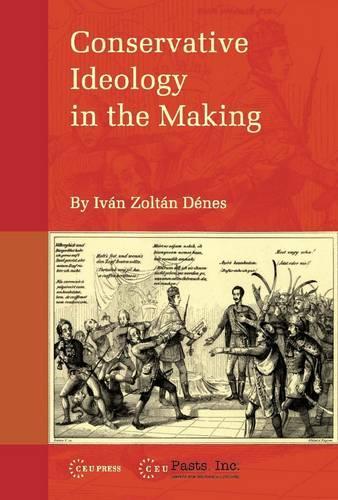
The fifty years or so preceding the watershed of 1848–49 witnessed the emergence of liberal nationalism in Hungary, along with a transmutation of conservatism which appeared then as a party and an ideological system in the political arena. The specific features of the conservatism, combining the protection of the status quo with some reform measures, its strategic vision, conceptual system, argumentation, assessment criteria and values require an in depth exploration and analysis. Different conservative groups were in the background or in opposition from 1848 to 1918, while in the period between the two World Wars, they constituted the overwhelming majority of ruling parties. During the one-party system, from 1949 to 1989, the liberals and conservatives—like all other political groups—were illegal, a status from which they could later emerge upon the change of the political system. The inheritance of the autocratic system frozen up and undigested by the one-party state was thawed after the peaceful regime change, the constitutional revolution and its discrete components began to be reactivated, including the enemy images of earlier discourses. ""Liberal"" and ""conservative"" had become state-party stigmas in line with fascist, reactionary, rightist, and bourgeois. In reaction to that, at first conservative then liberal, intellectual fashions and renascences unfolded in the 1980s. The attempts by liberal and conservative advocates to find predecessors did not favor an objective approach.The first step toward objectivity is establishing distance from the different kinds of enemy images and their political idioms. This is a pressing need because, although several pioneering works have appeared on different variants of the Hungarian liberalisms and conservatisms, there are no serious unbiased syntheses. This work is urgent because the political poles of the constitutional revolution and the ensuing period have up till now been described in terms of different conspiracy theories.
Full Product Details
Author: Ivan Zoltan Denes ,
Judit Pokoly
Publisher: Central European University Press
Imprint: Central European University Press
Dimensions:
Width: 15.90cm
, Height: 2.30cm
, Length: 23.40cm
Weight: 0.599kg
ISBN: 9789639776579
ISBN 10: 9639776572
Pages: 292
Publication Date: 15 September 2009
Audience:
Professional and scholarly
,
Professional & Vocational
Format: Hardback
Publisher's Status: Active
Availability: In Print

This item will be ordered in for you from one of our suppliers. Upon receipt, we will promptly dispatch it out to you. For in store availability, please contact us.
Author Information
Iván Zoltán Dénes is historian of ideas, has published seven books (including four monographs), several scholarly articles, edited and contributed in nine books, was awarded by the British Academy, the Fulbright Association, the International Exchange of Scholars, the Netherlands Institute for Advanced Study scholarships for studying. He is founder and president of the Istvan Bibo Center for Advanced Studies, Budapest, and an elected member of the Academia Europaea, London.