|
|
|||
|
||||
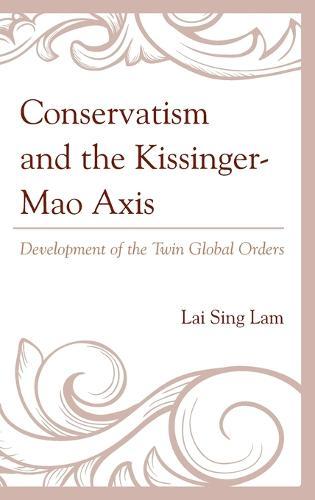
OverviewFull Product DetailsAuthor: Lam Lai SingPublisher: Bloomsbury Publishing Plc Imprint: Lexington Books Dimensions: Width: 16.10cm , Height: 2.10cm , Length: 23.30cm Weight: 0.490kg ISBN: 9781498511391ISBN 10: 1498511392 Pages: 236 Publication Date: 20 May 2015 Audience: College/higher education , Postgraduate, Research & Scholarly Format: Hardback Publisher's Status: Active Availability: In Print This item will be ordered in for you from one of our suppliers. Upon receipt, we will promptly dispatch it out to you. For in store availability, please contact us. Table of ContentsPart I: Background of Kissinger's Doctrine of Balance of Power in Action 1The Postwar International Environment: The American-Soviet-Chinese Triangle Part II: The Kissinger-Mao Axis 2 Conservatism and the Materialization of the Kissinger-Mao Axis 3 The Kissinger-Mao Axis I: The Integration of Kissinger's Balance-of-Power and Mao's Global Order of Tripolarity: Mao's Ping-Pong Diplomacy 4 The Kissinger-Mao Axis II: Mao's Modernization Revolution and Deng the Successor 5 The Kissiner-Mao Axis III: The Post-Dengist Economic Development: Deng's Good- Neighborly Policy and the Rise of China Part III: The Volatile Asia Pacific in the New Century 6 The New American Containment of China Part IV: The Volatile Europe in the New Century 7 The New US-led NATO Containment of the Rising Russia Part V: The New Global Order of Bipolarity of the 21st Century 8 The SCO and Counter-Containment of the WestReviewsLai Sing Lam draws on his deep appreciation of the role that history plays in diplomacy by showing, in Conservatism and the Kissinger-Mao Axis, how the historically-informed strategic ideas of the two central protagonists aligned in the early 1970s to shape the contemporary international order. As it traces the story of the tripolar world order emerging after the creation of the People's Republic of China in 1949, and its transformation into a bipolar world order after 1996, this book offers fresh insights into Mao's thinking. Its stress on the deeply conservative foundations of both Kissinger's and Mao's positions is a useful antidote to romantics and revolutionaries alike. For those of us keen to understand the logic of China's current strategic moves, and how we got here, this book is essential reading. -- David Lovell, Professor of Political Science Author InformationLai Sing Lam is an independent scholar. Tab Content 6Author Website:Countries AvailableAll regions |
||||