|
|
|||
|
||||
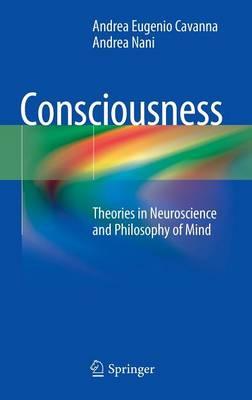
OverviewThis book reviews some of the most important scientific and philosophical theories concerning the nature of mind and consciousness. Current theories on the mind-body problem and the neural correlates of consciousness are presented through a series of biographical sketches of the most influential thinkers across the fields of philosophy of mind, psychology and neuroscience. The book is divided into two parts: the first is dedicated to philosophers of mind and the second, to neuroscientists/experimental psychologists. Each part comprises twenty short chapters, with each chapter being dedicated to one author. A brief introduction is given on his or her life and most important works and influences. The most influential theory/ies developed by each author are then carefully explained and examined with the aim of scrutinizing the strengths and weaknesses of the different approaches to the nature of consciousness. Full Product DetailsAuthor: Andrea Eugenio Cavanna , Andrea NaniPublisher: Springer-Verlag Berlin and Heidelberg GmbH & Co. KG Imprint: Springer-Verlag Berlin and Heidelberg GmbH & Co. K Edition: 2014 ed. Dimensions: Width: 15.50cm , Height: 1.40cm , Length: 23.50cm Weight: 4.956kg ISBN: 9783662440872ISBN 10: 3662440873 Pages: 203 Publication Date: 10 October 2014 Audience: Professional and scholarly , Professional & Vocational Format: Hardback Publisher's Status: Active Availability: Manufactured on demand We will order this item for you from a manufactured on demand supplier. Table of ContentsPart 1. Philosophical Theories of Consciousness: David Chalmers.- Paul and Patricia Churchland.- Tim Crane.- Donald Davidson.- Daniel Dennett.- René Descartes.- Jerry Fodor.- Jaegwon Kim.- William Lycan.- Collin McGinn.- Thomas Nagel.- Alva Noë.- Hilary Putnam.- David Rosenthal.- John Searle.- Part 2. Scientific Theories of Consciousness: Bernard Baars.- Francis Crick and Christof Koch.- Antonio Damasio.- Stanislas Dehaene.- Merlin Donald.- John Eccles and Karl Popper.- Gerald Edelman.- Nicholas Humphrey.- Julian Jaynes.- Benjamin Libet.- John Kevin O'Regan.- Roger Penrose and Stuart Hameroff.- Giulio Tononi.- Max Velmans.- Semir Zeki.ReviewsFor any reader wanting to find out how the philosophical debates between dualistic and identity theories and a variety of intermediate positions have unfolded over the last decades ... this book is a perfect starting point. ... This book makes clear that there is a great deal of opportunity for philosophers, neuroscientists and clinicians to learn from each other when discussing disorders of consciousness, dissociative states or the alterations of qualia ... associated with synaesthesia or hallucinatory experiences. (David E. J. Linden, Cognitive Neuropsychiatry, Vol. 20 (5), 2015) For any reader wanting to find out how the philosophical debates between dualistic and identity theories and a variety of intermediate positions have unfolded over the last decades ... this book is a perfect starting point. ... This book makes clear that there is a great deal of opportunity for philosophers, neuroscientists and clinicians to learn from each other when discussing disorders of consciousness, dissociative states or the alterations of qualia ... associated with synaesthesia or hallucinatory experiences. (David E. J. Linden, Cognitive Neuropsychiatry, Vol. 20 (5), 2015) Author InformationTab Content 6Author Website:Countries AvailableAll regions |
||||