Overview
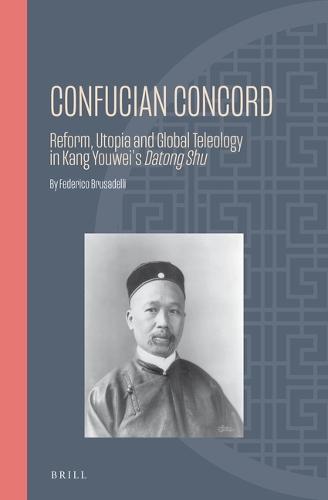
In Confucian Concord, Federico Brusadelli offers an intellectual analysis of the Datong Shu. Written by Kang Youwei (1858-1927) and conceived as his most esoteric and comprehensive legacy to posterity, the book was eventually published posthumously, in 1935, considered “too advanced for the times” in Kang’s own opinion. Connecting Datong Shu to its author’s intellectual biography and framing it within the intellectual and political debate of the time, Brusadelli investigates the conceptual and philosophical implications of Kang’s ‘global prophecy’, showing how an apparently ‘utopian’ and ‘escapist’ piece of literature was actually an attempt to save (at least ideally) the imperial political order, updating the traditional Confucian universalism to a new, ‘modern’ world.
Full Product Details
Author: Federico Brusadelli
Publisher: Brill
Imprint: Brill
Volume: 24
Dimensions:
Width: 15.50cm
, Height: 1.70cm
, Length: 23.50cm
Weight: 0.437kg
ISBN: 9789004434448
ISBN 10: 9004434445
Pages: 208
Publication Date: 02 July 2020
Audience:
Professional and scholarly
,
Professional & Vocational
Format: Hardback
Publisher's Status: Active
Availability: Manufactured on demand

We will order this item for you from a manufactured on demand supplier.
Reviews
""Brusadelli's approach is an exciting one that does not shy away from unorthodox solutions, for example, interpreting China's modernizing ambitions from a standpoint that attempts to transcend the binary oppositions of ""traditional"" versus ""modern,"" ""Chinese"" versus ""Western."" The questions that we, the readers, are after in this excellent work have to do as much with the origins of Kang's influential ideas as with their impact on the rise of nationalism in China, on Mao Zedong's own utopian views, and finally, on the political challenges that the China of our present time needs to face."" - Lehel Balogh, Hokkaido University in Relgious Studies Review, Vol. 47, No. 3 (September 2021).
Brusadelli's approach is an exciting one that does not shy away from unorthodox solutions, for example, interpreting China's modernizing ambitions from a standpoint that attempts to transcend the binary oppositions of traditional versus modern, Chinese versus Western. The questions that we, the readers, are after in this excellent work have to do as much with the origins of Kang's influential ideas as with their impact on the rise of nationalism in China, on Mao Zedong's own utopian views, and finally, on the political challenges that the China of our present time needs to face. - Lehel Balogh, Hokkaido University in Relgious Studies Review, Vol. 47, No. 3 (September 2021).
Author Information
Federico Brusadelli, Ph.D. (2016), University of Naples “L’Orientale”, is Lecturer in Sinology at the Friedrich-Alexander University in Erlangen-Nuremberg.