Overview
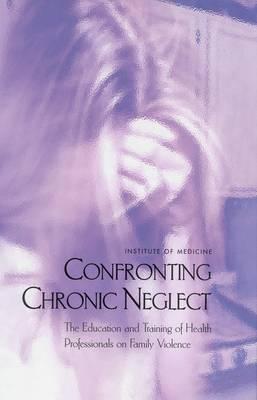
As many as 20 to 25 percent of American adults—or one in every four people—have been victimized by, witnesses of, or perpetrators of family violence in their lifetimes. Family violence affects more people than cancer, yet it's an issue that receives far less attention. Surprisingly, many assume that health professionals are deliberately turning a blind eye to this traumatic social problem. The fact is, very little is being done to educate health professionals about family violence. Health professionals are often the first to encounter victims of abuse and neglect, and therefore they play a critical role in ensuring that victims—as well as perpetrators—get the help they need. Yet, despite their critical role, studies continue to describe a lack of education for health professionals about how to identify and treat family violence. And those that have been trained often say that, despite their education, they feel ill-equipped or lack support from by their employers to deal with a family violence victim, sometimes resulting in a failure to screen for abuse during a clinical encounter. Equally problematic, the few curricula in existence often lack systematic and rigorous evaluation. This makes it difficult to say whether or not the existing curricula even works. Confronting Chronic Neglect offers recommendations, such as creating education and research centers, that would help raise awareness of the problem on all levels. In addition, it recommends ways to involve health care professionals in taking some responsibility for responding to this difficult and devastating issue. Perhaps even more importantly, Confronting Chronic Neglect encourages society as a whole to share responsibility. Health professionals alone cannot solve this complex problem. Responding to victims of family violence and ultimately preventing its occurrence is a societal responsibility Table of Contents Front Matter Executive Summary 1 Introduction 2 Defining the Problem 3 Current Educational Activities in the Health Professions 4 Forces Influencing Health Professionals' Education 5 Evaluation of Training Efforts 6 Training Beyond the State of the Art 7 Priorities for Health Professional Training on Family Violence References Appendix A Accreditation Requirements Appendix B Policy Statements of Health Professional Organizations Appendix C Mandatory Reporting Laws for Family Violence Appendix D Mandatory Education Laws for Family Violence Appendix E Existing Curricula on Family Violence Appendix F Summary of Evaluation Studies on Training of Health Care Professionals on Intimate Partner Violence Appendix G Summary of Evaluation Studies on Training of Health Care Professionals on Child Abuse and Neglect Appendix H Core Competencies for Family Violence Appendix I Biographical Sketches of Committee Members and Staff Index
Full Product Details
Author: Institute of Medicine ,
Board on Children, Youth, and Families ,
Committee on the Training Needs of Health Professionals to Respond to Family Violence ,
John D. Stobo
Publisher: National Academies Press
Imprint: National Academies Press
Dimensions:
Width: 15.20cm
, Height: 2.90cm
, Length: 22.90cm
Weight: 0.730kg
ISBN: 9780309074315
ISBN 10: 0309074312
Pages: 368
Publication Date: 04 May 2002
Audience:
Professional and scholarly
,
Professional & Vocational
Format: Hardback
Publisher's Status: Active
Availability: Out of stock

The supplier is temporarily out of stock of this item. It will be ordered for you on backorder and shipped when it becomes available.
Author Information
Felicia Cohn, Marla E. Salmon, and John D. Stobo, Editors, Committee on the Training Needs of Health Professionals to Respond to Family Violence, Board on Children, Youth, and Families