Overview
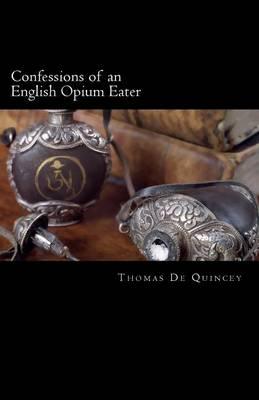
In this remarkable autobiography, Thomas De Quincey hauntingly describes the surreal visions and hallucinatory nocturnal wanderings he took through London-and the nightmares, despair, and paranoia to which he became prey-under the influence of the then-legal painkiller laudanum. Forging a link between artistic self-expression and addiction, De Quincey seamlessly weaves the effects of drugs and the nature of dreams, memory, and imagination. First published in 1821, it paved the way for later generations of literary drug users, from Baudelaire to Burroughs, and anticipated psychoanalysis with its insights into the subconscious.
Full Product Details
Author: Thomas De Quincey ,
Sheba Blake
Publisher: Createspace Independent Publishing Platform
Imprint: Createspace Independent Publishing Platform
Dimensions:
Width: 14.00cm
, Height: 0.40cm
, Length: 21.60cm
Weight: 0.100kg
ISBN: 9781495913938
ISBN 10: 1495913937
Pages: 78
Publication Date: 11 February 2014
Audience:
General/trade
,
General
Format: Paperback
Publisher's Status: Active
Availability: Available To Order

We have confirmation that this item is in stock with the supplier. It will be ordered in for you and dispatched immediately.
Author Information
Thomas de Quincey (1785-1859) was an English author and intellectual, best known for his Confessions of an English Opium-Eater. A number of medical practitioners have speculated on the physical ailments that inspired and underlay De Quincey's resort to opium, and searched the corpus of his autobiographical works for evidence. One possibility is a mild ... case of infantile paralysis that he may have contracted from Wordsworth's children. De Quincey certainly had intestinal problems, and problems with his vision - which could have been related: uncorrected myopic astigmatism ... manifests itself as digestive problems in men. De Quincey also suffered neuralgic facial pain, trigeminal neuralgia - attacks of piercing pain in the face, of such severity that they sometimes drive the victim to suicide. As with many addicts, De Quincey's opium addiction may have had a self-medication aspect for real physical illnesses, as well as a psychological aspect. Psychologically, he had what Alethea Hayter has called the pariah temperament typical of drug addicts. By his own testimony, De Quincey first used opium in 1804 to relieve his neuralgia; he used it for pleasure, but no more than weekly, through 1812. It was in 1813 that he first commenced daily usage, in response to illness and his grief over the death of Wordsworth's young daughter Catherine. In the periods of 1813-16 and 1817-19 his daily dose was very high, and resulted in the sufferings recounted in the final sections of his Confessions. For the rest of his life his opium use fluctuated between extremes; he took enormous doses in 1843, but late in 1848 he went for 61 days with none at all. There are many theories surrounding the effects of opium on literary creation, and notably, his periods of low usage were literarily unproductive.