Overview
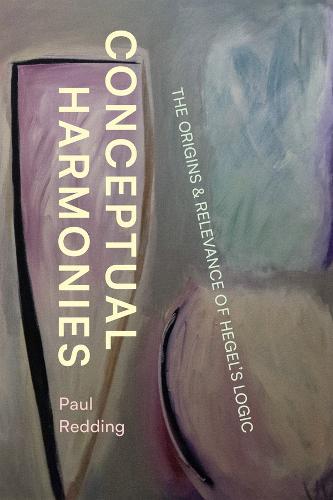
A new reading of Hegel’s Science of Logic through the history of European mathematics. Conceptual Harmonies develops an original account of G. W. F. Hegel’s perplexing Science of Logic from a simple insight: philosophical and mathematical thought have shaped each other since classical times. Situating the Science of Logic within the rise of modern mathematics, Redding stresses Hegel’s attention to Pythagorean ratios, Platonic reason, and Aristotle’s geometrically inspired logic. He then explores how later traditions shaped Hegel’s world, through both Leibniz and new forms of algebraic geometry. This enlightening reading recovers an overlooked stream in Hegel’s philosophy that remains, Redding argues, important for contemporary conceptions of logic.
Full Product Details
Author: Paul Redding
Publisher: The University of Chicago Press
Imprint: University of Chicago Press
Dimensions:
Width: 15.20cm
, Height: 3.30cm
, Length: 22.90cm
Weight: 0.399kg
ISBN: 9780226826073
ISBN 10: 0226826074
Pages: 336
Publication Date: 05 June 2023
Audience:
Professional and scholarly
,
Professional & Vocational
Format: Paperback
Publisher's Status: Active
Availability: Available To Order

We have confirmation that this item is in stock with the supplier. It will be ordered in for you and dispatched immediately.
Reviews
“The erudition and scope of Redding’s new book are staggering. This is a very fine book on the history of ancient logic and mathematics and its modern German reception, and it is also a major contribution to Hegel studies and philosophy. We finally have a clear and compelling answer to the question, What did Hegel actually think logic was? Redding has shown us the deep philosophical importance of that answer.” -- Robert B. Pippin, University of Chicago “Conceptual Harmonies powerfully challenges a long-standing barrier to a full appreciation of Hegel’s logic: the assumption that, given his trenchant critique of all ‘formalisms,’ Hegel’s logic is in no way mathematical. With his characteristic erudition and insight, Redding guides readers through a history of logic and mathematics from Plato to the twentieth century, toward an entirely new understanding of Hegelian logic. Redding’s latest is a must-read for anyone interested in Hegel and the history of logic, proving once again that Redding is one of the most original, rigorous, and historically sensitive interpreters of Hegel writing in any language.” -- Karen Ng, Vanderbilt University “In Conceptual Harmonies, Redding makes a breathtakingly original case for a new understanding of Hegel’s Logic. Expanding the examination of Hegel’s sources well beyond the standard Aristotelian and Kantian texts, Redding rewrites the history of logic to show that Hegel anticipated many developments in the mid-nineteenth century and beyond. This is a major achievement that opens up a new line of research into Hegel’s though -- Dean Moyar, Johns Hopkins University
"""In making his case, Redding places Hegel's discussion of logic and mathematics in a broad historical context, ranging from Plato's academy through Kepler, Newton, Leibniz, Frege, Boole, and Peirce. . . The book will be of interest to Hegel's scholars, not least of all for the challenge it mounts to Robert Brandom's contention that Hegel is best understood within the project of analytic philosophy."" * Choice * “The erudition and scope of Redding’s new book are staggering. This is a very fine book on the history of ancient logic and mathematics and its modern German reception, and it is also a major contribution to Hegel studies and philosophy. We finally have a clear and compelling answer to the question, What did Hegel actually think logic was? Redding has shown us the deep philosophical importance of that answer.” -- Robert B. Pippin, University of Chicago “Conceptual Harmonies powerfully challenges a long-standing barrier to a full appreciation of Hegel’s logic: the assumption that, given his trenchant critique of all ‘formalisms,’ Hegel’s logic is in no way mathematical. With his characteristic erudition and insight, Redding guides readers through a history of logic and mathematics from Plato to the twentieth century, toward an entirely new understanding of Hegelian logic. Redding’s latest is a must-read for anyone interested in Hegel and the history of logic, proving once again that Redding is one of the most original, rigorous, and historically sensitive interpreters of Hegel writing in any language.” -- Karen Ng, Vanderbilt University “In Conceptual Harmonies, Redding makes a breathtakingly original case for a new understanding of Hegel’s Logic. Expanding the examination of Hegel’s sources well beyond the standard Aristotelian and Kantian texts, Redding rewrites the history of logic to show that Hegel anticipated many developments in the mid-nineteenth century and beyond. This is a major achievement that opens up a new line of research into Hegel’s though -- Dean Moyar, Johns Hopkins University"
The erudition and scope of Redding's new book are staggering. This is a very fine book on the history of ancient logic and mathematics and its modern German reception, and it is also a major contribution to Hegel studies and philosophy. We finally have a clear and compelling answer to the question, What did Hegel actually think logic was? Redding has shown us the deep philosophical importance of that answer. -- Robert B. Pippin, University of Chicago Conceptual Harmonies powerfully challenges a long-standing barrier to a full appreciation of Hegel's logic: the assumption that, given his trenchant critique of all 'formalisms,' Hegel's logic is in no way mathematical. With his characteristic erudition and insight, Redding guides readers through a history of logic and mathematics from Plato to the twentieth century, toward an entirely new understanding of Hegelian logic. Redding's latest is a must-read for anyone interested in Hegel and the history of logic, proving once again that Redding is one of the most original, rigorous, and historically sensitive interpreters of Hegel writing in any language. -- Karen Ng, Vanderbilt University In Conceptual Harmonies, Redding makes a breathtakingly original case for a new understanding of Hegel's Logic. Expanding the examination of Hegel's sources well beyond the standard Aristotelian and Kantian texts, Redding rewrites the history of logic to show that Hegel anticipated many developments in the mid-nineteenth century and beyond. This is a major achievement that opens up a new line of research into Hegel's though -- Dean Moyar, Johns Hopkins University
Author Information
Paul Redding is emeritus professor of philosophy at the University of Sydney. He is the author of Continental Idealism: Leibniz to Nietzsche and Analytic Philosophy and the Return of Hegelian Thought.