Overview
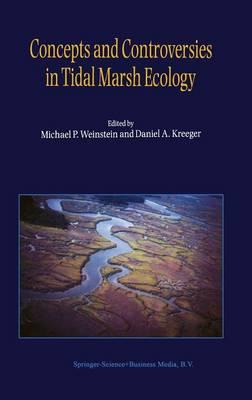
Tidal salt marshes are viewed as critical habitats for the production of fish and shellfish. As a result, considerable legislation has been promulgated to conserve and protect these habitats. The relatively young science of ecological engineering has also emerged, and there are now attempts to reverse centuries-old losses by encouraging sound wetland restoration practices. Today, tens of thousands of hectares of degraded or isolated coastal wetlands are being restored worldwide. Whether restored wetlands reach functional equivalency to natural systems is a subject of heated debate. Equally debatable is the paradigm that depicts tidal salt marshes as the ""great engine"" that drives much of the secondary production in coastal waters. This view was questioned in the early 1980s by investigators who noted that total carbon export was of much lower magnitude than originally thought. These authors also recognized that some marshes were either net importers of carbon, or showed no net exchange. Thus, the notion of ""outwelling"" has become but a single element in an evolving view of marsh function and the link between primary and secondary production. The ""revisionist"" movement was launched in 1979 when stable isotopic ratios of macrophytes and animal tissues were found to be mismatched. Some 18 years later, the view of marsh function is still undergoing additional modification, and we are slowly unravelling the complexities of biogeochemical cycles, nutrient exchange, and the links between primary producers and the marsh/estuary fauna. Yet, since Teal's paper nearly 40 years ago, we are not much closer to understanding how marshes work. If anything, we have learned that the story is far more complicated than originally thought. Despite more than four decades of intense research, we do not yet know how salt marshes function as essential habitat, nor do we know the relative contributions to secondary production, both in situ or in the open waters of the estuary. The theme of the symposium papers collected here was to review the status of salt marsh research and revisit the existing paradigm(s) for salt marsh function. Challenge questions were designed to meet the controversy around whether marshes support the production of marine transient species, If so, how? Are any of these species marsh obligates? How much of the production takes place in situ versus in open waters of the estuary/coastal zone? Sessions were devoted to reviews of landmark studies, or current findings that advance our knowledge of salt marsh function. A day was also devoted to ecological engineering and wetland restoration papers addressing methodology and specific case histories. Several challenge papers arguing for and against our ability to restore functional salt marshes led off each session. This volume is intended to serve as a synthesis of understanding of the ecological role of salt marshes.
Full Product Details
Author: M.P. Weinstein ,
Daniel A. Kreeger
Publisher: Kluwer Academic Publishers
Imprint: Kluwer Academic Publishers
Edition: 2000 ed.
Dimensions:
Width: 15.50cm
, Height: 5.00cm
, Length: 23.50cm
Weight: 1.710kg
ISBN: 9780792360193
ISBN 10: 0792360192
Pages: 875
Publication Date: 31 October 2000
Audience:
Professional and scholarly
,
Professional & Vocational
Format: Hardback
Publisher's Status: Active
Availability: Out of stock

The supplier is temporarily out of stock of this item. It will be ordered for you on backorder and shipped when it becomes available.
Reviews
'On balance this book will be a landmark for its intended audience, North American salt marsh ecosystem ecologist and a valuable resource for students and ecologists from other disciplines interested in learning about salt marsh ecology. ...I highly recommend this book to tidal marsh scientist and graduate students because it presently provides the best and the most up to date single source of information on tidal marsh ecology.' Journal of Experimental Marine Biology and Ecology. 'The book contains a tremendous amount of up to date information on salt marsh ecology and its an excellent reference for those interested in ecosystem-level processes in these systems ' Ecological Engineering 18:399-400 (2002)
'On balance this book will be a landmark for its intended audience, North American salt marsh ecosystem ecologist and a valuable resource for students and ecologists from other disciplines interested in learning about salt marsh ecology. ...I highly recommend this book to tidal marsh scientist and graduate students because it presently provides the best and the most up to date single source of information on tidal marsh ecology.' Journal of Experimental Marine Biology and Ecology. 'The book contains a tremendous amount of up to date information on salt marsh ecology and its an excellent reference for those interested in ecosystem-level processes in these systems ' Ecological Engineering 18:399-400 (2002)
`On balance this book will be a landmark for its intended audience, North American salt marsh ecosystem ecologist and a valuable resource for students and ecologists from other disciplines interested in learning about salt marsh ecology. ...I highly recommend this book to tidal marsh scientist and graduate students because it presently provides the best and the most up to date single source of information on tidal marsh ecology.' Journal of Experimental Marine Biology and Ecology. `The book contains a tremendous amount of up to date information on salt marsh ecology and its an excellent reference for those interested in ecosystem-level processes in these systems ' Ecological Engineering 18:399-400 (2002)