Full Product Details
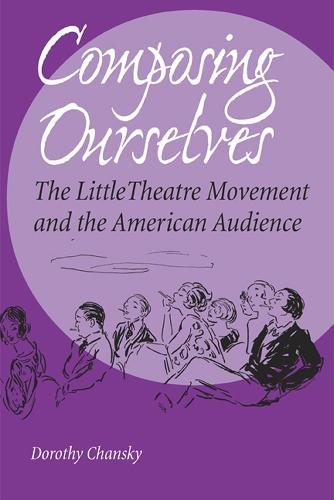
Author: Dorothy Chansky
Publisher: Southern Illinois University Press
Imprint: Southern Illinois University Press
Edition: New edition
Dimensions:
Width: 15.40cm
, Height: 2.00cm
, Length: 22.90cm
Weight: 0.448kg
ISBN: 9780809326495
ISBN 10: 0809326493
Pages: 320
Publication Date: 11 May 2005
Audience:
College/higher education
,
Professional and scholarly
,
Undergraduate
,
Postgraduate, Research & Scholarly
Format: Paperback
Publisher's Status: Active
Availability: In Print

This item will be ordered in for you from one of our suppliers. Upon receipt, we will promptly dispatch it out to you. For in store availability, please contact us.
Reviews
In Composing Ourselves , Dorothy Chansky weaves a compelling narrative of the emergence of the literary theatre in America. By offering vivid portraits and probing analyses of the people and institutions that were responsible for turning a popular amusement into high art, she uncovers the sometimes troubling assumptions that underlay the elevation of the stage in the early twentieth century. Her attention to the ironies of history illuminates the contradictions that informed not only the Little Theatre movement, but also the theatre of our own time. --David Savran, City University of New York
In Composing Ourselves, Dorothy Chansky weaves a compelling narrative of the emergence of the literary theatre in America. By offering vivid portraits and probing analyses of the people and institutions that were responsible for turning a popular amusement into high art, she uncovers the sometimes troubling assumptions that underlay the elevation of the stage in the early twentieth century. Her attention to the ironies of history illuminates the contradictions that informed not only the Little Theatre movement, but also the theatre of our own time. --David Savran, City University of New York
Composing Ourselves significantly expands our understanding of the Little Theatre movement in the United States and the aesthetic, political, and historical forces informing its development. Simultaneously, Chansky' s study convincingly demonstrates the wide-ranging regional and national impact of these organizations; in so doing she productively shifts our long-standing scholarly focus from a few notable companies to a panoply of stages and artists who, both theoretically and very practically, shaped this comparatively underexplored but powerful aspect of twentieth-century U.S. culture. -- J. Ellen Gainor, Cornell University A stylistic fusion of historical narrative and contemporary theory, repositioning the Little Theatre Movement as the progenitor of pedagogical and even public relations practices, Composing Ourselves joins a surprisingly small cohort of studies of the ' American' audience. Chansky interrogates perpetuated notions of the movement' s participants as privileged proponents of pluralism, placing them as members of a professional-managerial class, with attendant hegemonic assumptions that operate beneath the social radar. Her work challenges those of us who teach American theatre history to revisit our notions of modernism, progressivism, the Little Theatre movement, and theatre education itself. -- Anne Fletcher, Southern Illinois University Carbondale A stylistic fusion of historical narrative and contemporary theory, repositioning the Little Theatre Movement as the progenitor of pedagogical and even public relations practices, Composing Ourselves joins a surprisingly small cohort of studies of the 'American' audience. Chansky interrogates perpetuated notions of the movement's participants as privileged proponents of pluralism, placing them as members of a professional-managerial class, with attendant hegemonic assumptions that operate beneath the social radar. Her work challenges those of us who teach American theatre history to revisit our notions of modernism, progressivism, the Little Theatre movement, and theatre education itself. --Anne Fletcher, Southern Illinois University Carbondale Composing Ourselves significantly expands our understanding of the Little Theatre movement in the United States and the aesthetic, political, and historical forces informing its development. Simultaneously, Chansky's study convincingly demonstrates the wide-ranging regional and national impact of these organizations; in so doing she productively shifts our long-standing scholarly focus from a few notable companies to a panoply of stages and artists who, both theoretically and very practically, shaped this comparatively underexplored but powerful aspect of twentieth-century U.S. culture. --J. Ellen Gainor, Cornell University In Composing Ourselves, Dorothy Chansky weaves a compelling narrative of the emergence of the literary theatre in America. By offering vivid portraits and probing analyses of the people and institutions that were responsible for turning a popular amusement into high art, she uncovers the sometimes troubling assumptions that underlay the elevation of the stage in the early twentieth century. Her attention to the ironies of history illuminates the contradictions that informed not only the Little Theatre movement, but also the theatre of our own time. --David Savran, City University of New York In Composing Ourselves , Dorothy Chansky weaves a compelling narrative of the emergence of the literary theatre in America. By offering vivid portraits and probing analyses of the people and institutions that were responsible for turning a popular amusement into high art, she uncovers the sometimes troubling assumptions that underlay the elevation of the stage in the early twentieth century. Her attention to the ironies of history illuminates the contradictions that informed not only the Little Theatre movement, but also the theatre of our own time. --David Savran, City University of New York Composing Ourselves significantly expands our understanding of the Little Theatre movement in the United States and the aesthetic, political, and historical forces informing its development. Simultaneously, Chansky s study convincingly demonstrates the wide-ranging regional and national impact of these organizations; in so doing she productively shifts our long-standing scholarly focus from a few notable companies to a panoply of stages and artists who, both theoretically and very practically, shaped this comparatively underexplored but powerful aspect of twentieth-century U.S. culture. J. Ellen Gainor, Cornell University A stylistic fusion of historical narrative and contemporary theory, repositioning the Little Theatre Movement as the progenitor of pedagogical and even public relations practices, Composing Ourselves joins a surprisingly small cohort of studies of the American audience. Chansky interrogates perpetuated notions of the movement s participants as privileged proponents of pluralism, placing them as members of a professional-managerial class, with attendant hegemonic assumptions that operate beneath the social radar. Her work challenges those of us who teach American theatre history to revisit our notions of modernism, progressivism, the Little Theatre movement, and theatre education itself. Anne Fletcher, Southern Illinois University Carbondale In Composing Ourselves, Dorothy Chansky weaves a compelling narrative of the emergence of the literary theatre in America. By offering vivid portraits and probing analyses of the people and institutions that were responsible for turning a popular amusement into high art, she uncovers the sometimes troubling assumptions that underlay the elevation of the stage in the early twentieth century. Her attention to the ironies of history illuminates the contradictions that informed not only the Little Theatre movement, but also the theatre of our own time. David Savran, City University of New York In Composing Ourselves, Dorothy Chansky weaves a compelling narrative of the emergence of the literary theatre in America. By offering vivid portraits and probing analyses of the people and institutions that were responsible for turning a popular amusement into high art, she uncovers the sometimes troubling assumptions that underlay the elevation of the stage in the early twentieth century. Her attention to the ironies of history illuminates the contradictions that informed not only the Little Theatre movement, but also the theatre of our own time. David Savran, City University of New York In Composing Ourselves, Dorothy Chansky weaves a compelling narrative of the emergence of the literary theatre in America. By offering vivid portraits and probing analyses of the people and institutions that were responsible for turning a popular amusement into high art, she uncovers the sometimes troubling assumptions that underlay the elevation of the stage in the early twentieth century. Her attention to the ironies of history illuminates the contradictions that informed not only the Little Theatre movement, but also the theatre of our own time. --David Savran, City University of New York In Composing Ourselves , Dorothy Chansky weaves a compelling narrative of the emergence of the literary theatre in America. By offering vivid portraits and probing analyses of the people and institutions that were responsible for turning a popular amusement into high art, she uncovers the sometimes troubling assumptions that underlay the elevation of the stage in the early twentieth century. Her attention to the ironies of history illuminates the contradictions that informed not only the Little Theatre movement, but also the theatre of our own time. --David Savran, City University of New York In Composing Ourselves, Dorothy Chansky weaves a compelling narrative of the emergence of the literary theatre in America. By offering vivid portraits and probing analyses of the people and institutions that were responsible for turning a popular amusement into high art, she uncovers the sometimes troubling assumptions that underlay the elevation of the stage in the early twentieth century. Her attention to the ironies of history illuminates the contradictions that informed not only the Little Theatre movement, but also the theatre of our own time. -- David Savran, City University of New York
Author Information
Dorothy Chansky is an assistant professor in the Department of Theatre, Speech, and Dance at the College of William and Mary. She wrote the original musical The Brooklyn Bridge, which was performed off-Broadway and published in book form.