|
|
|||
|
||||
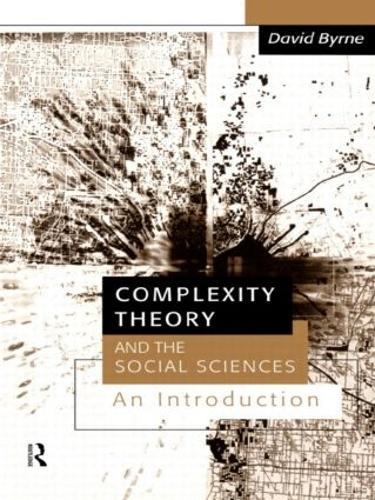
OverviewChaos and complexity are the new buzz words in both science and in contemporary society. The ideas they represent have enormous implications for the way we understand and engage with the world. Complexity Theory and the Social Sciences introduces students to the central ideas which surround the chaos/complexity theories. It discusses key concepts before using them as a way of investigating the nature of social research. By applying them to such familiar topics as urban studies, education and health, it allows readers new to the subject to appreciate the contribution which complexity theory can make to social research and to illuminating the crucial social issues of our day. Full Product DetailsAuthor: David ByrnePublisher: Taylor & Francis Ltd Imprint: Routledge Dimensions: Width: 13.80cm , Height: 1.20cm , Length: 21.60cm Weight: 0.272kg ISBN: 9780415162968ISBN 10: 0415162963 Pages: 216 Publication Date: 01 October 1998 Audience: College/higher education , Tertiary & Higher Education , Undergraduate Format: Paperback Publisher's Status: Active Availability: In Print This item will be ordered in for you from one of our suppliers. Upon receipt, we will promptly dispatch it out to you. For in store availability, please contact us. Table of ContentsAcknowledgements Introduction 1. Understanding the complex 2. The reality of the complex: the complexity of the real 3. Complexity and the quantitative programme in social science 4. Analysing social complexity 5. Complex spaces: regions, cities and neighbourhoods in a complex world 6. The complex character of health and illness 7. Complexity, education and change 8. Complexity and policy: the limits to urban governance 9. Conclusion Glossary Notes Bibliography IndexReviewsAuthor InformationDavid Byrne is Senior Lecturer in Social Policy at the University of Durham. He is author of Beyond the Inner City and has published a number of articles in urban sociology and social policy. Tab Content 6Author Website:Countries AvailableAll regions |
||||