Overview
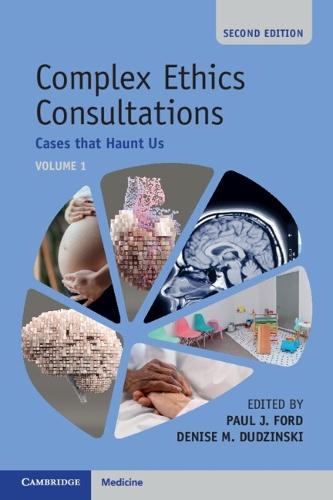
Clinical ethics consultants navigate dilemmas across patient care, public health, and healthcare policy. Issues span from the beginning to the end of life, complex discharges, employment of novel technologies, and visitation restrictions. The second edition relays the narratives of fraught, complex consultations through richly detailed cases. Authors explore the ethical reasoning, professional issues, and emotional aspects of these impossibly difficult scenarios. Describing the affective aspects of ethics consultations, authors highlight the lasting effects of these cases on their practices. They candidly reflect on evolving professional practice as well as contemporary concerns and innovations while attending to equity and inclusivity. Featuring many new chapters, cases are grouped together by theme to aid teaching, discussion, and professional growth. The book is intended for clinicians, bioethicists, and ethics committee members with an interest in the choices made in real-life medical dilemmas as well as the emotional cost to those working to improve the situations.
Full Product Details
Author: Paul J. Ford (The Cleveland Clinic Foundation, Cleveland) , Denise M. Dudzinski (University of Washington School of Medicine, Seattle)
Publisher: Cambridge University Press
Imprint: Cambridge University Press
Edition: 2nd Revised edition
ISBN: 9781009400954
ISBN 10: 1009400959
Pages: 281
Publication Date: 05 June 2025
Audience:
General/trade
,
General
Format: Paperback
Publisher's Status: Active
Availability: Manufactured on demand 
We will order this item for you from a manufactured on demand supplier.
Table of Contents
Introduction: live and learn: courage, honesty, and vulnerability; Part I. Starting at the Beginning: Prenatal and Neonatal Issues: 1. Quality of life – and of ethics consultation – in the NICU Robert C. Macauley and Robert R. Orr; 2. When a baby dies in pain Thomas R. McCormick and David Woodrum; 3. But how can we choose? Richard M. Zaner; 4. Maternal-fetal surgery and the 'profoundest questions in ethics' Mark J. Bliton; Commentary 1. Reflections on Part I: starting at the beginning: prenatal and neonatal issues Lucia D. Wocial; Part II. The Most Vulnerable of Us: Pediatrics: 5. She was the life of the party Douglas S. Diekema; 6. The sound of chains Jeffrey Spike; 7. Susie's voice Rosa Lynn Pinkus, Stella L. Smetanka, and Nathan A. Kottkamp; 8. Access to an infant's family: lingering effects of not talking with parents D. Micah Hester; Commentary 2. Reflections on Part II: the most vulnerable of us: pediatrics Nneka Sederstrom; Part III. Diversity of Desires and Limits of Liberty: Psychiatric and Psychological Issues: 9. Helping staff help a 'hateful' patient Joy Skeel and Kristi Williams; 10. Ulysses contract Barbara Daly and Cynthia Griggins; 11. Misjudging needs Paul J. Ford; 12. When the patient refuses to eat Debra Craig and Gerald R. Winslow; Commentary 3. Reflections on Part III: diversity of desires and limits of liberty: psychiatric and psychological issues Maya Scott; Part IV. Withholding Therapy with a Twist: 13. Listening to the husband Ellen W. Bernal; 14. You're the ethicist; I'm just the surgeon Joseph P. DeMarco and Paul J. Ford; 15. Haunted by a good outcome: the case of Sister Jane George J. Agich; 16. Is a broken jaw a terminal condition Stuart G. Finder; Commentary 4. Reflections on Part IV: withholding therapy with a twist: fifteen years later Crystal Brown; Part V. The Unspeakable/Unassailable: Religious and Cultural Beliefs: 17. Adolescent pregnancy, confidentiality, and culture Donald Brunquell; 18. 'Tanya, the one with Jonathan's kidney': a living unrelated donor case of church associates Tarris D. Rosell; 19. Futility, Islam, and death Kathryn L. Weise; 20. Suffering as God's will Kathrin Ohnsorge and Paul J. Ford; Commentary 5: Reflections on Part V: The Unspeakable/ Unassailable: Religious and Cultural Beliefs Mahwish Ahmad; Part VI. Human Guinea Pigs and Miracles: Clinical Innovations and Unorthodox Treatment: 21. Amputate my arm, please. I don't want it anymore Denise M. Dudzinski; 22. Feuding surrogates, herbal therapies, and a dying patient Alissa Hurwitz Swota; 23. One way out: destination therapy by default Alice Chang and Denise M. Dudzinski; 24. Altruistic organ donation: Credible? Acceptable? Ronald B. Miller; Commentary 6: Reflections on Part VI: Human Guinea Pigs and Miracles: Clinical Innovations and Unorthodox Treatment Kaarkuzhali B. Krishnamurthy; Part VII. The Big Picture: Organizational Issues: 25. It's not my responsibility Mary Beth Foglia and Robert A. Pearlman; 26. Intra-operative exposure to sporadic Creutzfieldt-Jakob disease: to disclose or not to disclose Joel Potash; 27. Why do we have to discharge this patient Sarah E. Shannon; 28. Who's that sleeping in my bed? An institutional response to an organizational ethics problem Daryl Pullman, Rick Singleton, and Janet Templeton; Commentary 7: Reflections on Part VII: The Big Picture: Organizational Issues, Learning from the Past to Shape the Future: Ruchika Mishra; Conclusions, educational activities, and references Denise M. Dudzinski and Paul J. Ford.
Reviews
'This rich anthology reminds us that clinical case consultation is a complicated process that is personal and intuitive, often haunting practitioners with memories that are both disturbing and instructive. Professors Ford and Dudzinski have brilliantly capitalized on the pedagogical value of these musings, editing a volume that will enrich teaching in the seminar room or at the bedside. This new edition places the current generation of practitioners into conversation with their pioneering predecessors from the first edition, reminding readers of the enduring values that should inform case consultation. This volume belongs in the library of every student and teacher of bioethics.' Joseph J. Fins, M. D., D. Hum. Litt. (hc), M.A.C.P., F.R.C.P.; E. William Davis, Jr., M.D. Professor of Medical Ethics and Chief of the Division of Medical Ethics; Weill Cornell Medicine and Chair of the Hastings Center Board of Trustees; Author of Rights Come to Mind: Brain Injury, Ethics and the Struggle for Consciousness
Author Information
Paul J. Ford specializes in ethical challenges in neurological diseases and directs the NeuroEthics Programs at the Cleveland Clinic Foundation with a faculty appointment in the Case Western Reserve Medical School, Cleveland. He has performed more than two thousand ethics consultations and authored more than one hundred publications. Denise M. Dudzinski is Professor (Joint) in Bioethics & Humanities and Pediatrics, Division of Bioethics & Palliative Care at the University of Washington School of Medicine, Seattle. She is Director of the Ethics Consultation Service at UW Medicine and Director of Organizational Ethics at Seattle Children's Hospital.
Tab Content 6
Author Website:
Countries Available
All regions
|