Overview
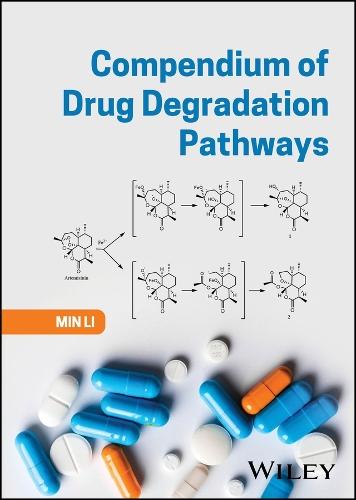
Provides accurate and current information on drug degradation pathways Understanding the degradation chemistry of pharmaceuticals is essential for drug formulation, stability testing, and regulatory compliance. Compendium of Drug Degradation Pathways presents a detailed analysis of the degradation pathways of approximately 350 widely used prescription and over-the-counter drugs, making it an indispensable reference for formulation and analytical scientists. Drug stability and impurity characterization play a critical role in pharmaceutical research and development, as degradation can impact efficacy, safety, and regulatory approval. Structured alphabetically, this compendium organizes degradation data into concise monographs, each summarizing a drug’s chemical structure, degradation pathways, and stability considerations. By collating information from regulatory guidelines, scientific literature, and real-world drug formulations, Dr. Min Li provides formulation chemists, regulatory scientists, and medicinal chemists with a clear understanding of degradation mechanisms under practical storage conditions. Provides guidance on real-world drug degradation under long-term stability conditions Summarizes critical stability data for formulation and analytical scientists working in drug development and manufacturing Offers valuable insights into drug metabolism and in vivo degradation linked to potential toxicities Uses a systematic and organized approach, grouping drugs by therapeutic categories and structural similarities Includes a dedicated introduction on regulatory perspectives, impurity characterization, and stress testing methodologies With increasing regulatory scrutiny on drug quality and safety, Compendium of Drug Degradation Pathways is a critical reference for professionals in pharmaceutical sciences, intellectual property law, and regulatory agencies reviewing Chemistry, Manufacturing, and Controls (CMC) sections of NDAs and ANDAs.
Full Product Details
Author: Min Li (Johns Hopkins University, MD)
Publisher: John Wiley & Sons Inc
Imprint: John Wiley & Sons Inc
Dimensions:
Width: 17.00cm
, Height: 4.10cm
, Length: 24.40cm
Weight: 1.219kg
ISBN: 9781118832936
ISBN 10: 1118832930
Pages: 640
Publication Date: 18 December 2025
Audience:
Professional and scholarly
,
Professional & Vocational
Format: Hardback
Publisher's Status: Forthcoming
Availability: Awaiting stock

Author Information
Min Li is currently the Chief Scientist of Huahai Pharmaceutical, Co., Ltd. responsible for analytical research and development. He received his PhD in Organic Chemistry from The Johns Hopkins University in 1991. Following a postdoctoral research in medicinal chemistry, he has worked for several multinational pharmaceutical companies with increasing responsibilities, including Roche, Merck & Co., Inc., and Schering-Plough. Dr Li has led technical teams of senior-level scientists for various analytical and pharmaceutical manufacturing process investigations and troubleshooting, impurity research and qualification, study of drug degradation chemistry, analytical development, and support for new drug filing (NDA).