Overview
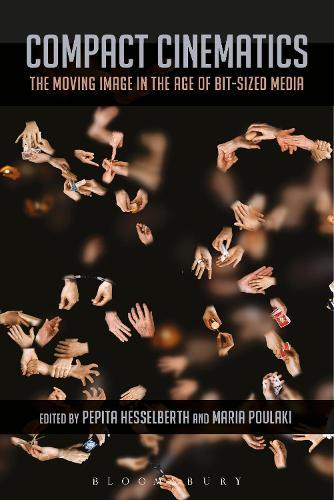
Compact Cinematics challenges the dominant understanding of cinema to focus on the various compact, short, miniature, pocket-sized forms of cinematics that have existed from even before its standardization in theatrical form, and in recent years have multiplied and proliferated, taking up an increasingly important part of our everyday multimedia environment. Short films or micro-narratives, cinematic pieces or units re-assembled into image archives and looping themes, challenge the concepts that have traditionally been used to understand cinematic experience, like linear causality, sequentiality, and closure, and call attention to complex and modular forms of cinematic expression and perception. Such forms, in turn, seem to meet the requirements of digital convergence, which has pushed the development of more compact and mobile hardware for the display and use of audiovisual content on laptops, smartphones, and tablets. Meanwhile, contemporary economies of digital content acquisition, filing, and sharing equally require the shrinking of cinematic content for it to be recorded, played, projected, distributed, and installed with ease and speed. In this process, cinematic experience is shortened and condensed as well, so as to fit the late-capitalist attention economy. The essays in this volume ask what this changed technical, socio-economic and political situation entails for the aesthetics and experience of contemporary cinematics, and call attention to different concepts, theories and tools at our disposal to analyze these changes.
Full Product Details
Author: Pepita Hesselberth (Leiden University, the Netherlands) , Maria Poulaki (University of Surrey, UK)
Publisher: Bloomsbury Publishing Plc
Imprint: Bloomsbury Academic
Dimensions:
Width: 16.00cm
, Height: 2.00cm
, Length: 23.20cm
Weight: 0.520kg
ISBN: 9781501322266
ISBN 10: 1501322265
Pages: 256
Publication Date: 26 January 2017
Audience:
College/higher education
,
Tertiary & Higher Education
Format: Hardback
Publisher's Status: Active
Availability: Manufactured on demand 
We will order this item for you from a manufactured on demand supplier.
Table of Contents
Introduction Compact Cinematics: Screen, Capture, Attention // Pepita Hesselberth (Leiden University, The Netherlands) & Maria Poulaki (University of Surrey, UK) Part 1 [Short] Minimal Narratives 1. Countdown to Zero: Compressing Cinema Time // Tom Gunning (The University of Chicago, US) 2. On Conflict in Short Film Storytelling // Richard Raskin (Aarhus University, Denmark) 3. Accelerated Gestures: Play Time in Agnès Varda’s Cléo de 5 à 7 // Peter Verstraten (Leiden University, The Netherlands) 4. Lynch on the Run: The Proximity of Trauma in the Short Film // Todd McGowan (The University of Vermont, USA) Part 2 [Condensed] Polyphonic Archives 5. The Ethics of Repair: Re-Animating the Archive // Sean Cubitt (Goldsmiths, University of London, UK) 6. Long Story Short // Natalie Bookchin (Rutgers, USA) 7. Skip Intro? Short Video Intros as a Reflexive Threshold in the Interactive Documentary// Tina M. Bastajian (Webster University the Netherlands, The Netherlands) 8. The Viewser as Curator: The Online Film Festival Platform // Geli Mademli (University of Amsterdam, The Netherlands) Part 3 [Compressed] Pleasure & Productivity 9. The Contingent Spectator // Francesco Casetti (Yale University, USA) 10. Speed Watching, Efficiency, and the New Temporalities of Digital Spectatorship // Neta Alexander (The New York University Tisch School of the Arts, USA) 11. Visual Pleasure and GIFs // Anna McCarthy (The New York University Tisch School of the Arts, USA) 12. Solitary Screens: On the Recurrence and Consumption of Images // Pasi Väliaho (Goldsmiths, University of London, UK) Part 4 [Miniature] Mobile Cinematics 13. Archaeology of Mobile Film: Blink, Bluvend and the Pocket Short // Kim Louise Walden (University of Hertfordshire, UK) 14. Children’s Little Thumb Films or “Films-Poucets” // Wanda Strauven (Goethe-Universität Frankfurt, Germany) and Alexandra Schneider (University in Mainz, Germany) 15. Of Flip Books & Funny Animals: Chris Ware’s Quimby the Mouse // Yasco Horsman (Leiden University, The Netherlands) 16. Mobile Cinematics // Maria Engberg (Malmö University, Sweden) and Jay David Bolter (Georgia Institute of Technology, USA) Part 5 [Compacted] Urban Ecologies 17. Screening Smart Cities: Managing Data, Views, and Vertigo // Gillian Rose (The Open University, UK) 18. Of Compactness: Life with Media Façade Screens // Ulrik Ekman (University of Copenhagen, Denmark) 19. Codified Space: Cinematic Recodings of Urban Reality // Justin Ascott (Norwich University of the Arts, UK)
Reviews
A necessary read for media and moving image scholars and practitioners. * Dandelion * Hesselberth and Poulaki have assembled some of the most exciting thinkers in the field, with essays both from emerging and established voices, to rethink the concepts of compactness, fragmentation and the short in visual culture. The result is an extremely rich collection, spanning film, television and digital media studies, and one that offers ways new ways to think through the compression of twenty-first century media. * Timothy Barker, Senior Lecturer in Digital Media, University of Glasgow, Scotland * Compact Cinematics is a bold collection of essays by leading film and media theorists who depart from the notion of object-oriented study, refocusing debate around processes, habits and textures. The range of approaches delivers a fittingly multi-angled view of the current mediascape in which intensity resides in the miniature and the fragment, images are both commanding and adhesive, and human attention is a premium capture. * Janet Harbord, Professor of Film Studies, Queen Mary University of London, UK * [T]he book's attention to the generally neglected ecology of short-form work that is so prevalent today, along with its insistence on a broad historical context that refuses to neglect the past as we examine the present and look to the future, make it vital; (...) the attempts to name and frame a shifting context underscore how complex the changes are. -- Dr. P. Hesselberth * LA Review of Books *
Hesselberth and Poulaki have assembled some of the most exciting thinkers in the field, with essays both from emerging and established voices, to rethink the concepts of compactness, fragmentation and the short in visual culture. The result is an extremely rich collection, spanning film, television and digital media studies, and one that offers ways new ways to think through the compression of twenty-first century media. Timothy Barker, Senior Lecturer in Digital Media, University of Glasgow, Scotland Compact Cinematics is a bold collection of essays by leading film and media theorists who depart from the notion of object-oriented study, refocusing debate around processes, habits and textures. The range of approaches delivers a fittingly multi-angled view of the current mediascape in which intensity resides in the miniature and the fragment, images are both commanding and adhesive, and human attention is a premium capture. Janet Harbord, Professor of Film Studies, Queen Mary University of London, UK
Hesselberth and Poulaki have assembled some of the most exciting thinkers in the field, with essays both from emerging and established voices, to rethink the concepts of compactness, fragmentation and the short in visual culture. The result is an extremely rich collection, spanning film, television and digital media studies, and one that offers ways new ways to think through the compression of twenty-first century media. * Timothy Barker, Senior Lecturer in Digital Media, University of Glasgow, Scotland * Compact Cinematics is a bold collection of essays by leading film and media theorists who depart from the notion of object-oriented study, refocusing debate around processes, habits and textures. The range of approaches delivers a fittingly multi-angled view of the current mediascape in which intensity resides in the miniature and the fragment, images are both commanding and adhesive, and human attention is a premium capture. * Janet Harbord, Professor of Film Studies, Queen Mary University of London, UK *
Author Information
Pepita Hesselberth is assistant professor in cultural theory, film, and digital media at the Department of Film and Literary Studies, Leiden University, the Netherlands. She is the author of Cinematic Chronotopes (Bloomsbury, 2014), and the guest editor of Empedocles: Journal of Philosophy of Communication, on “Short Film Experience” (with Carlos Roos; 2015). Currently she is working on her project on Disconnectivity in the Digital Age, for which she received a grant from the Danish Council of Independent Research, and is appointed as a research fellow at the University of Copenhagen. Maria Poulaki is Lecturer in Film and Digital Media Arts at University of Surrey, UK. Placing contemporary cinematics within the realm of complexity theory and neuroscience debates she has contributed to Screen, New Review of Film and Television Studies, Film-Philosophy, Cinema & Cie, Projections, and a number of edited volumes.
Tab Content 6
Author Website:
Countries Available
All regions
|