Overview
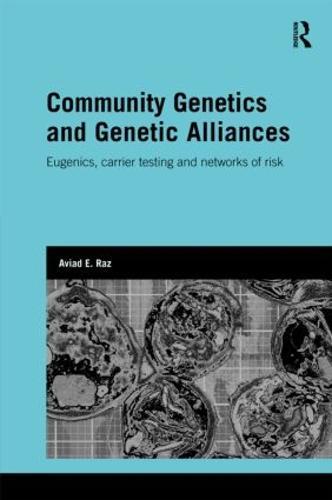
Carrier testing of adults provides information about the risk of passing a genetic mutation to your children, leading to reproductive (and some say, eugenic) decisions. Excessive carrier screening may have adverse effects, but it can also prevent suffering and open up new reproductive options. Raz's study focuses on the interplay of community genetics (the medical organisation of carrier screening) and genetic alliances (networks of individuals at risk), exploring how 'genetic communities' are emerging both within existing ethnic groups and around patients' organizations. While the interplay between carrier testing, reproduction and eugenics has sparked many discussions, this study provides a novel and much-needed perspective on its actual implementation and interpretation by community members. Conflating a cross-cultural spectrum of genetic communities, the benefits and perils of supporting (or restricting) carrier screening are located within broader social issues such as religion, ethnicity, multi-culturalism, abortion, stigmatization, suffering and care-giving. While carrier screening emerges as ultimately a morally justified pronatalist endeavour for the reduction of suffering, thus being different in principle from the 'old' eugenics, it can also carry unintended adverse consequences if left unattended to consumers, communities, or health professionals.
Full Product Details
Author: Aviad E. Raz (Aviad E. Raz, Ben-Gurion University of the Negev, Israel)
Publisher: Taylor & Francis Ltd
Imprint: Routledge
Dimensions:
Width: 15.60cm
, Height: 1.30cm
, Length: 23.40cm
Weight: 0.453kg
ISBN: 9780415496186
ISBN 10: 0415496187
Pages: 208
Publication Date: 27 August 2009
Audience:
College/higher education
,
Professional and scholarly
,
Postgraduate, Research & Scholarly
,
Professional & Vocational
Format: Hardback
Publisher's Status: Active
Availability: In Print

This item will be ordered in for you from one of our suppliers. Upon receipt, we will promptly dispatch it out to you. For in store availability, please contact us.
Reviews
'Using opportunities to reduce suffering is a laudable intention, whatever it is called. The road to hell, however, is paved with good intentions too. Thanks heaven critics like Aviad Raz keep us alert by pointing out unwanted side effects. A warned human counts for two.' - Leo P ten Kate, Professor Emeritus of Clinical Genetics, VU University Medical Center, Amsterdam, The Netherlands 'Everyone confronting the social, cultural and ethical aspects of this field should reflect carefully on what this book has to say. It is an original, empirically informed and invaluable addition to the literature' - Ruth Chadwick, Director of the ESRC Centre for Economic and Social Aspects of Genomics, Cardiff University, UK
'Using opportunities to reduce suffering is a laudable intention, whatever it is called. The road to hell, however, is paved with good intentions too. Thanks heaven critics like Aviad Raz keep us alert by pointing out unwanted side effects. A warned human counts for two.' -- Leo P ten Kate, Professor Emeritus of Clinical Genetics, VU University Medical Center, Amsterdam, The Netherlands 'Everyone confronting the social, cultural and ethical aspects of this field should reflect carefully on what this book has to say. It is an original, empirically informed and invaluable addition to the literature' -- Ruth Chadwick, Director of the ESRC Centre for Economic and Social Aspects of Genomics, Cardiff University, UK
Author Information
Aviad E. Raz is Associate Professor at the Department of Sociology and Anthropology, Ben-Gurion University of the Negev, Beer-Sheva, Israel, where he is also directing the Behavioural Sciences Program. He has published on the subject of organisational culture, as well as on the social and bioethical aspects of health organisations, especially in the context of community genetics.