Overview
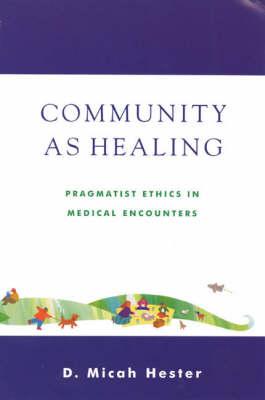
The brief history of 20th century bioethics has been dominated by discussions of principles and appeals to autonomy that both divorce theory from practice and champion a notion of the individual as prior to and isolated from society. Pragmatism, on the other hand, has long sought to reconstruct ethical thought with the belief that distinctions between theory and practice, individual and society are not ""a priori"" starting points but purposeful developments of inquiry. Using insights from classic pragmatism, this book proposes reconstructive accounts of physician-patient relationships resulting in an emphasis on aiding the process of meaningful/signficant living for all individuals involved in medical encounters. William James, John Dewey and George Herbert Mead, among others, provide discussions of human relationships which accentuate the situatedness of problems and solutions and stress the need for building on shared experience in order to develop both self and community. With an insistence on a recognition of a functional concept of the self (or ""self as social product""), the book's pragmatic position illuminates the integration of self with the community and leads to a need to develop new practices in the medical encounter based on an attitude of ""community as healing"".
Full Product Details
Author: Micah D. Hester
Publisher: Bloomsbury Publishing Plc
Imprint: Rowman & Littlefield
Dimensions:
Width: 14.70cm
, Height: 0.90cm
, Length: 22.90cm
Weight: 0.181kg
ISBN: 9780742512191
ISBN 10: 0742512193
Pages: 120
Publication Date: 26 June 2001
Audience:
General/trade
,
Professional and scholarly
,
General/trade
,
General
,
Postgraduate, Research & Scholarly
Format: Paperback
Publisher's Status: Active
Availability: In Print

This item will be ordered in for you from one of our suppliers. Upon receipt, we will promptly dispatch it out to you. For in store availability, please contact us.
Reviews
Micah Hester storms onto the scene with one of the most important books to be published in the thirty-year history of bioethics. It is enough that Hester levels the most devastating critique of the superficial 'principles' of bioethics ever to be published. But he has also given us a better way of solving the problems that perplex families, clinicians, and scholars, a pragmatic theory of bioethics that draws deeply on John Dewey and William James. I cannot imagine a better book to revivify and inspire both bioethics and American philosophy at the turn of the century, and I have yet to read a better book on bioethics for a broad academic audience... -- Glenn McGee, University of Pennsylvania American Journal of Bioethics Hester takes John Dewey, William James, and G.H. Mead as his heroes. None of these or, apparently, anyone else, has developed a theory of medical ethics based on pragmatism. Hester begins to develop one. CHOICE In Community as Healing: Pragmatist Ethics in Medical Encounters, Micah Hester achieves the impossible - offering a book on bioethical methodology that combines critical virtuosity with accessibility for non-bioethicists. Emphasizing the teachings of pragmatist philosophers John Dewey, William James and George Herbert Mead, Community as Healing offers an elegant summary of the development and operation of personal intelligence, a scathing (if at times exaggerated) critique of bioethical principlism, and (best of all) a cogent and engaging prescription for cultivating communities of healing. This book is necessary reading for academic bioethicists who wish to keep abreast of the best and most innovative thinking in their field. Perhaps more importantly, it is ideal for undergraduate and graduate students of bioethics or American philosophy. Community as Healing is tightly argued, imminently readable, and breathtakingly original. Like the engaging, relevant treatises of philosophers past, Hester's book deserves to be read and pondered by professionals and lay persons alike. I commend it highly Journal Of Speculative Philosophy Brings the most important themes in pragmatism to bear on issues surrounding the physician-patient relationship. In addition to being an excellent contribution to bioethics, it is also most timely: first, it serves to strengthen the emerging movement of pragmatic bioethics; and second it equally finds repose in a much larger movement in bioethics with attempts to replace the infuential principlism with a richer understanding of context and the communicative nature of both the individual and the community. Transactions Of The Charles S. Peirce Society Community as Healing is among the finest books on the methods of bioethics in recent years. Hester weaves together the best elements of narrative ethics and pragmatism to form an exciting synthesis. This is a must-read for all serious students of bioethical theory. -- Mark Kuczewski, Loyola University Chicago Micah Hester storms onto the scene with one of the most important books to be published in the thirty-year history of bioethics. It is enough that Hester levels the most devastating critique of the superficial 'principles' of bioethics ever to be published. But he has also given us a better way of solving the problems that perplex families, clinicians, and scholars, a pragmatic theory of bioethics that draws deeply on John Dewey and William James. I cannot imagine a better book to revivify and inspire both bioethics and American philosophy at the turn of the century, and I have yet to read a better book on bioethics for a broad academic audience. -- Glenn McGee, University of Pennsylvania American Journal of Bioethics
Micah Hester storms onto the scene with one of the most important books to be published in the thirty-year history of bioethics. It is enough that Hester levels the most devastating critique of the superficial 'principles' of bioethics ever to be published. But he has also given us a better way of solving the problems that perplex families, clinicians, and scholars, a pragmatic theory of bioethics that draws deeply on John Dewey and William James. I cannot imagine a better book to revivify and inspire both bioethics and American philosophy at the turn of the century, and I have yet to read a better book on bioethics for a broad academic audience...--Glenn McGee American Journal Of Bioethics
Micah Hester storms onto the scene with one of the most important books to be published in the thirty-year history of bioethics. It is enough that Hester levels the most devastating critique of the superficial 'principles' of bioethics ever to be published. But he has also given us a better way of solving the problems that perplex families, clinicians, and scholars, a pragmatic theory of bioethics that draws deeply on John Dewey and William James. I cannot imagine a better book to revivify and inspire both bioethics and American philosophy at the turn of the century, and I have yet to read a better book on bioethics for a broad academic audience... -- Glenn McGee, University of Pennsylvania American Journal of Bioethics Hester takes John Dewey, William James, and G.H. Mead as his heroes. None of these or, apparently, anyone else, has developed a theory of medical ethics based on pragmatism. Hester begins to develop one. CHOICE In Community as Healing: Pragmatist Ethics in Medical Encounters, Micah Hester achieves the impossible - offering a book on bioethical methodology that combines critical virtuosity with accessibility for non-bioethicists. Emphasizing the teachings of pragmatist philosophers John Dewey, William James and George Herbert Mead, Community as Healing offers an elegant summary of the development and operation of personal intelligence, a scathing (if at times exaggerated) critique of bioethical principlism, and (best of all) a cogent and engaging prescription for cultivating communities of healing. This book is necessary reading for academic bioethicists who wish to keep abreast of the best and most innovative thinking in their field. Perhaps more importantly, it is ideal for undergraduate and graduate students of bioethics or American philosophy. Community as Healing is tightly argued, imminently readable, and breathtakingly original. Like the engaging, relevant treatises of philosophers past, Hester's book deserves to be read and pondered by professionals and lay persons alike. I commend it highly Journal of Speculative Philosophy Brings the most important themes in pragmatism to bear on issues surrounding the physician-patient relationship. In addition to being an excellent contribution to bioethics, it is also most timely: first, it serves to strengthen the emerging movement of pragmatic bioethics; and second it equally finds repose in a much larger movement in bioethics with attempts to replace the infuential principlism with a richer understanding of context and the communicative nature of both the individual and the community. Transactions Of The Charles S. Peirce Society Community as Healing is among the finest books on the methods of bioethics in recent years. Hester weaves together the best elements of narrative ethics and pragmatism to form an exciting synthesis. This is a must-read for all serious students of bioethical theory. -- Mark Kuczewski, Loyola University Chicago Micah Hester storms onto the scene with one of the most important books to be published in the thirty-year history of bioethics. It is enough that Hester levels the most devastating critique of the superficial 'principles' of bioethics ever to be published. But he has also given us a better way of solving the problems that perplex families, clinicians, and scholars, a pragmatic theory of bioethics that draws deeply on John Dewey and William James. I cannot imagine a better book to revivify and inspire both bioethics and American philosophy at the turn of the century, and I have yet to read a better book on bioethics for a broad academic audience. -- Glenn McGee, University of Pennsylvania American Journal of Bioethics
Micah Hester storms onto the scene with one of the most important books to be published in the thirty-year history of bioethics. It is enough that Hester levels the most devastating critique of the superficial 'principles' of bioethics ever to be published. But he has also given us a better way of solvingthe problems that perplex families, clinicians, and scholars, a pragmatic theory of bioethics that draws deeply on John Dewey and William James. I cannot imagine a better book to revivify and inspire both bioethics and American philosophy at the turn of the century, and I have yet to read a better book on bioethics for a broad academic audience.--Glenn McGee American Journal Of Bioethics
Micah Hester storms onto the scene with one of the most important books to be published in the thirty-year history of bioethics. It is enough that Hester levels the most devastating critique of the superficial 'principles' of bioethics ever to be published. But he has also given us a better way of solving the problems that perplex families, clinicians, and scholars, a pragmatic theory of bioethics that draws deeply on John Dewey and William James. I cannot imagine a better book to revivify and inspire both bioethics and American philosophy at the turn of the century, and I have yet to read a better book on bioethics for a broad academic audience... -- Glenn McGee American Journal Of Bioethics Hester takes John Dewey, William James, and G.H. Mead as his heroes. None of these or, apparently, anyone else, has developed a theory of medical ethics based on pragmatism. Hester begins to develop one. CHOICE In Community as Healing: Pragmatist Ethics in Medical Encounters, Micah Hester achieves the impossible - offering a book on bioethical methodology that combines critical virtuosity with accessibility for non-bioethicists. Emphasizing the teachings of pragmatist philosophers John Dewey, William James and George Herbert Mead, Community as Healing offers an elegant summary of the development and operation of personal intelligence, a scathing (if at times exaggerated) critique of bioethical principlism, and (best of all) a cogent and engaging prescription for cultivating communities of healing. This book is necessary reading for academic bioethicists who wish to keep abreast of the best and most innovative thinking in their field. Perhaps more importantly, it is ideal for undergraduate and graduate students of bioethics or American philosophy. Community as Healing is tightly argued, imminently readable, and breathtakingly original. Like the engaging, relevant treatises of philosophers past, Hester's book deserves to be read and pondered by professionals and lay persons alike. I commend it highly Journal Of Speculative Philosophy Brings the most important themes in pragmatism to bear on issues surrounding the physician-patient relationship. In addition to being an excellent contribution to bioethics, it is also most timely: first, it serves to strengthen the emerging movement of pragmatic bioethics; and second it equally finds repose in a much larger movement in bioethics with attempts to replace the infuential principlism with a richer understanding of context and the communicative nature of both the individual and the community. Transactions Of The Charles S. Pierce Society Community as Healing is among the finest books on the methods of bioethics in recent years. Hester weaves together the best elements of narrative ethics and pragmatism to form an exciting synthesis. This is a must-read for all serious students of bioethical theory. -- Kuczewski, Mark Micah Hester storms onto the scene with one of the most important books to be published in the thirty-year history of bioethics. It is enough that Hester levels the most devastating critique of the superficial 'principles' of bioethics ever to be published. But he has also given us a better way of solving the problems that perplex families, clinicians, and scholars, a pragmatic theory of bioethics that draws deeply on John Dewey and William James. I cannot imagine a better book to revivify and inspire both bioethics and American philosophy at the turn of the century, and I have yet to read a better book on bioethics for a broad academic audience. -- Glenn McGee American Journal Of Bioethics
Author Information
D. Micah Hester is assistant professor of biomedical ethics at Mercer University School of Medicine in Macon, Georgia.