Overview
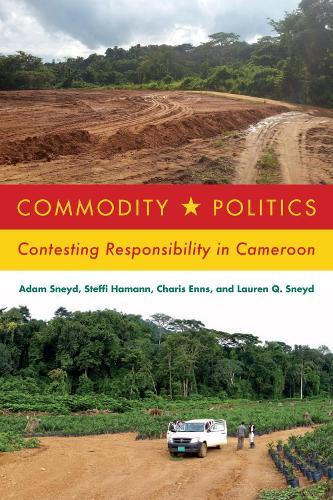
Responsibility is political. As the international community has called for more responsible environmental, social, and governance performance, the politics of commodities has become more fraught. Commodity Politics cuts through the new rhetoric of responsibility and presents innovative research from Cameroon to provide a better understanding of the political complexity surrounding commodity production and trade in the twenty-first century. Assessing the perspectives of businesses, international organizations, governments, and civil society groups, the authors offer insights gleaned from years of field research in a commodity-dependent country. Commodity Politics presents case studies of sugar, palm oil, cocoa, and the Chad-Cameroon pipeline project. These cases uncover a problematic politics that is much broader than the implications of corporate social responsibility codes for people and the planet, delivering solid rationales for policy-makers and commodity stakeholders to think more deeply about investor-driven approaches to improving environmental, social, and governance conduct. This book trains students and scholars to better recognize political intricacies and consequential flash points. Immersing its readers in timely debates over the meaning and intent of responsibility, Commodity Politics breaks new ground in the political analysis of development.
Full Product Details
Author: Adam Sneyd ,
Steffi Hamann ,
Charis Enns ,
Lauren Q. Sneyd
Publisher: McGill-Queen's University Press
Imprint: McGill-Queen's University Press
ISBN: 9780228008880
ISBN 10: 0228008883
Pages: 280
Publication Date: 15 February 2022
Audience:
Professional and scholarly
,
Professional & Vocational
Format: Hardback
Publisher's Status: Active
Availability: In Print

This item will be ordered in for you from one of our suppliers. Upon receipt, we will promptly dispatch it out to you. For in store availability, please contact us.
Reviews
“Commodity Politics demonstrates not just how different actors and groups in several African countries and across several industries define responsible development and use of resources in different ways, but clearly explains why this matters. The book’s multidimensional understanding of responsibility is a useful heuristic that will be applicable to other regional contexts and industries.” Andrea M. Collins, University of Waterloo
Commodity Politics demonstrates not just how different actors and groups in several African countries and across several industries define responsible development and use of resources in different ways, but clearly explains why this matters. The book's multidimensional understanding of responsibility is a useful heuristic that will be applicable to other regional contexts and industries. Andrea M. Collins, University of Waterloo
Author Information
Adam Sneyd is associate professor in the Department of Political Science at the University of Guelph. Steffi Hamann is assistant professor in the Guelph Institute of Development Studies at the University of Guelph. Charis Enns is a presidential fellow at the University of Manchester. Lauren Q. Sneyd instructs courses related to food security and development at the University of Guelph.