Overview
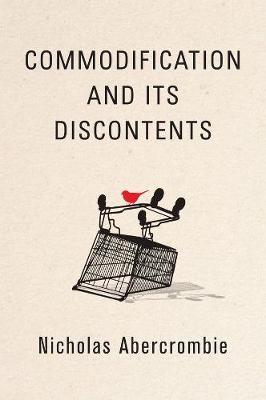
Should human organs be bought and sold? Is it right that richer people should be able to pay poorer people to wait in a queue for them? Should objects in museums ever be sold? The assumption underlying such questions is that there are things that should not be bought and sold because it would give them a financial value that would replace some other, and dearly held, human value. Those who ask questions of this kind often fear that the replacement of human by money values – a process of commodification – is sweeping all before it. However, as Nicholas Abercrombie argues, commodification can be, and has been, resisted by the development of a moral climate that defines certain things as outside a market. That resistance, however, is never complete because the two regimes of value – human and money – are both necessary for the sustainability of society. His analysis of these processes offers a thought-provoking read that will appeal to students and scholars interested in market capitalism and culture.
Full Product Details
Author: Nicholas Abercrombie (University of Lancaster)
Publisher: John Wiley and Sons Ltd
Imprint: Polity Press
Dimensions:
Width: 16.00cm
, Height: 2.30cm
, Length: 23.10cm
Weight: 0.454kg
ISBN: 9781509529810
ISBN 10: 1509529810
Pages: 224
Publication Date: 09 October 2020
Audience:
Professional and scholarly
,
Professional & Vocational
Format: Hardback
Publisher's Status: Active
Availability: Out of stock

The supplier is temporarily out of stock of this item. It will be ordered for you on backorder and shipped when it becomes available.
Reviews
As ever-wider domains of social life are relentlessly subject to the brutality of the price mechanism, increasing numbers of us aspire to a new moral economy. In this deeply researched historical sociology, Nicholas Abercrombie identifies the actual mechanisms, practices, and contingent conditions that make it possible to successfully defy commodification. Most revelatory is that the most effective strategies of resistance depend on complex 'regimes of value' that combine both markets and a morality of decommodification. With this volume Abercrombie contributes mightily to the fiercely urgent task of reclaiming a regime of social justice. Margaret Somers, University of Michigan This book shows that contrary to many theoretical accounts of modern economies 'commodification' need not be an all-or-nothing affair. Through illuminating analyses of concrete examples, Nick Abercrombie shows how in practice there are often degrees of commodification and moral regulation and explains how the relations between them have been constructed. Andrew Sayer, Lancaster University
Author Information
Nick Abercrombie is Emeritus Professor of Sociology at Lancaster University.