Overview
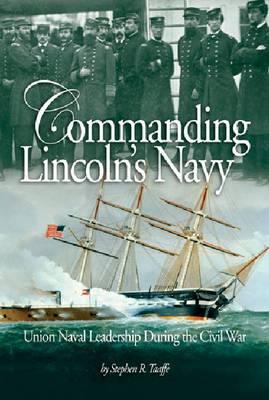
The Union Navy played a vital role in winning the Civil War by blockading Confederate ports, co-operating with the Union Army in amphibious assaults, and operating on the Mississippi River and its tributaries. To wage this multifaceted war, Secretary of the Navy Gideon Welles divided the Union Navy into six squadrons. Examining who Welles assigned to squadron command and why he appointed these officers, Taaffe argues that President Abraham Lincoln gave Welles considerable latitude in picking squadron commanders. Lincoln not only trusted Welles’s judgment, but he also understood that the Navy was not as important to the Union war effort militarily and politically as the Army, so there was less of a need for him to oversee closely its operations. Welles used this authority to make appointments to squadron command based on several criteria. Welles factored into his mental calculations seniority, availability, and political connections, but he was most interested in an officer’s record, character, and abilities. Although some of Welles’s earliest selections left something to be desired, his insight improved markedly as the war continued and he gained a greater understanding of the Navy and its officer corps. Indeed, by the end of the conflict, Welles had become quite ruthless in his search for effective squadron commanders capable of filling the Navy’s increasingly difficult missions. In doing so, he contributed greatly to Union victory in the Civil War and the book explores some of the Civil War’s most important campaigns and battles involving the commanders, such as the Union assaults on New Orleans, Charleston, Mobile Bay, and Fort Fisher, and the fighting on the Mississippi River.
Full Product Details
Author: Stephen R. Taaffe
Publisher: Naval Institute Press
Imprint: Naval Institute Press
Dimensions:
Width: 15.20cm
, Height: 3.30cm
, Length: 22.80cm
Weight: 0.590kg
ISBN: 9781591148555
ISBN 10: 1591148553
Pages: 352
Publication Date: 01 May 2009
Audience:
College/higher education
,
Tertiary & Higher Education
Format: Hardback
Publisher's Status: Out of Stock Indefinitely
Availability: In Print

Limited stock is available. It will be ordered for you and shipped pending supplier's limited stock.
Reviews
This is not a chronicle of the Civil War at sea and on the rivers. Instead it is a penetrating examination of the political and operational leadership of the Union Navy in the context of the major naval campaigns of the War. . . .Overall, Taaffe has provided a detailed examination of the operational leadership of the Union Navy at war and how it responded to political direction. He has exposed a `senior leadership group' which was by no means perfect, but which in the end got the job done. His descriptions of squadron commanders really do illustrate just how individual and imperfect we humans are and possibly equally important, how imperfection does not necessarily mean inability. This is a very useful book and it will reward careful reading. * Journal of the Australian Naval Institute *
Author Information
Stephen R. Taafee is Professor of History at Stephen F. Austin State University, teaching American military and diplomatic history. Born and raised in Youngstown, Ohio, he attended Grove City College in Pennsylvania for his undergraduate degrees, and Ohio University in Athens, Ohio, for his MA and Phd. He resides with his wife and three children in Nacogdoches, Texas. He is the author of MacArthur’s Jungle War: The 1944 New Guinea Campaign, The Philadelphia Campaign, and Commanding the Army of the Potomac.