Overview
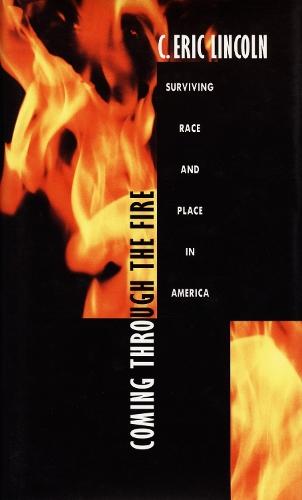
In Coming through the Fire, prominent scholar and writer C. Eric Lincoln addresses the most important issue of our time with insights forged by a lifetime of confronting racial oppression in America. Born in a small rural town in northern Alabama, raised by his grandparents, Lincoln portrays in rich detail the nuances of racial conflict and control that characterized the community of Athens, personal experiences which would lead him to dedicate his life to illuminating issues of race and social identity. The contradictions and calamities of being black and poor in the United States become a purifying fire for his searing analyses of the contemporary meanings of race and color. Coming through the Fire, with its fiercely intelligent, passionate, and clear-eyed view of race and class conflict, makes a major contribution to understanding-and thereby healing-the terrible rift that has opened up in the heart of America. Lincoln explores the nature of biracial relationships, the issue of transracial adoption, violence-particularly black-on-black violence-the “endangered” black male, racism as power, the relationship between Blacks and Jews, our multicultural melting pot, and Minister Louis Farrakhan.Without sidestepping painful issues, or sacrificing a righteous anger, the author argues for “no-fault reconciliation,” for mutual recognition of the human endowment we share regardless of race, preparing us as a nation for the true multiculture tomorrow will demand. Readers familiar with Lincoln’s earlier groundbreaking work on the Black Muslims and on the black church will be eagerly awaiting the publication of Coming through the Fire. Others will simply find C. Eric Lincoln’s personal story and his exploration of survival and race in America to be absorbing and compelling reading.
Full Product Details
Author: C. Eric Lincoln
Publisher: Duke University Press
Imprint: Duke University Press
Dimensions:
Width: 22.90cm
, Height: 2.20cm
, Length: 15.20cm
Weight: 0.499kg
ISBN: 9780822317364
ISBN 10: 0822317362
Pages: 168
Publication Date: 12 March 1996
Audience:
Professional and scholarly
,
Professional & Vocational
Format: Hardback
Publisher's Status: Active
Availability: In Print

This item will be ordered in for you from one of our suppliers. Upon receipt, we will promptly dispatch it out to you. For in store availability, please contact us.
Reviews
OThe first consciousness of race comes early. It is not something you learn in the same way you learn about stinging caterpillars or poison ivy. You do not have to learn it from some overt experience. It is a pervasive awareness, an insidious thing that seeps into the soil of consciousness, sending its toxic tendrils deep into the walls of the mind. It is like a mold, a blight. If you scrape it away here, you find it mockingly virulent there. Once the concept of race takes root in the mind, it is there to stay. You cannot run away from it because it is inside you... In the South, where I was raised, the pervasive awareness of race was helped along by a series of OlessonsO learned in the process of growing up. These lessons were sometimes impromptu, and often impersonal, but they were never unplanned or unintended. They were always there in the arsenal of race and place waiting for the most effective moment for inculcation.ONFrom Coming through the Fire
The first consciousness of race comes early. It is not something you learn in the same way you learn about stinging caterpillars or poison ivy. You do not have to learn it from some overt experience. It is a pervasive awareness, an insidious thing that seeps into the soil of consciousness, sending its toxic tendrils deep into the walls of the mind. It is like a mold, a blight. If you scrape it away here, you find it mockingly virulent there. Once the concept of race takes root in the mind, it is there to stay. You cannot run away from it because it is inside you... In the South, where I was raised, the pervasive awareness of race was helped along by a series of 'lessons' learned in the process of growing up. These lessons were sometimes impromptu, and often impersonal, but they were never unplanned or unintended. They were always there in the arsenal of race and place waiting for the most effective moment for inculcation. -From Coming through the Fire
oThe first consciousness of race comes early. It is not something you learn in the same way you learn about stinging caterpillars or poison ivy. You do not have to learn it from some overt experience. It is a pervasive awareness, an insidious thing that seeps into the soil of consciousness, sending its toxic tendrils deep into the walls of the mind. It is like a mold, a blight. If you scrape it away here, you find it mockingly virulent there. Once the concept of race takes root in the mind, it is there to stay. You cannot run away from it because it is inside you... In the South, where I was raised, the pervasive awareness of race was helped along by a series of OlessonsO learned in the process of growing up. These lessons were sometimes impromptu, and often impersonal, but they were never unplanned or unintended. They were always there in the arsenal of race and place waiting for the most effective moment for inculcation.ONFrom Coming through the Fire
Author Information
C. Eric Lincoln (1924–2000) was, at the time of his death, William Rand Kenan Jr. Professor Emeritus of Religion and Culture at Duke University. His widely acclaimed publications include The Black Muslims in America; The Black Church since Frazier; Race, Religion, and the Continuing American Dilemma; and, with Lawrence H. Mamiya and published by Duke University Press, The Black Church in the African American Experience. He has also written a novel, The Avenue, Clayton City, now published in paperback by Duke University Press, and a collection of poems, This Road since Freedom. He is the founding president of the Black Academy of Arts and Letters and a Fellow of the American Academy of Arts and Sciences.